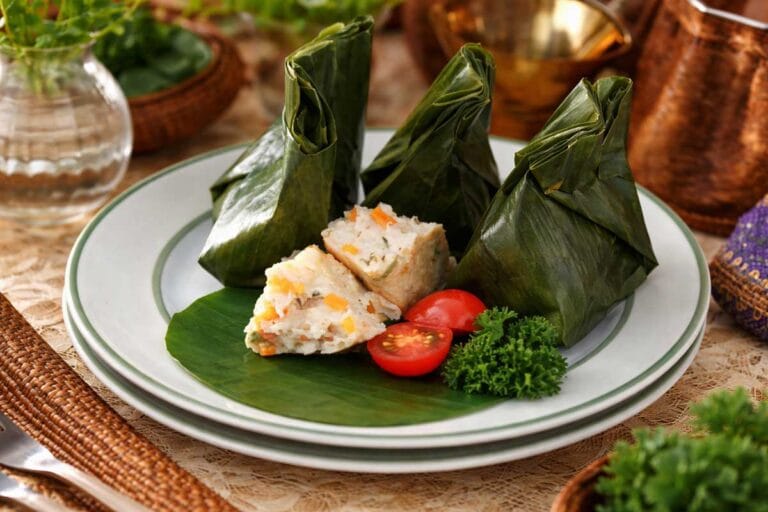
Arem-arem is a soft Indonesian rice roll filled with a savory mixture, wrapped in banana leaves, and steamed until fragrant. It’s an everyday food across Java — eaten at breakfast tables, packed into lunch boxes, and sold at market stalls. Simple and practical, it’s the kind of snack that fits naturally into daily life. Yet despite its modest appearance, arem-arem carries cultural meaning and history, reflecting how Indonesian cooking often balances comfort, community, and resourcefulness.
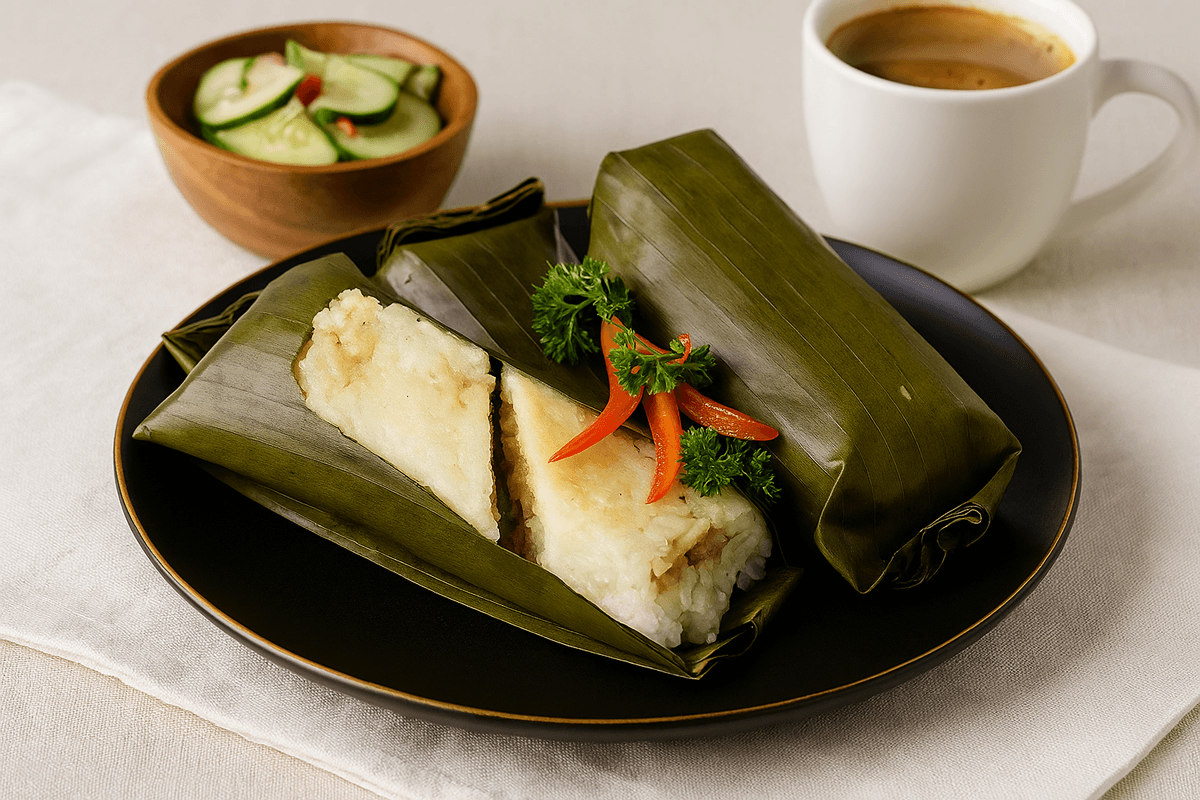
Indonesian Stuffed Rice Rolls (Arem-Arem)
Ingredients
Instruction
- In a pot, combine coconut milk, pandan leaves, and salt. Heat until just simmering.
- Add the rice and cook over low heat, stirring occasionally, until most liquid is absorbed and rice becomes half-cooked (like parboiled).
- Remove from heat and set aside.
- Heat a little oil in a skillet.
- Sauté shallots, garlic, and red chili until fragrant and slightly golden.
- Add ground beef and cook until browned.
- Add daun salam, lengkuas, and daun jeruk. Stir to combine.
- Add sweet soy sauce, salt, pepper, and a splash of water to help flavors blend.
- Cook until the mixture is slightly dry — this is important to prevent soggy rolls.
- Remove aromatics (bay leaves, galangal) and let the filling cool slightly.
- Lay a piece of banana leaf shiny-side up.
- Place about 3 tablespoons of rice in the center, flattening lightly.
- Add about 1 tablespoon of filling.
- Roll into a small log (like a mini burrito) and fold the ends.
- Secure with a toothpick if needed.
- Place the rolls in a steamer.
- Steam on medium heat for 30–45 minutes, until the rice is fully set and infused with the banana leaf aroma.
- Let cool slightly before serving.
Notes
-
Pandan leaf (daun pandan)
Adds a subtle vanilla-like aroma.
Optional: the dish will still taste great without it. -
Sweet soy sauce (kecap manis)
Thick, sweet Indonesian soy sauce.
Substitute: soy sauce + molasses or dark brown sugar. -
Indonesian bay leaf (daun salam)
Adds an earthy, herbal fragrance.
Substitute: regular bay leaf (flavor will be slightly different but still acceptable). -
Kaffir lime leaf (daun jeruk)
Provides bright citrus aroma.
Optional: can replace with a small amount of lime zest. -
Banana leaves (daun pisang)
Give a natural aroma and prevent sticking.
Substitute: parchment paper wrapped in foil when steaming (texture remains, aroma will be milder).
If using parchment + foil, shape rolls the same way — the flavor will be less aromatic, but texture will still be great.
What Exactly Is Arem-Arem?
Arem-arem is essentially steamed rice simmered in coconut milk, filled with a savory mixture—often vegetables, tempeh, chicken, or minced beef—and wrapped in banana leaves before being steamed again. Indonesians often enjoy it for breakfast, snacks, or as a practical meal for traveling, school, or work.
To put it simply for Western readers:
- Think Japanese onigiri, but softer, coconut-scented, and wrapped in banana leaf instead of seaweed.
- Or Latin American tamales, but with rice instead of corn masa.
- Or even Mediterranean dolma, but distinctly tropical.
It’s humble, portable, satisfying—and deeply nostalgic for many Indonesians.
A Short and Gentle History
Arem-arem originated in the Java region, particularly in Kebumen, Central Java, where it began as a practical breakfast meal. In agrarian communities, farmers needed food that was portable, nutritious, and filling. Rice and leftover vegetables or protein were wrapped in banana leaves and carried to the rice fields.
The banana leaf wasn’t just convenient—it helped preserve moisture and infused a subtle aroma, while also being naturally biodegradable. Over time, this simple farmers’ meal evolved into:
- A special dish served at weddings, family gatherings, and village festivals
- A jajanan pasar (market snack)
The name arem-arem is believed to come from the Javanese word “marem”, meaning pleasantly satisfied—the feeling of being comfortably full without overeating. The food didn’t aim to impress, it aimed to nourish and comfort.
Arem-Arem, Lemper, and Buras — What’s the Difference?
Western audiences often assume these similar banana-leaf-wrapped treats are interchangeable. They are not!
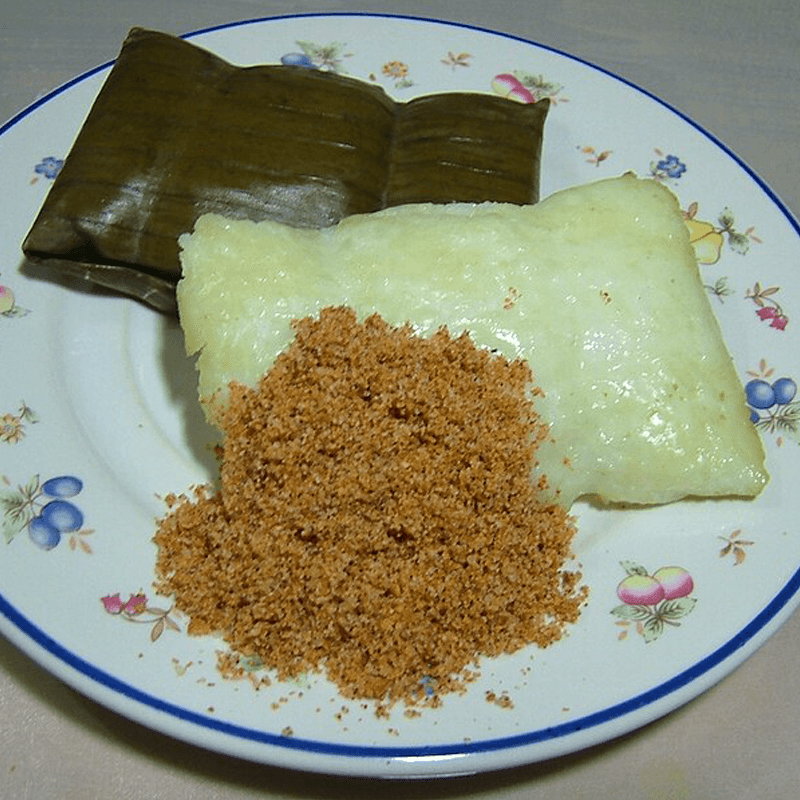
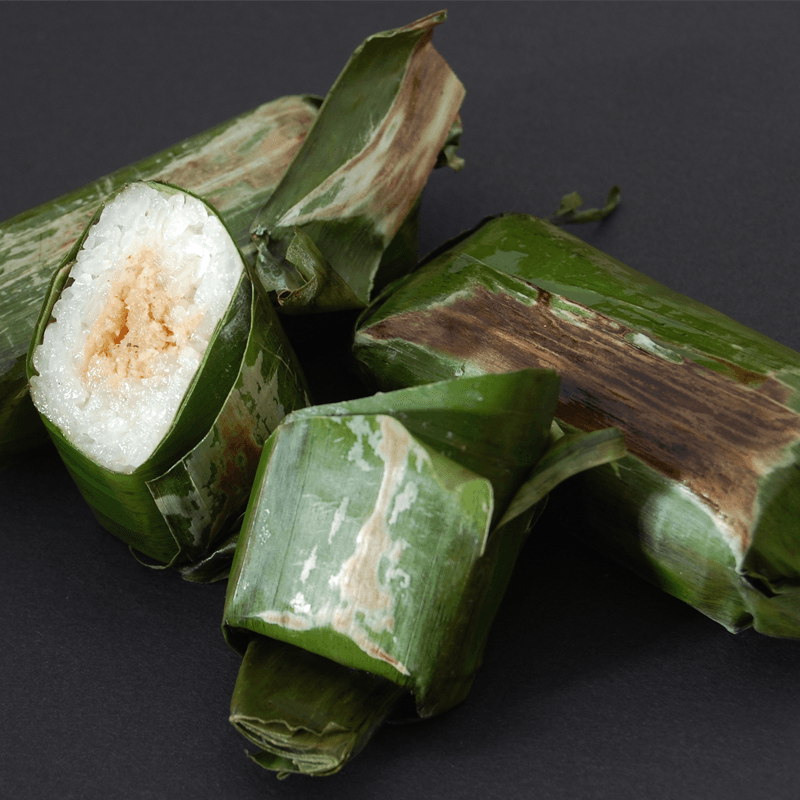
| Dish | Made From | Texture | Typical Filling | Key Difference |
|---|---|---|---|---|
| Arem-Arem | White rice | Soft, tender | Vegetables, tempeh, chicken, beef | Simpler, bigger, steamed after assembly |
| Lemper | Glutinous rice (sticky rice) | Chewy and dense | Rich seasoned shredded chicken | More compact, not steamed after wrapping |
| Buras (Makassar) | Coconut rice | Compact, savory | No filling (served with main dishes) | Usually tied in bundles and boiled for hours |
Arem-arem is the middle ground—not too heavy, not too plain—just right for any time of day.
How Arem-Arem Fits into Indonesian Cuisine
In Indonesia, food is rarely just food. It is:
- A gesture of care
- A social connector
- A sign of hospitality and togetherness
Arem-arem appears in:
- School lunch boxes
- Market snack assortments
- Village gatherings
- Religious ceremonies
- Office coffee breaks
- Long bus and train journeys
It is a meal that says:
“You don’t need much to feel full and cared for.”
Understanding the Flavor Balance
Arem-arem is appealing to international palates because it balances:

- Creaminess from coconut milk
- Aromatic brightness from banana leaves and herbs
- Savory depth from soy-based fillings
- Softness and warmth that evokes comfort food
It is familiar enough to relate to, and unique enough to feel memorable.
Are There Similar Foods Around the World?
Yes — and this is why Western audiences often find arem-arem intriguing:
| Region | Similar Dish | Relation |
|---|---|---|
| Japan | Onigiri | Portable rice snack with filling |
| Korea | Jumeokbap | Hand-formed seasoned rice with fillings |
| Mexico / Latin America | Tamales | Wrapped, steamed, portable meal |
| Mediterranean | Dolma | Stuffed leaf-wrapped bites |
But only arem-arem combines coconut rice + banana leaf aroma, making it uniquely Indonesian.
How Arem-Arem Is Enjoyed in Indonesia
Often served with:
- Fresh bird’s eye chili (for a spicy kick)
- Hot tea or sweet coffee
- Fried snacks like tempeh and tofu, risoles, bakwan
It is comfortable, casual, and always welcome.
Modern Variations
As Indonesian cuisine adapts globally, arem-arem now comes in exciting forms:
- Vegan arem-arem (tempeh, tofu, mushrooms)
- Fusion-style fillings (cheese, smoked chicken)
- Restaurant-plated versions with dipping sauces
- Mini party-size arem-arem for appetizers
The essence remains unchanged: soft rice, warm filling, wrapped with care.
Challenges When Making Arem-Arem in the West
- Banana leaves may be harder to find → try Asian grocery stores or freezer sections.
- Kecap manis may be unfamiliar → substitute soy sauce + molasses.
- Pandan leaves are optional but lovely → use vanilla bean or skip entirely.
Tips for Making Arem-Arem at Home
For best results:
- Use medium or long-grain rice (not sushi rice)
- Cook rice with coconut milk for creaminess
- Ensure the filling is dry before wrapping
- Soften banana leaves over a flame so they don’t tear
- Steam gently to let flavors meld
Flavor Pairing Ideas:
- Pair with green tea, oolong, or light coffee
- Add fresh cucumber salad to balance warmth
- Serve warm, not hot, to appreciate the aroma
Nutritional Notes
Arem-arem provides:
- Carbohydrates for energy
- Protein from fillings
- Healthy plant-based fats from coconut milk
- Vitamins from vegetable-based fillings
This makes it a balanced snack or light meal.
A Gentle Invitation
Food is one of the most beautiful ways to connect with a culture.
Arem-arem may be simple, but it is a window into Indonesian warmth—practical, generous, and welcoming.

If you try making it, share the moment:
- Post your version
- Invite friends to taste it
- Tell them the meaning of marem—that feeling of being peacefully satisfied
Because sometimes, the most memorable meals are not grand or dramatic.
They’re quiet, comforting, and shared.