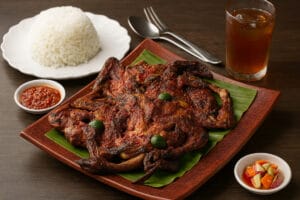
Nani Arsik is a traditional dish from the Batak Toba people, an ethnic group from North Sumatra, Indonesia. In the Batak language, nani means “cooked,” while arsik refers to a specific style of cooking using a rich yellow spice blend made from turmeric, torch ginger, lemongrass, and andaliman—a wild pepper native to the region.
More than just “fish with spices,” nani arsik refers to a slow-cooked, reduced dish where the liquid is simmered until nearly dry, allowing the spices to deeply penetrate the flesh of the fish. Traditionally made with common carp, the dish is rich in flavor and history.
When properly prepared, nani arsik can last up to two days at room temperature without spoiling—a testament to both the intensity of the cooking process and the preservative power of the spices.

Batak-Style Spiced Fish (Nani Arsik)
Ingredients
Instruction
- Clean the fishRemove the scales, gills, and innards of the fish. Rinse thoroughly and pat dry. Rub the fish with lime juice and salt. Let it sit for 20 minutes to reduce odor and firm up the flesh.
- Prepare the spice pasteBlend all ingredients listed under spice paste into a smooth mixture using a food processor or mortar and pestle.
- Stuff the fishMix one-third of the spice paste with some of the sliced torch ginger, Indian laurel leaves, and shallots. Carefully stuff this mixture into the fish’s cavity.
- Layer the potIn a wide, shallow pan or wok, spread half of the bruised lemongrass stalks and some torch ginger at the bottom. Place the fish on top.
- Assemble the restPour the remaining spice paste over the fish. Scatter the rest of the sliced herbs and basil leaves around it. Add the dried Garcinia (or tamarind), remaining lemongrass, and water.
- Cook slowlyCover and simmer on low heat for 30–40 minutes, or until the fish is fully cooked and most of the liquid has reduced, leaving a thick coating of spice on the fish.
- ServeGently transfer the fish to a serving plate. Garnish with fresh basil if desired, and serve hot with warm steamed rice.
Notes
- Ikan Mas (Common Carp): This freshwater fish is traditional in Indonesia but not popular in the West. Trout, red snapper, or branzino are excellent alternatives.
- Kecombrang (Torch Ginger): Rare outside Southeast Asia. You can mimic its floral aroma by combining extra lemongrass and a bit of fresh ginger.
- Daun Mangkokan (Indian Laurel Leaves): Not available internationally. Substitute with spinach or omit without losing much flavor.
- Lokio (Batak Shallots): Use pearl onions or small shallots, halved.
- Kemangi (Indonesian Basil): Thai basil or sweet basil can be used for a similar anise-like aroma.
- Asam Gelugur (Dried Garcinia): Commonly used for sourness. Use 1 tablespoon of tamarind paste or 1 tablespoon lemon juice as a substitute.
- Andaliman (Batak Pepper): A rare, citrusy pepper with a numbing effect. The closest Western substitute is Sichuan peppercorns, used in moderation.
- Spice Level: Indonesian chili can be quite hot. If you’re not sure about your spice tolerance, start with 3–5 chilies instead of 10.
- Serving Suggestion: Serve with plain steamed jasmine rice. Add sautéed greens or cucumber salad on the side for freshness.
What is Andaliman (Batak Pepper)?
Cultural Significance and Ceremonial Role
In Batak Toba culture, nani arsik isn’t an everyday meal—it is reserved for special ceremonies such as weddings, thanksgiving celebrations, or traditional rituals like mangulosi (the symbolic gift of a woven cloth called ulos). The cooking process is often entrusted to experienced family members, and the serving of the dish follows specific cultural protocols.
There’s a meaningful custom behind who can serve this dish. Not everyone is allowed to offer nani arsik in a traditional context. Only hula-hula—relatives from the bride’s side—are permitted to present this dish during family ceremonies. This may include the bride’s father, brothers, or extended male relatives from her clan. Offering nani arsik from the hula-hula side is a symbolic gesture—one that conveys blessing, honor, and goodwill.

In Batak philosophy, the carp used in nani arsik carries symbolic meanings:
- Prosperity
- Achievement and success
- Divine blessings
Serving nani arsik at a wedding, then, is a way for families to express gratitude for unity, abundance, and spiritual guidance.
A Flavorful Surprise for Western Palates
To most Indonesians, the taste of nani arsik feels nostalgic—bold, warm, and familiar. But to Western diners, it can be a completely new experience.
First, the use of common carp may come as a surprise. In many Western countries, carp is seen as a decorative fish rather than a food item. However, when slow-cooked in arsik spices, its soft and fatty texture becomes an ideal canvas for flavor absorption. For those unaccustomed to carp, substitutions like trout, red snapper, or sea bass work well.

On a personal note, I’ve always found freshwater or “land fish” like carp to be somewhat exotic. To be honest, they often have an earthy or muddy aroma that can be off-putting. I’ve seen beautifully presented dishes made with freshwater fish, only to be disappointed by the musty taste that lingers and ruins the appetite. But with arsik, everything changes. The abundance of herbs and spices—especially when cooked long enough—neutralizes the smell and transforms the fish into something truly delicious. The flavors soak into the meat, leaving no trace of that undesirable aroma. While it’s possible to use filleted fish for convenience, it would certainly lose some of the dish’s authenticity and depth.
Then there’s the flavor profile: intense, layered, and complex. A standout element is andaliman, a native Batak spice similar in character to Sichuan peppercorn. It creates a tingly, citrusy numbness on the tongue—spicy, aromatic, and slightly floral. When paired with turmeric, ginger, lemongrass, and torch ginger flower, the result is a sensory experience far beyond the usual chili heat found in Southeast Asian dishes.
Key Ingredients and International Substitutions
If you’re curious to recreate nani arsik at home, here are some of the essential ingredients, along with practical substitutions for those outside Indonesia:

- Common Carp
The traditional fish for this dish. Can be replaced with trout, red snapper, or sea bass. - Torch Ginger Flower (Kecombrang)
Adds a distinct floral aroma. If unavailable, a mix of lemongrass and fresh ginger can mimic the flavor. - Indian Laurel Leaf (Daun Mangkokan)
Rare outside Southeast Asia. Substitute with fresh spinach, basil, or simply omit. - Shallots or Pearl Onions (Lokio)
Easy to find in Western supermarkets. - Indonesian Lemon Basil (Kemangi)
Has a slightly citrus note. Thai basil or lemon basil makes a close alternative. - Andaliman
This wild Sumatran pepper is the soul of the dish. If you can’t find it, Sichuan peppercorn is the closest substitute. - Dried Garcinia (Asam Gelugur)
Used for a touch of sourness. Substitute with tamarind paste or a splash of lemon juice.
Is Nani Arsik for Western Taste Buds?
Absolutely—with a few thoughtful adaptations.
While the dish is deeply traditional and robust in aroma, adventurous eaters in the West—especially those familiar with Southeast Asian cuisine—will likely appreciate its uniqueness. Adjusting the heat level and using more familiar fish makes the dish more approachable, while still retaining its cultural identity.
In fact, nani arsik could be a fantastic highlight at Southeast Asian-themed dinners or cultural food events. It’s not just food—it’s a conversation starter.
A Taste of Heritage on the Plate
Nani arsik is more than just a recipe—it’s a symbol of family, tradition, and spiritual connection. Every bite tells a story of the Batak people, their customs, and their relationship with nature and community.
As global interest in authentic regional dishes continues to grow, nani arsik deserves its place among iconic Indonesian foods like rendang and nasi goreng. It’s time the world discovers the beauty—and the boldness—of this North Sumatran culinary gem.