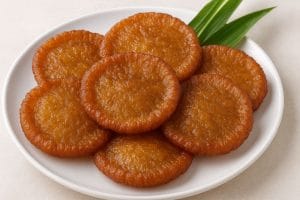
Kue Talam, often called Sweet Potato Coconut Pudding when introduced to Western audiences, is a soft, layered dessert fragrant with coconut—two layers that capture the essence of Indonesian hospitality and philosophy.
Kue Talam is not just a sweet; it is a story of cultural blending, colonial influence, and community spirit. Its history stretches back more than 500 years, with roots in Batavia (modern-day Jakarta), shaped by Chinese immigrants, Dutch colonials, and local Betawi traditions. Today, it remains one of the most recognizable Indonesian desserts, especially during festive occasions and Ramadan evenings.
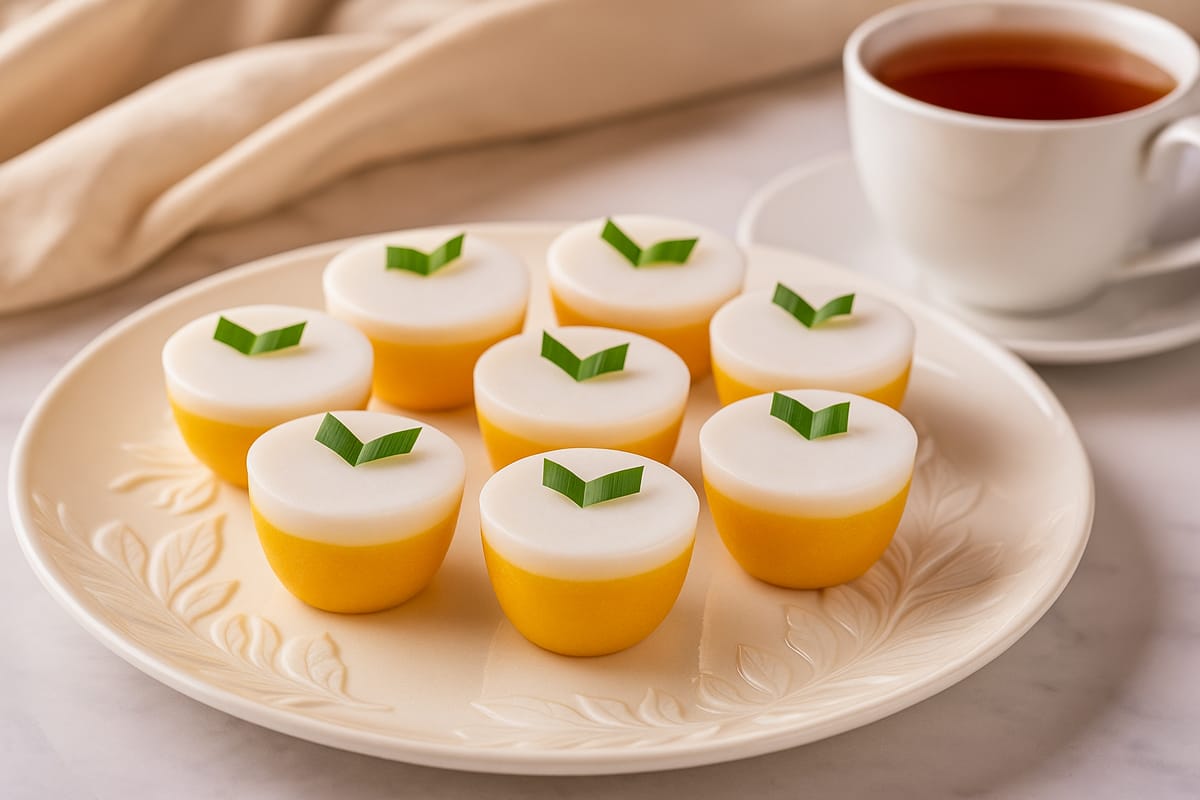
Kue Talam Ubi – Sweet Potato Coconut Pudding
Ingredients
Instruction
- Steam the sweet potatoesSteam the sweet potatoes (ubi jalar) until fully cooked and soft. Peel and mash while still hot for a smoother texture.
- Prepare rice flour paste In a bowl, mix rice flour with boiling water. Stir quickly until smooth and lump-free.
- Mix the batterAdd mashed sweet potato, tapioca starch, sugar, and thin coconut milk (santan cair). Stir until well combined.
- Cook the coconut milkBriefly boil the thin coconut milk to make it last longer and cool slightly before mixing it into the batter.
- Strain the batterStrain the sweet potato mixture through a fine sieve for a silky-smooth pudding base.
- Prepare moldsLightly grease small ramekins or heatproof bowls (about 5 cm / 2 inches in diameter). Fill ¾ of each mold with the sweet potato batter.
- First steaming Steam in a hot steamer (with the lid wrapped in a towel to catch condensation) for 15 minutes, until half set.
- Make the coconut layer In a saucepan, combine thick coconut milk (santan kental), rice flour, tapioca starch, and salt. Cook over low heat, stirring constantly, until the mixture thickens and is smooth.
- Top the puddingPour the coconut mixture gently over the half-cooked sweet potato base.
- Final steamingSteam again for 30 minutes, or until fully cooked and set.
- Cool and serveAllow to cool completely before removing from molds. Serve at room temperature or chilled.
Notes
- Sweet Potato (Ubi Jalar): Use orange sweet potatoes widely available in US/EU supermarkets. They are sweeter and softer than Indonesian yellow sweet potatoes but work perfectly.
- Coconut Milk (Santan): Canned coconut milk works well. For thin coconut milk (santan cair), dilute half coconut milk with half water. For thick coconut milk (santan kental), use the creamy top layer without dilution.
- Steaming Equipment: If you don’t own a traditional steamer, you can use a bamboo steamer over a pot, an electric steamer, or even an Instant Pot in “steam” mode. Always cover the lid with a towel to avoid water droplets ruining the surface.
- Molds: Traditional Indonesian talam is steamed in small round bowls (about 5 cm). In the West, you can use ramekins, silicone muffin cups, or mini muffin tins.
- Storage: Best served fresh, but can be stored in an airtight container in the fridge for up to 3 days. Serve chilled or allow to come to room temperature before eating.
The Origins of Kue Talam
The word kue itself comes from the Hokkien Chinese word koe, meaning traditional cake. The word talam refers to the round, flat, footless tray (loyang bulat tak berkaki) traditionally used for steaming the cake in Indonesia. This is where the dessert gets its name, as it was always presented in this “talam” pan during colonial times. Today, however, Kue Talam is more commonly made in small round molds resembling little bowls, reflecting a modern adaptation for individual servings.
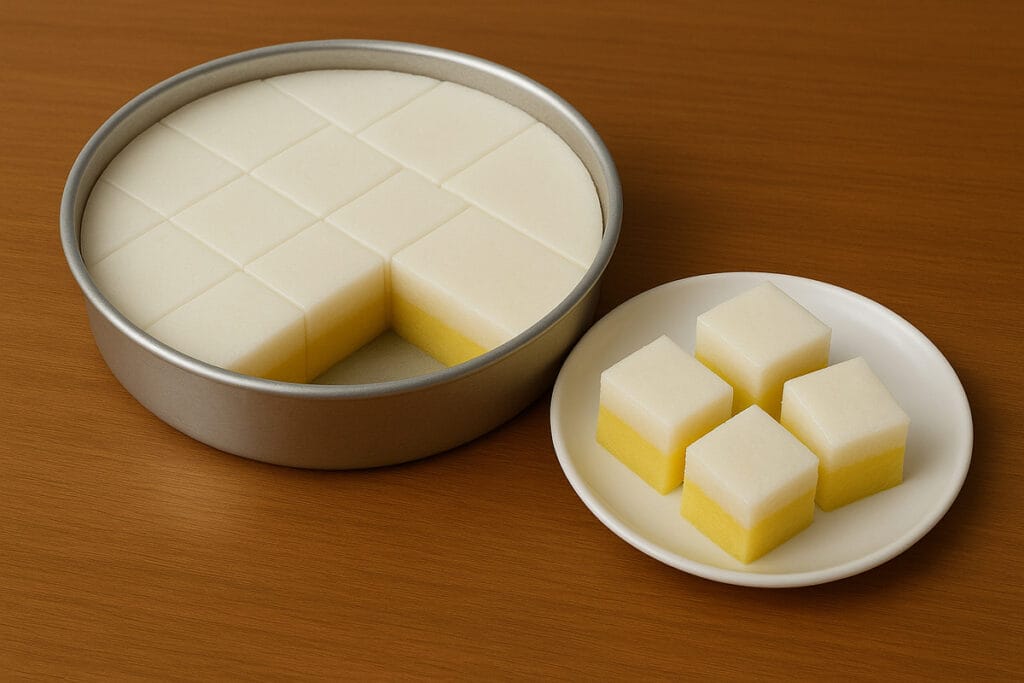
Historical accounts suggest that Kue Talam emerged in Batavia during the 16th century, when the Dutch had established their colonial presence and Chinese traders had settled in the region. The combination of rice flour (tepung beras), tapioca starch (tepung kanji), sugar, and coconut milk (santan) reflects Chinese and Southeast Asian techniques, while the way it was served—on a tray to welcome noble guests—reflects Dutch colonial etiquette.

Some versions of its history emphasize the strong role of Chinese immigrants, who introduced layered cakes and steaming methods, while others highlight Dutch influence in presenting the dish as a refined offering to important guests. What remains consistent is its role as a symbol of respect and hospitality.
Philosophy and Cultural Meaning
More than its taste, Kue Talam carries symbolic meaning. Its two layers are more than just a visual feature. The sweet base—sometimes made from palm sugar or sweet potato—represents the joys and sweetness of life, while the creamy coconut layer on top, lightly salted, represents balance and humility. Together, they illustrate the idea that life is not only sweet but also grounded in reality.
The sticky and chewy texture of the cake is also interpreted as a metaphor for human relationships: close, connected, and inseparable. In Betawi culture, serving Kue Talam to guests is a way of showing honor and goodwill. At weddings, circumcisions, or thanksgiving feasts (syukuran), the cake is often present as a prayer for harmony and togetherness.
In this way, Kue Talam is not only food but also a philosophy—every bite is a reminder of balance, unity, and community.
Variations Across Indonesia
Over time, Kue Talam has spread far beyond Jakarta. Every region has its own version, and these variations show the creativity of Indonesian home cooks:
- Talam Pandan: Green and white layers, scented with fragrant pandan leaves.
- Talam Ubi: Sweet potato is used as the base, giving a natural yellow, orange, or purple color.
- Talam Jagung: With sweet corn kernels, adding texture and natural sweetness.
- Talam Labu: Made from pumpkin, resulting in a vibrant orange cake.
- Talam Durian: A bold version infused with durian fruit, loved by fans of this tropical delicacy.
Despite these differences, the basic identity remains: a steamed cake with two layers, combining sweet and savory flavors.
When and How It Is Served in Indonesia
In Indonesia, Kue Talam is considered a classic jajanan pasar—traditional market snack. It is usually sold in small portions, served on banana leaves or in small molds.
During Ramadan, it is especially popular as a takjil (the light meal to break the fast), because its balance of sweetness and coconut richness provides comfort after a day of fasting. At family gatherings, it symbolizes generosity and unity.

It is rarely made to last for days because it is considered a kue basah (literally “wet cake”), which means it spoils quickly. Traditionally, people enjoy it fresh on the same day it is made.
Bringing Kue Talam to the West
For American and European kitchens, making Kue Talam Ubi (Sweet Potato Coconut Pudding) requires some adjustments. Instead of steaming in traditional talam trays or small Indonesian bowls, you can use ramekins, silicone muffin cups, or mini baking molds. Steaming can be done using an Instant Pot, an electric steamer, or even a bamboo steamer placed over a pot of boiling water.
Ingredients such as sweet potato, coconut milk, rice flour, and tapioca starch are widely available. Orange sweet potatoes found in US and European supermarkets can replace Indonesian yellow sweet potatoes. Canned coconut milk works perfectly, as long as you separate it into thin coconut milk (diluted with water) and thick coconut milk (the creamy top layer).
When serving, Western hosts might present the cakes on elegant dessert plates, garnished with fresh fruit or shredded coconut. This adaptation allows Kue Talam to be introduced not just as a traditional snack but as a refined dessert suitable for dinner parties or cultural events.
Nutritional and Simple Benefits
While Kue Talam is still a dessert, it has some benefits worth noting. The use of sweet potatoes provides natural sweetness, fiber, and beta-carotene. Coconut milk adds healthy fats, though it should be enjoyed in moderation. Rice flour and tapioca give it a gluten-free base, making it suitable for those avoiding wheat.
In Indonesian homes, however, the focus is less on nutrition and more on meaning: sharing a piece of cake that embodies tradition and togetherness.
A Symbol of Culinary Identity
Kue Talam is more than a sweet treat. It represents the fusion of Chinese, Dutch, and Indonesian cultures that shaped Batavia centuries ago. It also reflects how food can carry meaning beyond taste—philosophy, respect, and community values embedded in every layer.
For Western audiences discovering Indonesian cuisine, trying Sweet Potato Coconut Pudding (Kue Talam Ubi) is an invitation into that world. It is soft yet firm, sweet yet savory, humble yet festive. In a way, it captures the very essence of Indonesian food culture: balance, diversity, and warmth.
The Last Bite
Today, as Indonesian cuisine gains international recognition, Kue Talam stands as one of its timeless symbols. From its origins in Jakarta’s cultural melting pot to its place in modern kitchens abroad, it has carried with it stories of heritage and harmony.
Serving Kue Talam Ubi in a Western setting is more than offering dessert—it is sharing a cultural bridge, a taste of Indonesia’s layered history, and a gesture of hospitality that transcends borders.
So the next time you steam these little golden cakes topped with coconut cream, remember: you are not just enjoying a dessert, but participating in a tradition that has bound communities together for over five centuries.