Pindang Bandeng Kluwak (Indonesian 3-Hour Slow-Braised Milkfish in Black Nut Broth)
✨ Key Takeaways
- Pindang Bandeng Kluwak uses a 3-hour slow braise to soften milkfish bones and infuse deep flavor.
- The dish relies on kluwak (fermented black nut) for an earthy, umami-rich profile without coconut milk.
- Tamarind acidity is crucial for tenderizing the fish and balancing the rich, dark broth.
- This Betawi-Peranakan dish is traditionally served with steamed rice, sambal, and fresh vegetables.
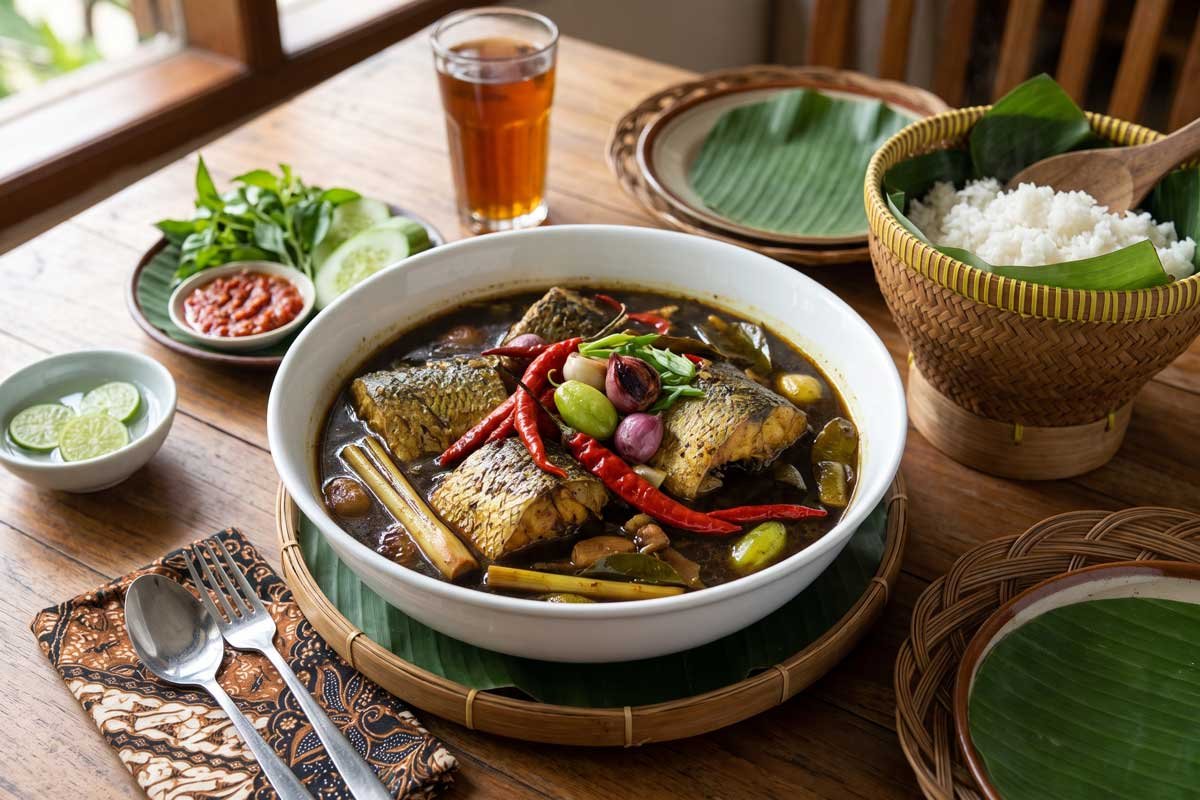
Pindang Bandeng Kluwak is a traditional Indonesian stew featuring whole milkfish slow-braised for three hours in a tangy, aromatic broth. The dish utilizes kluwak, a fermented black nut, to create a dark, velvety texture and complex umami flavor. This technique softens the fish's fine bones, making the meat tender and flavorful from edge to spine, resulting in a rich, coconut-milk-free culinary masterpiece.
Discover the deep, earthy secrets of Pindang Bandeng Kluwak, a slow-braised milkfish stew that transforms simple ingredients into a luxurious culinary experience. Milkfish (ikan bandeng) has a reputation across Southeast Asia for being simultaneously delicious and frustrating. Its flesh is sweet, fatty, and rich, yet it is packed with hundreds of tiny, needle-fine pin bones that can turn a rushed dinner into a delicate surgical operation. Rather than giving up on the fish, traditional cooks along Java’s northern coast and in Jakarta’s Betawi kitchens engineered a brilliant, low-tech solution: slow-braising it for three full hours in a deeply aromatic, tangy broth until those stubborn bones soften and the meat absorbs flavor right down to the spine.
In Pindang Bandeng Kluwak, that classic slow-braising technique meets one of Indonesia’s most intriguing ingredients. The result is a striking, dark, velvety fish stew that contains zero coconut milk, yet tastes astonishingly rich, earthy, smoky, and bright. It is a true weekend cooking project, and once you smell the roasted shallots, lemongrass, tamarind, and black nut simmering on your stove, you will understand why Indonesian families guard this recipe for their most important gatherings.
The History and Cultural Roots of Pindang Bandeng Kluwak
To understand Pindang Bandeng Kluwak, you have to look at the centuries-old cultural crossroads of Batavia (modern-day Jakarta) and the Pantura. Here, indigenous Betawi and Javanese coastal communities lived, traded, and cooked side by side with Peranakan Chinese families.
According to Indonesian culinary historians—including Fadly Rahman (Jejak Rasa Nusantara) and regional heritage records in the Ensiklopedia Kuliner Nusantara—the pindang cooking method originally developed as a practical preservation technique. Before refrigeration, coastal households simmered fresh fish in salted, acidic, spiced water so it would stay fresh for days in tropical heat.
In Betawi-Peranakan culture, Pindang Bandeng evolved far beyond preservation into a celebrated ceremonial dish. As frequently documented in Indonesian culinary journalism such as Kompas, whole milkfish became the centerpiece of Lunar New Year (Imlek) traditions in Jakarta, particularly through the Betawi custom of nganterin bandeng (gifting large, prized milkfish to parents-in-law and respected elders). While some Jakarta households darken their pindang broth using sweet soy sauce (kecap manis) and charred shallots, older traditional kitchens—especially those influenced by Javanese and Peranakan buah keluak traditions—use kluwak to achieve an inky, earthy depth that soy sauce alone can never replicate.

Pindang Bandeng Kluwak (Indonesian 3-Hour Slow-Braised Milkfish in Black Nut Broth)
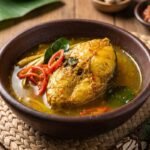
An authentic, coconut-free Indonesian coastal classic featuring whole milkfish slow-braised for 3 hours in an earthy, tangy black nut (kluwak) and tamarind broth, lined with banana leaves to prevent scorching and soften the fine bones.
Ingredients
Instruction
- Marinate the Fish & Dry-Roast Whole Aromatics (15 minutes): Rub the milkfish pieces with lime juice and ½ teaspoon of salt. Let sit for 10 minutes, then rinse thoroughly and drain. (Keep the scales on so the skin and flesh stay intact during the 3-hour braise.) Meanwhile, dry-roast the Whole Aromatics (4 red chilies, 10 shallots, 5 garlic cloves) in a dry skillet over medium heat until lightly charred and fragrant. Set aside.
- Sauté the Spice Paste Until Deeply Fragrant (8–10 minutes): Blend all Bumbu Halus ingredients (including the softened kluwak) into a completely smooth paste. Heat 50 ml of oil in a skillet over low-medium heat, then sauté the spice paste with the bruised lemongrass, bay leaves, makrut lime leaves, galangal, and ginger for 8–10 minutes until the paste darkens, loses its raw smell, and the oil separates.
- Line the Pot & Season the Broth: Line the bottom of a heavy-bottomed pot (thick stainless steel, enameled Dutch oven, or clay pot) with the banana leaves. Transfer the sautéed spice paste into the pot, pour in the 2 liters of water, and stir well to dissolve the kluwak and candlenut paste. Add the shaved palm sugar, tamarind water (or bilimbi), 2½ teaspoons of salt, and the whole roasted aromatics. Bring to a boil and simmer for 10 minutes. Taste and adjust—the broth should be clearly savory, distinctly tangy, and gently sweet.
- Slow-Braise the Milkfish (3 hours, ultra-low heat): Reduce the heat to the absolute lowest setting so the broth only barely trembles (a gentle simmer). Carefully arrange the milkfish pieces in a single layer on top of the banana leaf liner, ensuring they are fully submerged. Cover the pot tightly and cook for 3 hours. Never stir or flip the fish. Check the liquid level every 45–60 minutes; if the broth reduces and exposes the top of the fish, gently pour hot water down the inside edge of the pot so the fish stays submerged and the bottom never scorches.
- Rest Before Serving (Minimum 30 minutes): After 3 hours, turn off the heat and let the fish rest inside the covered pot for at least 30 minutes until the steam subsides. Carefully lift each intact fish piece onto a serving platter using a wide spatula, ladle the dark, aromatic broth and whole roasted aromatics over the top, and serve with hot steamed white rice.
Notes
- Why Leave the Scales On? Milkfish skin is very delicate. Leaving the scales intact acts as a natural shield that holds the fish together during the 3-hour simmer. The scales peel away effortlessly on your plate once cooked.
- Don’t Skip the Banana Leaf Liner: Ground kluwak and candlenuts are heavy and naturally settle to the bottom of the pot. Lining the base with banana leaves (or parchment + lemongrass) prevents the sediment from burning over a 3-hour cook.
- Always Taste-Test Your Kluwak: Crack open and taste a tiny fleck of every single kluwak nut before soaking. Good kluwak tastes earthy, savory, and slightly nutty. If a nut tastes sharply bitter, throw it away immediately.
- Hands-Off Simmering: Resist the urge to stir once the fish is in the pot. Keeping the heat at a bare simmer and adding hot water along the edges keeps the steaks whole and picture-perfect.
- Make-Ahead Magic: Pindang Bandeng Kluwak keeps beautifully in the refrigerator for up to 3–4 days and tastes even richer on Day 2. Reheat gently over low heat without stirring.
The Name and Culinary Philosophy
Every word in Pindang Bandeng Kluwak tells a story about both technique and symbolism:
- Pindang: In Indonesian gastronomy, pindang refers to a spiced, tangy, water-based braise. Unlike gulai or opor, it uses no coconut milk, relying instead on acidity (tamarind or starfruit) and aromatics to keep the broth clean and invigorating.
- Bandeng (Milkfish): In Betawi and Peranakan philosophy, the milkfish is a symbol of prosperity, resilience, and smooth fortune. Because navigating the fish’s many fine bones requires patience and care, elders traditionally equate eating bandeng with navigating life’s challenges wisely to reach the sweet reward.
- Kluwak (Black Nut): Known botanically as Pangium edule, raw kluwak seeds are naturally toxic until fermented and aged underground. In Indonesian culinary philosophy, kluwak represents transformation through patience—turning something inedible into a dark, nutty, umami-rich treasure.
Practically, this 3-hour version also honors three classic kitchen principles: leaving the scales on so the delicate fish skin doesn’t tear during long cooking, lining the pot with banana leaves to prevent the heavy kluwak and candlenut sediment from scorching, and never stirring the pot once the fish goes in.
What Does Pindang Bandeng Kluwak Taste Like?
If you have never cooked with kluwak before, the broth of Pindang Bandeng Kluwak is a memorable flavor experience:
- Deeply Earthy & Umami: Kluwak brings a dark, savory complexity that food writers often compare to a cross between black truffles, dark chocolate, and fermented black beans, without being sweet or bitter.
- Bright & Tangy: Tamarind water (air asam jawa) or bilimbi (belimbing wuluh) cuts straight through the richness of the milkfish and candlenuts, keeping the broth lively and refreshing.
- Smoky & Aromatic: Dry-roasting whole shallots, garlic, and red chilies until lightly charred—then simmering them whole in the broth—infuses the soup with a subtle wood-fire sweetness.
- Balanced Sweetness & Warmth: A touch of palm sugar (gula merah) rounds out the acidity, while lemongrass, galangal, ginger, and makrut lime leaves lift every spoonful with bright herbal notes.
- Silky, Intact Fish: After three hours on the lowest possible simmer, the milkfish meat turns tender and infused to the bone, while the natural gelatin in the skin gives the dark broth a luscious body.
How It Is Traditionally Served in Indonesia
In Indonesia, Pindang Bandeng Kluwak is treated as a centerpiece dish. After the 3-hour simmer, the fish is rested in the covered pot for at least 30 minutes so the flesh firms up slightly and can be lifted out whole with a wide spatula.
It is served in a deep platter with plenty of its dark, aromatic broth alongside:
- Steamed White Rice (Nasi Putih): Essential for soaking up the rich, tangy kluwak broth.
- Sambal Terasi or Sambal Rawit: Because the broth itself is mildly spiced rather than fiery, a spoonful of fresh chili relish on the side lets each diner dial up the heat.
- Crisp Fresh Vegetables (Lalapan) or Kerupuk: Sliced cucumber, cabbage, and crunchy prawn crackers provide a crisp contrast to the tender, slow-braised fish.
When to Serve It
Because it requires a 3-hour simmer (mostly hands-off), Pindang Bandeng Kluwak is an ideal Sunday cooking project, holiday centerpiece, or make-ahead dinner party dish. Like a great French beef bourguignon or Javanese rawon, it actually tastes even better the next day after resting overnight in the refrigerator, allowing the kluwak and tamarind to penetrate even deeper into the fish.
Can Pindang Bandeng Kluwak Be Adapted Internationally?
Yes. Frozen whole milkfish (bangus / bandeng) and jarred or frozen kluwak paste are widely stocked in Asian and Filipino supermarkets across North America, Europe, and Australia.
Also check out:
Singgang Sumbawa (Sumbawa Tangy Turmeric & Tamarind Tuna Soup)
If you only have access to a standard Western supermarket, you can still recreate the spirit, technique, and 90% of the flavor profile using firm, oily fish (like mackerel or trout) and a clever umami-rich swap for the kluwak. A standard heavy-bottomed stainless steel pot or enameled Dutch oven works wonderfully in place of a traditional Indonesian clay pot.
Ingredient Substitutions for Western Supermarkets
Use this guide to adapt Pindang Bandeng Kluwak using ingredients from a standard Western grocery store:
| Authentic Indonesian Ingredient | Role in the Dish | Best Western Supermarket Substitute |
|---|---|---|
| Ikan Bandeng (Milkfish, scales on) | Sweet, rich, fatty fish | Whole mackerel, mullet, rainbow trout, or skin-on salmon/carp steaks. (Note: If using boneless fillets, reduce simmer time to 30–40 minutes.) |
| Daging Kluwak (Fermented black nut) | Inky color & earthy, truffle-like umami | 2 tbsp fermented black bean paste (or dark miso) + 1 tsp unsweetened cocoa powder + 3 cloves black garlic mashed together. |
| Daun Pisang (Banana leaves, for pot lining) | Anti-burn barrier at the bottom of the pot | A round of parchment paper topped with 3–4 stalks of celery or extra lemongrass laid flat on the pot floor. |
| Kemiri (Candlenuts) | Creamy body & subtle nuttiness | Macadamia nuts (1:1 ratio) or raw cashews, dry-toasted until lightly golden. |
| Daun Salam (Indonesian bay leaves) | Woody, subtle herbal depth | 2 Mediterranean bay leaves (use slightly less as they are stronger). |
| Daun Jeruk (Makrut lime leaves) | Bright citrus aroma | 1 tsp freshly grated lime zest (added in the last 15 minutes) + 1 bay leaf. |
| Lengkuas (Galangal) | Piney, citrus-ginger sharpness | Fresh ginger (equal amount) plus a squeeze of lime juice. |
| Gula Merah (Indonesian palm sugar) | Deep, caramel-like sweetness | Dark brown sugar or coconut sugar. |
| Air Asam Jawa / Belimbing Wuluh (Tamarind / Bilimbi) | Acid that balances richness & softens bones | 3–4 tbsp tamarind concentrate/paste diluted in warm water, or 3 tbsp fresh lime juice (tamarind is strongly preferred for long simmering). |
Global Culinary Cousins: Similar Dishes Around the World
Pindang Bandeng Kluwak shares fascinating culinary DNA with several iconic dishes across Asia:
- Peranakan Ayam Buah Keluak (Singapore & Malaysia): Uses the exact same fermented black nut (kluwak) paired with tamarind, candlenuts, lemongrass, and galangal, though it is typically cooked as a thick, rich chicken stew rather than a brothy fish dish.
- Javanese Rawon (East Java, Indonesia): Indonesia’s most famous kluwak soup. While Rawon pairs the dark black-nut broth with slow-braised beef brisket, Pindang Bandeng Kluwak brings that same earthy depth to coastal seafood with a brighter, tangier tamarind finish.
- Filipino Paksiw na Bangus: The Philippines also adores milkfish (bangus) simmered slowly in an acidic broth (using cane vinegar, ginger, and garlic) to tenderize the fish and preserve it.
- Japanese Saba Misoni / Iwashi no Umeni: Japanese home cooking uses a remarkably similar slow-simmering technique with acidic ingredients (like umeboshi plums or vinegar) to soften the fine bones of oily fish like mackerel and sardines until they are completely edible.
Nutritional Overview, Health Benefits, and Precautions
Because this dish uses no coconut milk and relies on omega-3-rich fish and fresh herbs, it is remarkably nourishing. A single serving (based on 6 servings) contains approximately 365 kcal, 35g of protein, 18g of fat (predominantly heart-healthy unsaturated fats), and 16g of carbohydrates.
Key Health Benefits
- Rich in Omega-3 Fatty Acids & Protein: Milkfish (ikan bandeng) is famous in nutrition circles for having omega-3 levels comparable to salmon, supporting heart and brain health while delivering high-quality lean protein.
- Natural Calcium Boost: Slow-simmering fish in an acidic tamarind broth helps release trace minerals and softens the fine bones, increasing dietary calcium availability.
- Anti-Inflammatory Aromatics: Turmeric, ginger, galangal, garlic, and shallots pack the broth with antioxidants and digestive-supporting compounds.
Precautions to Keep in Mind
- Kluwak Safety (Crucial!): Raw kluwak contains hydrocyanic acid and is toxic. Only buy properly fermented, dark-brown/black kluwak from reputable Asian grocers, and always taste a tiny speck of each nut before adding it to your spice paste—if a nut tastes bitter, discard it immediately, as a single bitter kluwak will ruin the entire pot.
- Fine Fish Bones: While 3 hours of gentle simmering with tamarind softens the fine pin bones dramatically, larger rib bones will still be present. Always eat slowly and mindfully, especially when serving young children.
- Allergens: Contains fish and tree nuts (candlenuts/macadamias).
Estimated Cost Breakdown (Western Supermarket / Asian Grocer)
Cooking Pindang Bandeng Kluwak for a crowd of 6 is very economical. Here is a realistic cost estimate in the US or Europe:
- 1 kg (2.2 lbs) whole milkfish (or mackerel/trout): $10.00 – $15.00
- 100 g kluwak (or black bean/black garlic substitute) & 50 g candlenuts/macadamias: $4.00 – $6.00
- Fresh aromatics (shallots, garlic, red chilies, turmeric, ginger, galangal, lemongrass, lime, leaves): $6.00 – $8.50
- Tamarind, palm sugar, banana leaves/parchment, salt & oil: $3.00 – $4.50 (prorated)
- Total Estimated Cost: $23.00 – $34.00 (roughly $3.85 – $5.65 per generous serving).
FAQ Seputar Pindang Bandeng Kluwak
What makes Pindang Bandeng Kluwak different from other fish stews?
It uses kluwak (fermented black nut) instead of coconut milk, creating a dark, earthy, and tangy broth that is rich yet light.
Why does the recipe require 3 hours of simmering?
The long simmering time is essential to soften the numerous fine pin bones in the milkfish and allow the flavors to penetrate the meat deeply.
Can I substitute kluwak if I cannot find it?
Yes, you can use a mix of fermented black bean paste, dark miso, unsweetened cocoa powder, and black garlic to mimic the earthy umami profile.