Singgang Sumbawa (Sumbawa Tangy Turmeric & Tamarind Tuna Soup)
✨ Key Takeaways
- The Singgang Sumbawa recipe uses no coconut milk, relying instead on tamarind and turmeric for flavor.
- Mackerel tuna (ikan tongkol) provides a firm, meaty texture that holds up well in the simmering broth.
- Toasted candlenuts add a subtle, silky richness that distinguishes this dish from clearer coastal soups.
- This dish is highly adaptable, with easy substitutes for Western supermarkets like macadamia nuts for candlenuts.
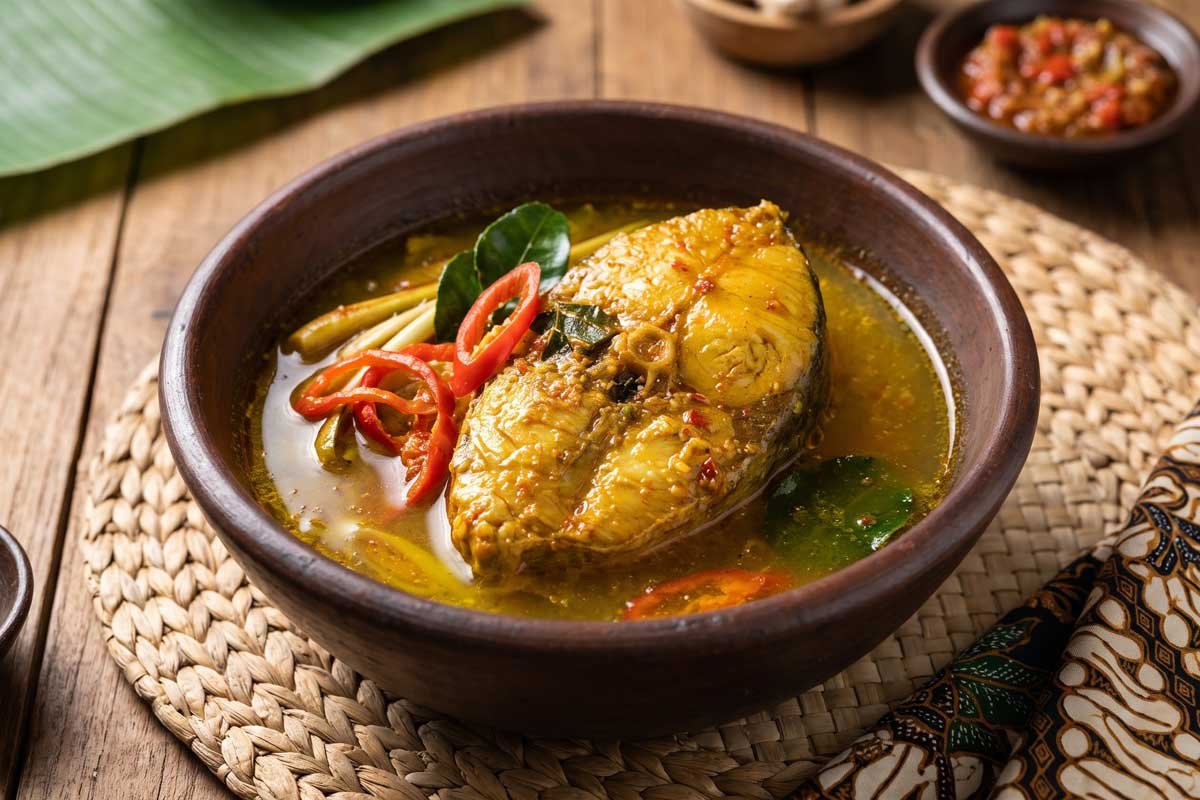
Singgang Sumbawa is a vibrant, golden-yellow fish soup from West Nusa Tenggara that skips coconut milk entirely. The Singgang Sumbawa recipe builds its body from mackerel tuna, tangy tamarind, earthy turmeric, and toasted candlenuts. This coastal dish is bright, savory, and lightly thickened, offering a refreshing alternative to heavy stews while remaining deeply satisfying and easy to prepare at home.
Discover the authentic Singgang Sumbawa recipe that delivers a bright, tangy, and coconut-free tuna soup experience in under 35 minutes. If you assume that every great Indonesian stew relies on rich coconut milk, Singgang Sumbawa will happily prove you wrong. Coming straight from the coastal kitchens of Sumbawa Island in West Nusa Tenggara, this vibrant, golden-yellow fish soup skips the coconut milk completely. Instead, it builds its body from just a handful of fresh ingredients: meaty mackerel tuna (ikan tongkol), tangy tamarind, earthy turmeric, toasted candlenuts, and a lively kick of red chilies.
In under 35 minutes, you get a broth that is bright, savory, lightly thickened, and deeply refreshing. It is the kind of everyday coastal comfort food that wakes up your palate immediately—and because it requires no obscure fermented pastes or specialty equipment, it is one of the easiest Eastern Indonesian dishes to master in a Western kitchen.
The History and Cultural Roots of Singgang Sumbawa
Sumbawa Island (Tana Samawa) sits in the eastern half of the Indonesian archipelago, bordered by the Flores Sea to the north and the Indian Ocean to the south. With miles of rugged coastline and abundant pelagic fish like mackerel tuna, skipjack, and snapper, fishing has anchored the Samawa way of life for centuries.
According to Indonesian culinary records—including the Ensiklopedia Kuliner Nusantara and regional heritage studies from West Nusa Tenggara—Singgang (often spelled Singang in the local Samawa dialect) evolved as a practical, everyday fishermen’s meal. In a warm, sun-drenched coastal climate where fresh fish had to be cooked quickly before spoiling, local cooks turned to two natural ingredients that grew abundantly inland: tamarind (asam jawa) and turmeric (kunyit). Both ingredients served a dual purpose—they neutralized any strong fishy odor (amis) while acting as natural preservatives and digestive aids.
Historically, Sumbawa’s maritime trade links with the Makassar and Bugis kingdoms of South Sulawesi, as well as Malay seafarers, also shaped the dish. You can see this shared seafaring heritage across the archipelago: from Makassar’s Pallumara to Malaysia’s Ikan Singgang. Yet Sumbawa’s version carved out its own distinct identity by incorporating candlenuts (kemiri) into the spice paste, giving the broth a subtle, silky richness that sets it apart from clearer coastal fish soups.

The Name and Culinary Philosophy
The word Singgang (or Singang) is rooted in Austronesian maritime culinary traditions, traditionally referring to a simple, bright, acid-forward fish stew simmered in water with aromatics rather than coconut milk.
Philosophically, Singgang Sumbawa celebrates restraint and freshness. In Samawa cooking, when you have genuinely fresh fish, you do not bury it under twenty dried spices or heavy sauces. Instead, the dish balances three core sensations:
- Asam (Sour): From tamarind, which cuts through the natural oils of tuna and keeps the broth crisp.
- Gurih (Savory): From sautéed shallots, garlic, and ground candlenuts, which round out the acidity.
- Pedas (Spicy): From red chilies and bird’s eye chilies, adding warmth without overpowering the delicate sweetness of the fish.
Singgang Sumbawa (Sumbawa Tangy Turmeric & Tamarind Tuna Soup)
A bright, coconut-free Eastern Indonesian fish soup from Sumbawa made with meaty mackerel tuna simmered in a golden, tangy broth of tamarind, fresh turmeric, toasted candlenuts, shallots, and chilies. Ready in 30 minutes.
Ingredients
Instruction
- Prepare the Spice Paste: Grind the candlenuts, fresh turmeric, red chilies, bird’s eye chilies, and garlic in a mortar and pestle or small food processor until smooth. Add 1 tablespoon of water if needed to help blend.
- Sauté the Aromatics: Heat 2 tablespoons of cooking oil in a medium pot or deep skillet over medium heat. Add the thinly sliced shallots and the ground spice paste. Sauté for 3–4 minutes, stirring constantly, until the shallots soften and the paste smells deeply fragrant and no longer raw.
- Add Tamarind & Fish: Pour in the 1 tablespoon of tamarind water and gently place the fish pieces into the pot. Turn the fish carefully to coat it in the golden spice paste and cook for 2–3 minutes until the exterior of the fish turns opaque.
- Simmer the Broth: Pour in the 400 ml of water and add 1 teaspoon of salt. Bring to a gentle simmer over medium-low heat and cook uncovered for 8–10 minutes until the fish is cooked through, tender, and has absorbed the tangy, spiced broth.
- Taste & Serve: Taste the broth and adjust the salt or tamarind if desired. Ladle the fish and golden soup into bowls and serve immediately with hot steamed white rice.
Notes
- Handle the Fish Gently: Once the fish is in the pot, avoid vigorous stirring so the steaks stay intact. Spoon the broth over the fish instead.
- No Coconut Milk Needed: The subtle richness in this broth comes entirely from the ground candlenuts (kemiri). Don’t skip them—if you don’t have candlenuts, macadamia nuts are the closest match.
- Candlenut Safety: If using authentic Indonesian candlenuts, always dry-toast them for 2 minutes or make sure the spice paste is thoroughly sautéed before adding water—never eat raw candlenuts.
- Adjusting the Sourness & Heat: Tamarind pastes vary in concentration. Start with 1 tablespoon, taste the broth near the end, and add an extra splash of tamarind water or lime juice if you prefer a sharper tang. For a milder soup, remove the seeds from the chilies or omit the bird’s eye chilies.
- Best Enjoyed Fresh: Like most coastal fish soups, Singgang Sumbawa tastes brightest on the day it is made, though leftovers can be refrigerated for up to 2 days and reheated gently over low heat.
What Does Singgang Sumbawa Taste Like?
If you are trying to imagine your first spoonful before cooking, think of Singgang Sumbawa as a bright, savory, golden-yellow fish broth with a gentle nutty body.
- Tangy & Refreshing: The tamarind gives the soup a clean, fruity sourness—more mellow and complex than lemon juice, and never harshly vinegary.
- Earthy & Aromatic: Fresh turmeric turns the broth a brilliant marigold yellow while adding a warm, peppery earthiness.
- Lightly Creamy (Without Dairy or Coconut): Four ground candlenuts emulsify into the broth as it simmers, giving the soup a velvety mouthfeel while keeping it remarkably light.
- Meaty & Satisfying: Mackerel tuna (ikan tongkol) has a firm, steak-like texture that holds its shape in the simmering broth and soaks up the tangy spice paste like a sponge.
- Customizable Heat: With two large red chilies and three bird’s eye chilies, the broth has a brisk, invigorating warmth that lingers pleasantly at the back of the throat.
How It Is Traditionally Served in Indonesia
In Sumbawa, Singgang is a staple of the midday meal (makan siang), especially on hot days when heavy, coconut-rich dishes feel too rich. It is almost always served piping hot in a deep bowl alongside a generous plate of steamed white rice (nasi putih). Diners flake the tender fish onto their rice and ladle plenty of the golden broth over the top.
At a traditional Samawa table, Singgang is frequently paired with:
- Pelu Sepat Lengak or Ayam Bakar Sumbawa: The tangy, light broth of Singgang acts as a palate cleanser alongside richer, smoky grilled dishes.
- Fresh Raw Vegetables (Lalapan) or Blanched Greens: Sliced cucumber, cabbage, or plecing kangkung (water spinach) add crisp texture.
- Extra Sambal: For heat lovers, a side of fresh chili relish (sambal tomat or sambal terasi) is always within reach.
When to Serve It
Because it goes from chopping board to dinner table in roughly 30 minutes, Singgang Sumbawa is a phenomenal weeknight dinner. It is also an ideal dish when you are craving something light, restorative, and warming—whether you are recovering from a cold, looking for a high-protein post-workout meal, or hosting a Southeast Asian dinner party where you need a bright soup to balance fried or grilled mains.
Can Singgang Sumbawa Be Adapted Internationally?
Yes. Unlike many regional Indonesian dishes that require hard-to-find herbs like daun salam, keluak, or fresh kecombrang, Singgang Sumbawa relies on a minimalist list of nine core ingredients. Nearly every single item is available at a standard Western supermarket, and the one or two specialty items (like candlenuts and tamarind) have seamless, widely available substitutes.

Also check out:
Nasi Goreng Ijo Recipe: Indonesian Green Fried Rice
Ingredient Substitutions for Western Supermarkets
If you do not live near an Asian grocery store, use this table to shop at any regular supermarket without compromising the authentic flavor of Sumbawa:
| Authentic Indonesian Ingredient | Role in the Dish | Best Western Supermarket Substitute |
|---|---|---|
| Ikan Tongkol (Mackerel tuna / Little tunny) | Firm, meaty fish that holds its shape | Fresh mackerel, bonito, skipjack/albacore tuna steaks, mahimahi, or firm white fish (like cod or halibut) cut into chunks. |
| Kemiri (Candlenuts) | Lightly thickens the broth & adds nuttiness | Macadamia nuts (1:1 ratio) or raw cashews. |
| Air Asam Jawa (Tamarind water) | Fruity, mellow sourness | 1 tbsp tamarind paste/concentrate dissolved in 2 tbsp warm water. In a pinch, use 1½ tbsp fresh lime juice + a tiny pinch of brown sugar. |
| Kunyit Segar (Fresh turmeric root) | Golden color & earthy warmth | 1 tsp ground turmeric (add directly to the spice paste). |
| Bawang Merah (Indonesian shallots) | Sweet, aromatic base | 2–3 medium French shallots or ½ small red onion, thinly sliced. |
| Cabai Merah (Large red chilies) | Mild heat & color | Fresno chilies, Holland red chilies, or red jalapeños. |
| Cabai Rawit (Bird’s eye chilies) | Sharp, punchy heat | Thai chilies, serrano peppers, or ½ tsp crushed red pepper flakes. |
Global Culinary Cousins: Similar Dishes Around the World
Singgang Sumbawa belongs to a beloved family of sour-and-savory seafood soups found across Southeast Asia and beyond:
- Makassar Pallumara (South Sulawesi, Indonesia): Singgang’s closest Indonesian relative. Both feature tuna or milkfish simmered in turmeric and tamarind, though Pallumara typically skips candlenuts for a thinner, clearer broth and often adds whole chilies and fried shallots at the end.
- Malaysian Ikan Singgang (Terengganu & Kelantan): Shares the exact same name and coastal heritage, but the Malaysian version is usually a clear, oil-free poached fish soup flavored with galangal, garlic, and asam gelugor (dried garcinia slices) rather than sautéed turmeric and candlenuts.
- Filipino Sinigang na Isda: Another iconic tamarind-based fish soup. Sinigang leans heavily into vegetables (radish, okra, water spinach) and a much sharper, soupier sourness, whereas Singgang Sumbawa is more concentrated, golden, and spice-paste driven.
- Thai Gaeng Som: Thailand’s famous sour orange curry shares the tamarind, chili, and fish DNA, though Gaeng Som uses shrimp paste (kapi) and tends to be significantly fierier and more pungent.
Nutritional Overview, Health Benefits, and Precautions
Because Singgang Sumbawa contains zero coconut milk and minimal oil, it is one of the healthiest traditional dishes in the Indonesian repertoire. A single serving (based on 4 servings) contains approximately 265 kcal, 31g of protein, 11g of fat, and 8g of carbohydrates.
Key Health Benefits
- High-Protein, Omega-3 Rich: Mackerel tuna (ikan tongkol) is packed with lean protein, heart-healthy omega-3 fatty acids, vitamin D, and vitamin B12.
- Anti-Inflammatory & Antioxidant: Fresh turmeric (curcumin) combined with healthy fats from the fish and candlenuts supports anti-inflammatory pathways, while tamarind is rich in polyphenols and vitamin C.
- Light & Easy to Digest: Without heavy creams or coconut milk, the broth is gentle on the stomach and naturally gluten-free and dairy-free.
Precautions to Keep in Mind
- Fish Freshness (Histamine Safety): Tuna and mackerel belong to the Scombridae family. Always buy very fresh (or properly flash-frozen) fish and keep it well-chilled until cooking to avoid scombroid/histamine buildup.
- Mercury & Purines: Like all tuna varieties, mackerel tuna contains moderate levels of mercury and purines. Enjoy it as part of a varied diet, and those with gout or pregnancy-related mercury guidelines may prefer substituting wild salmon, cod, or tilapia.
- Allergens & Acidity: This dish contains fish and tree nuts (candlenuts/macadamias). If you have acid reflux, you can slightly reduce the tamarind and omit the bird’s eye chilies.
Estimated Cost Breakdown (Western Supermarket)
Singgang Sumbawa is remarkably budget-friendly—especially if you use fresh mackerel or frozen tuna steaks. Here is a realistic cost estimate for 4 servings in the US or Europe:
- 500 g (1.1 lbs) fresh mackerel, tuna steaks, or firm fish: $8.00 – $12.00
- Fresh aromatics (shallots, garlic, red chilies, bird’s eye chilies, fresh turmeric): $3.50 – $4.50
- Tamarind paste, candlenuts/macadamias, salt & cooking oil: $2.00 – $3.00 (prorated)
- Total Estimated Cost: $13.50 – $19.50 (roughly $3.40 – $4.90 per serving).
FAQ Seputar Singgang Sumbawa
What is the main protein in the Singgang Sumbawa recipe?
The traditional recipe uses mackerel tuna (ikan tongkol), which has a firm, steak-like texture that holds its shape in the broth.
Can I substitute candlenuts in this dish?
Yes, you can use macadamia nuts in a 1:1 ratio or raw cashews to achieve a similar nutty flavor and slight thickening effect.
Is Singgang Sumbawa suitable for a low-fat diet?
Yes, it contains zero coconut milk and minimal oil, making it a high-protein, low-fat option compared to many other Indonesian stews.