- Kue Kacang is a shortbread-style cookie that relies on high fat content for its signature crumbly texture.
- The history of Kue Kacang blends Portuguese, Dutch, and Chinese-Indonesian culinary influences.
- Achieving the perfect melt-in-your-mouth texture requires precise control of cornstarch and butter ratios.
- Kue Kacang is a central element of Indonesian hospitality during major festive celebrations.
Discover the secret to the perfect Kue Kacang, a masterpiece of Indonesian peanut cookies that defines the melt-in-your-mouth texture. This guide explores the shortbread recipe and festive baking traditions behind this iconic treat.
Bite into a piece of Kue Kacang (Indonesian Melt-in-Your-Mouth Peanut Cookie), and you experience a masterclass in textural contrast. The journey begins with a delicate, crumbly exterior that instantly dissolves on the tongue, yielding to the deep, roasted earthiness of peanuts and the rich, luxurious mouthfeel of butter. Unlike the chewy, molasses-heavy peanut cookies found in Western bakeries, this Indonesian delicacy operates on the principles of classic shortbread, relying on a high fat-to-flour ratio and zero chemical leavening to achieve its signature sandy, melt-away texture.
For the global palate, Kue Kacang perfectly bridges the gap between a savory nut snack and a sweet pastry. It is an extraordinary ambassador of Indonesian culinary ingenuity, transforming humble ingredients into a sophisticated, universally appealing treat. (Authentic Indonesian Nastar Recipe: Melt-in-Your-Mouth Pineapple Tarts – Kue Kacang).
The Historical Tapestry: Where East Meets West
To understand the origins of Kue Kacang, one must look at the complex historical crossroads of the Indonesian archipelago. The peanut (Arachis hypogaea) is not native to Southeast Asia. It was introduced to the region in the 16th century by Portuguese and Spanish traders who brought the legume from South America via their established trade routes to the Moluccas and eventually Java. [Peanut – Wikipedia]
However, the technique of baking this legume into a delicate, buttery biscuit is a direct inheritance from the Dutch colonial era in the Dutch East Indies. Prior to European influence, indigenous Indonesian sweets primarily utilized rice flour, coconut milk, and palm sugar, typically resulting in steamed or sticky cakes (jajan pasar). The Dutch introduced wheat flour, butter, and the concept of baking in ovens. They also brought with them a love for pindakaas (peanut butter).
Simultaneously, the Chinese-Indonesian (Peranakan) community played a pivotal role in the popularization of the peanut cookie. In Chinese culture, peanuts symbolize longevity, vitality, and multiplied wealth. For generations, Chinese descendants in Indonesia have baked peanut cookies to celebrate the Lunar New Year (Imlek). Over centuries, these three distinct influences—South American agriculture, European baking techniques, and Chinese cultural symbolism—fused perfectly into Kue Kacang.

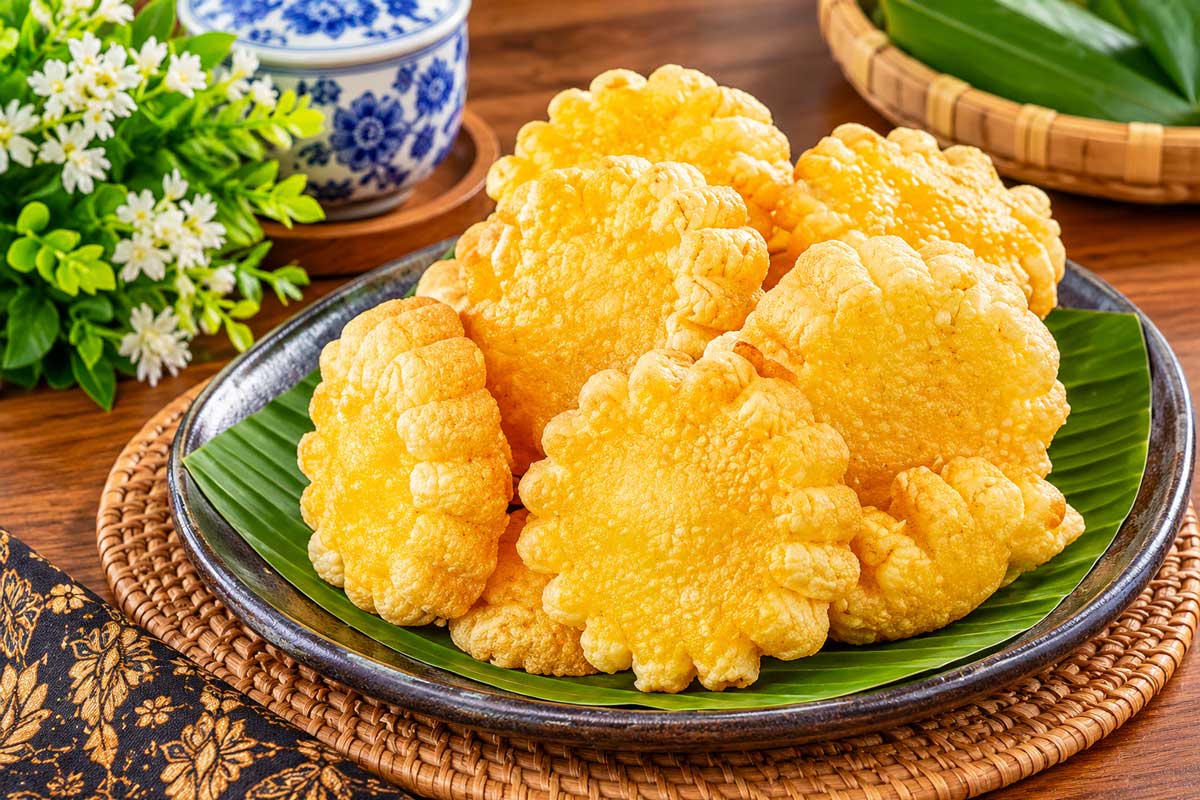
Authentic Indonesian Kue Kacang (Melt-in-Your-Mouth Peanut Cookies)
Ingredients
Equipment
Instruction
- Cream the Fats and Sugar: In a large mixing bowl, combine the softened butter, powdered sugar, and creamy peanut butter. Use a whisk or an electric mixer on medium speed to beat the mixture until it is smooth, creamy, and pale in color.
- Add the Yolk: Add the egg yolk to the creamed butter mixture. Beat gently just until the yolk is fully incorporated. Do not overmix.
- Incorporate the Dry Ingredients: Add the all-purpose flour, cornstarch, and the finely ground roasted peanuts into the bowl. Switch to a spatula or use your hands to gently fold and knead the mixture until it forms a cohesive, smooth dough. The dough should feel soft but not sticky.
- Roll and Cut: Preheat your oven to 170°C (340°F). Lightly grease your baking sheet with margarine or line it with parchment paper. Place the dough on a flat, clean surface. Using a rolling pin, roll the dough out to an even thickness of about 0.5 cm (1/4 inch). Use cookie cutters to stamp out your desired shapes.
- Glaze and Bake: Carefully transfer the cut cookies to the prepared baking sheet, leaving a small gap between each. Using a pastry brush, lightly brush the top of each cookie with melted margarine to create a subtle glaze. Place the baking sheet in the preheated oven.
- Bake: Bake at 170°C (340°F) for 20 to 25 minutes, or until the cookies are baked through and the edges turn a faint golden brown.
- Cool and Store: Remove from the oven. The cookies will be extremely fragile while hot. Allow them to rest on the baking sheet for at least 10 minutes before transferring them to a wire rack to cool completely. Once completely cooled, store in an airtight container.
Notes
- Glazing Alternative: While this traditional recipe specifically uses margarine for the top glaze, modern Indonesian bakers often use an egg yolk wash (1 egg yolk mixed with 1 tsp of oil and a drop of yellow food coloring) to achieve a bright, glossy, golden finish.
- Peanut Texture: When grinding the roasted peanuts, ensure they are fine but stop before they turn into paste. A slightly coarse grind adds a wonderful micro-crunch to the finished cookie.
- Storage: These cookies will keep beautifully at room temperature in an airtight container for up to 3 weeks, making them ideal for shipping or preparing ahead of holidays.
Cultural Philosophy and Social Significance
In Indonesia, Kue Kacang is far more than a midday snack; it is an edible emblem of hospitality and unity. It takes center stage during major cultural and religious celebrations, most notably Lebaran (Eid al-Fitr), Imlek (Lunar New Year), and Christmas.
During these festive periods, Indonesian households engage in silaturahmi—the tradition of visiting relatives and neighbors to strengthen communal bonds. Coffee tables are meticulously arranged with crystal or glass jars filled with kue kering (dry cookies), with Kue Kacang almost always present alongside Nastar (pineapple tarts) and Kastengel (cheese sticks). The philosophy of the cookie lies in its service: serving a labor-intensive, rich pastry reflects the host’s respect and joy in welcoming guests. Its sweet and savory balance serves as a metaphor for harmonizing different aspects of life and community.
Global Relatives: A Cross-Cultural Comparison
While peanut cookies exist globally, the Indonesian adaptation possesses distinct structural and flavor differences shaped by local preferences and historical baking constraints.
Nutritional Profile and Mindful Consumption
Kue Kacang is an energy-dense treat that offers a unique combination of macronutrients. The inclusion of roasted ground peanuts and peanut butter provides a modest boost of plant-based protein and heart-healthy monounsaturated fats. Peanuts are naturally rich in niacin (Vitamin B3), folate, and antioxidants like resveratrol, which support cellular health and energy metabolism.
However, because the recipe relies heavily on butter and simple carbohydrates (powdered sugar and refined wheat flour), it is a calorie-rich food.
Dietary Considerations:
- Growing Children & Active Individuals: The high caloric density and combination of fats and carbohydrates make this an excellent, quick-energy snack for children and active adults.
- Mature Adults & Sedentary Lifestyles: Due to the saturated fat content from the butter and the glycemic load of the sugar, moderation is advised for older individuals or those monitoring their cholesterol and blood sugar levels.
- Allergen Warning: This product contains potent allergens, specifically peanuts, dairy, gluten, and eggs.
- Mindful Enjoyment: Consuming 2 to 3 pieces alongside an unsweetened beverage provides the perfect sensory satisfaction without excessive caloric intake. Overindulgence may lead to sluggishness due to the heavy butter and sugar content.
Adapting Kue Kacang for the Global Kitchen
To make Kue Kacang accessible for an international audience, ingredient substitutions are straightforward and often yield spectacular results.
- The Peanut Component: The recipe calls for both peanut butter and ground roasted peanuts. For the peanut butter, use a commercial creamy brand rather than a 100% natural, oil-separated variety. Natural peanut butters can release too much oil during baking, causing the cookies to spread and lose their intricate shapes. The ground peanuts should be roasted unsalted, blitzed in a food processor until they resemble coarse sand.
- Butter vs. Margarine: While Indonesian recipes often mix margarine and butter for stability in tropical heat, international bakers in cooler climates can use 100% European-style butter (82% butterfat) for a richer, more luxurious melt.
- Flour and Starch: Standard all-purpose flour (plain flour) works perfectly. The secret to the melt-in-the-mouth texture is the cornstarch (maizena), which inhibits gluten formation. For a gluten-free version, substitute the wheat flour with a high-quality 1:1 gluten-free baking blend containing xanthan gum.
- Vegan Adaptation: Substitute the butter with a high-quality vegan block butter and omit the egg yolk. Since the egg yolk acts as a binder, you may need to add 1-2 tablespoons of plant milk to bring the dough together.
Serving Suggestions and International Travel Viability
In Indonesia, Kue Kacang is traditionally served with Kopi Tubruk (unfiltered robusta coffee) or warm, unsweetened jasmine tea. The slight bitterness of the beverage cuts through the richness of the cookie, cleansing the palate for the next bite.
For an international audience, this cookie pairs beautifully with an Earl Grey or an Oolong tea. It also makes an exceptional accompaniment to an espresso or a cappuccino, where the roasted notes of the coffee echo the roasted peanuts.
Travel and Gifting: Kue Kacang is an exceptionally travel-friendly bake. Because it contains very little moisture and no perishable fillings, it boasts a long shelf life. When packed tightly in an airtight tin, separated by layers of parchment paper, these cookies can easily survive international shipping or long-haul flights. They are the perfect candidate for international holiday cookie swaps, offering a unique Southeast Asian flair to standard festive assortments.
Estimated Cost of Production
Creating Kue Kacang at home is remarkably economical, yielding a large batch suitable for gifting. Below is an estimated cost breakdown based on average international supermarket prices (in USD) for a yield of 800 grams:
- Butter (150g): $1.80
- Peanut Butter (100g): $0.70
- Powdered Sugar (75g): $0.30
- Egg (1 yolk): $0.20
- All-Purpose Flour (300g): $0.40
- Cornstarch (2 tbsp): $0.15
- Roasted Peanuts (50g): $0.45
- Margarine for glazing/greasing: $0.20
- Total Estimated Cost: $4.20 USD
For roughly $4.20, you produce 800 grams of premium, artisanal cookies—easily filling two large presentation jars, making it a high-value culinary project.