A soft, buttery Indonesian snack made with mashed potatoes, coconut milk, and a touch of vanilla—sweet, rich, and comforting with every bite.
To Indonesians, Kue Lumpur is more than a sweet treat. It’s a piece of heritage. This golden-hued, tender cake — usually served in small, round portions — evokes nostalgia and comfort. You’ll find it at family gatherings, festive occasions, or sold by friendly vendors at traditional markets. Its name literally means “mud cake,” referring not to its ingredients, but its smooth, custard-like texture that melts in your mouth like soft earth after rain.
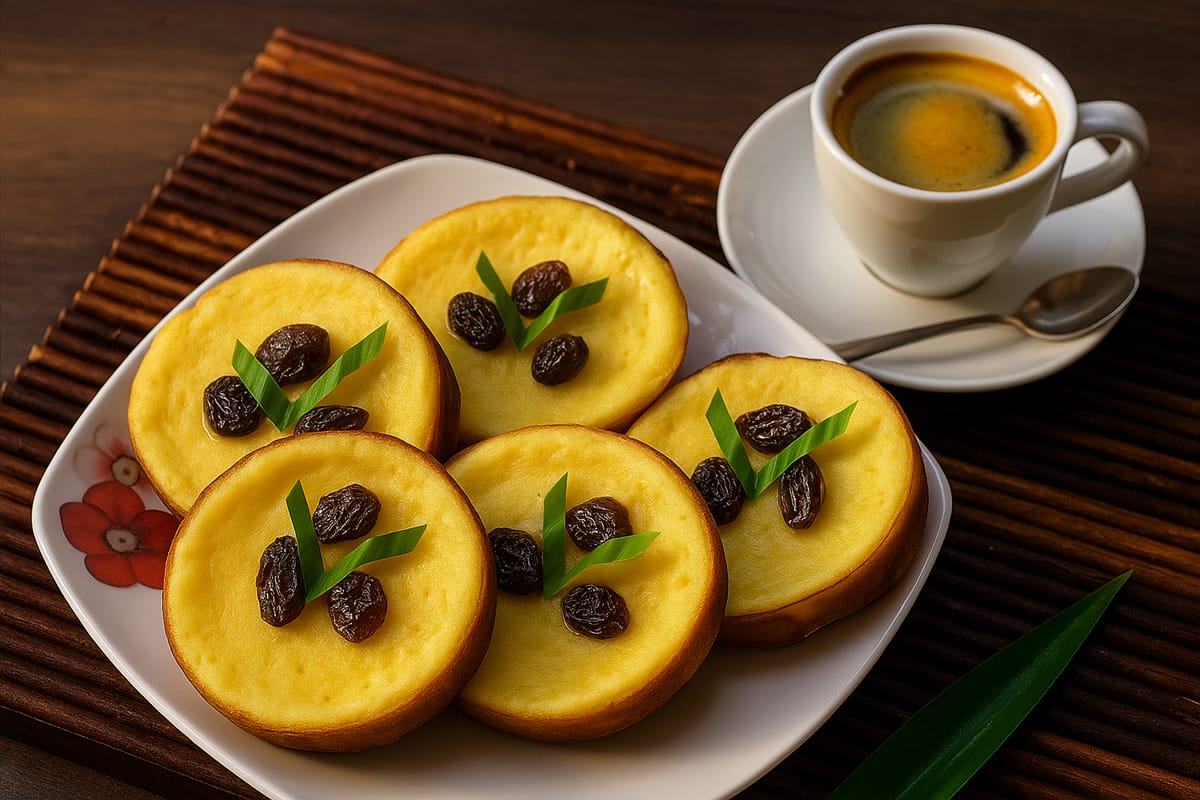
Kue Lumpur Kentang – Indonesian Potato Coconut Pudding Cakes
Ingredients
Instruction
- Prepare the potatoesPeel and cut the kentang into chunks. Steam or boil until very soft. Mash until smooth and lump-free. Set aside.
- Heat the coconut milk mixtureIn a small saucepan, combine santan kelapa, mentega, and garam. Heat over medium flame until it just begins to simmer. Remove from heat and let cool to room temperature.
- Blend the baseIn a blender, combine the mashed kentang and cooled coconut milk mixture. Blend until completely smooth and creamy.
- Mix the batterIn a large bowl, whisk telur ayam and gula pasir just until the sugar dissolves (no need to make it frothy).Pour in the blended potato-coconut mixture and stir well. Add tepung terigu and vanili bubuk, whisking until the batter is smooth and free of lumps.(Tip: you can strain the batter through a fine sieve for extra smoothness.)
- Cook the cakesHeat a kue lumpur mold or a nonstick muffin pan on low-medium heat (you can use the stovetop or oven at 350°F / 175°C).Lightly brush the mold with mentega. Pour the batter until about ¾ full. Cover (if using stovetop) and cook until the surface sets and the edges pull away slightly — about 10–12 minutes.If desired, place a kismis or sliver of kelapa muda on top halfway through cooking.
- ServeRemove from mold and cool slightly. Serve warm or at room temperature with tea or coffee.
Notes
- Coconut Milk (Santan Kelapa): Use full-fat canned coconut milk for the best flavor. Avoid “lite” versions; they’ll make the cake less rich.
- Potatoes: Russet or Yukon Gold are ideal for their fluffy texture. Sweet potatoes can be used for a different flavor.
- Cooking method: Traditionally, these are made in round molds on the stovetop, but you can use a muffin pan in the oven — just bake at 350°F (175°C) for about 20 minutes until set.
- Butter vs. Margarine: Either works, but real butter gives a better aroma.
- Flavor twists: Add a few drops of pandan or vanilla extract for a Southeast Asian flair.
- Storage: Keep in an airtight container for up to 2 days at room temperature, or refrigerate and reheat gently before serving.
A Journey Through Time: Portuguese Roots and Indonesian Reinvention
Like many Indonesian dishes, Kue Lumpur carries a fascinating story of cultural blending.
Historical records suggest that the cake’s ancestors arrived with Portuguese traders during the 16th century. The Portuguese, who colonized parts of the Indonesian archipelago, brought their famous Pastel de Nata — a custard tart made from milk, eggs, and sugar, encased in pastry.
But tropical Indonesia had its own set of ingredients. Milk was scarce, yet coconut milk was abundant. Wheat flour was precious, but kentang (potatoes) were locally available. So local cooks, inspired by the Portuguese custard, reimagined it using native produce. The result was softer, creamier, and more fragrant — a new dessert that carried the soul of both worlds.
Over time, Kue Lumpur spread across the islands, adapting to regional tastes:

- Betawi (Jakarta) versions use more coconut milk for a richer flavor.
- Surabaya’s style adds toppings like raisins and strips of kelapa muda (young coconut).
- Bandung variations feature pandan essence or grated cheese for a modern twist.
Originally reserved for noble families and traditional ceremonies, the cake eventually became a people’s favorite — found in markets, home kitchens, and even modern cafés that celebrate Indonesian heritage through contemporary plating.
The Meaning Behind the Sweetness
In Indonesian tradition, food often carries symbolic meaning — and Kue Lumpur is no exception.
Its soft texture represents kindness and warmth, while its golden-yellow color symbolizes prosperity and happiness. The round shape hints at unity and togetherness, making it a fitting treat for family celebrations or community gatherings.
To this day, serving Kue Lumpur often means more than offering dessert — it’s a gesture of affection, a quiet way to say, “You are welcome here.”
Flavor Philosophy: What Does Kue Lumpur Taste Like?
Imagine the creaminess of custard meeting the heartiness of mashed potatoes, kissed by the sweetness of coconut and a hint of vanilla.
That’s Kue Lumpur — a dessert that’s rich yet light, sweet but balanced with a savory note from coconut milk and butter.
If you love:
- Crème brûlée for its custardy texture,
- Rice pudding for its comfort factor, or
- Madeleines for their buttery softness —
then you’ll instantly connect with this cake.
Its charm lies in its simplicity. There’s no elaborate frosting or complicated layering. Each bite offers a smooth, melt-in-your-mouth experience that feels both humble and luxurious.
How It’s Served in Indonesia
You’ll often find Kue Lumpur displayed in small molds at street-side stalls, warm from the griddle, sometimes topped with a raisin or a sliver of young coconut. It’s eaten fresh — sometimes with tea or black coffee in the morning, sometimes as an afternoon snack.

Because it’s a kue basah (a “wet” cake with high moisture content), it’s meant to be enjoyed within a day or two. That ephemeral quality makes it even more special — it’s the kind of dessert that invites you to pause and savor the moment.
Modern Context: Connecting East and West
For Western cooks, Kue Lumpur offers an accessible entry point into Indonesian home baking. Unlike layered cakes or steamed puddings that require specific tools, this one is simple and forgiving.
You can make it in:
- A muffin tin or mini tart molds,
- A nonstick skillet with a lid (the traditional way), or
- A baking dish for a shareable version.
Its texture resembles a cross between flan and pancake, but made with earthy, tropical ingredients. That makes it a perfect dessert for those curious about Asian sweets but looking for something familiar.
In Indonesia, it’s often cooked over charcoal or gas flame, covered to let the steam set the custard. But if you bake it in the oven, it still turns out beautifully — golden on the edges and silky in the center.
Making It at Home: Simplicity and Comfort
Difficulty: Easy to moderate
Time: About 45 minutes
Flavor payoff: Worth every second
Tips for a Foolproof Kue Lumpur:
- Use full-fat coconut milk. This keeps the cake creamy and flavorful.
- Mash the potatoes smoothly. Any lumps will affect the silky texture.
- Strain the batter. It ensures a perfectly even custard.
- Cook on low heat or bake at 350°F (175°C) — patience is key to avoid burning the base.
- Add a touch of vanilla or pandan extract for aroma.
Storing & Reheating
- Raw batter: Can be refrigerated for up to 24 hours. Stir well before use.
- Cooked cakes: Store in an airtight container in the fridge for up to 3 days.
- To serve again: Reheat gently in a microwave or toaster oven until just warm.
Best Pairings for Western Palates
- Fresh berries for a fruity contrast
- A scoop of vanilla ice cream
- Hot black tea or espresso
- Drizzle of maple syrup or caramel sauce for indulgence
Nutrition and Lifestyle Tips
- Comfort food: Definitely. Creamy, sweet, and soul-soothing.
- Gluten content: Contains wheat flour, but can be made gluten-free by swapping rice flour or almond flour.
- Vegan option: Replace eggs with silken tofu or a flaxseed mixture, and butter with coconut oil.
- Low-carb alternative: Use mashed cauliflower or pumpkin instead of potatoes.
- Fun fact: The natural fats from coconut milk provide healthy medium-chain triglycerides (MCTs), which help sustain energy levels.
So while it’s a dessert, it’s not entirely guilty pleasure — it’s comfort with a touch of nourishment.
Why It Resonates Internationally
Part of Kue Lumpur’s appeal lies in its universality. It embodies the spirit of Indonesian cooking — turning simple, local ingredients into something deeply satisfying. Yet its flavor profile translates beautifully to Western tastes: buttery, creamy, aromatic, and subtly sweet.

In many ways, Kue Lumpur bridges worlds. It’s a humble street snack that could easily sit beside your afternoon latte in a European café. It’s a reminder that culinary creativity often blooms where cultures meet — and that the softest foods sometimes carry the strongest histories.
Final Thoughts: From Tradition to Your Table
Kue Lumpur is not just an Indonesian dessert — it’s a conversation between past and present, between the tropics and the temperate. It tells a story of adaptation: of how colonial influences met local wisdom to create something new, tender, and enduring.
If you’ve never tried Indonesian baking before, let this be your first adventure. The recipe is approachable, the ingredients are familiar, and the reward is a cake that feels like a warm hug in edible form.
So, grab some potatoes, open a can of coconut milk, and let your kitchen smell like a little piece of Indonesia.
And when you take that first bite — creamy, fragrant, and lightly sweet — you might just understand why Indonesians hold Kue Lumpur close to their hearts.