A Childhood Memory That Stays Warm
Still in West Java, when I was a child, almost every day there were food vendors passing through our neighborhood. During the day, it was usually es campur, tahu gejrot, or bakso. But at night, the atmosphere changed. Vendors selling siomay, bakwan Malang, and one of my favorites—putu bambu—would appear.
The putu seller had a bicycle with a wooden cart attached to the back. What made him unique was the sound he made when steaming the cakes: tutttt… A loud whistle of steam announcing that fresh putu was ready. For us kids, that sound was a call to gather.
The cakes themselves were simple yet magical. The green dough was grainy, not smooth like pancakes, because it was made from coarse rice flour. Inside hid a treasure: molten palm sugar (gula merah). Bite into it, and the savory rice flour mixed with sweet syrupy sugar, topped with grated coconut—it was unforgettable. Looking back, the ingredients were humble. But the way they came together created something extraordinary.
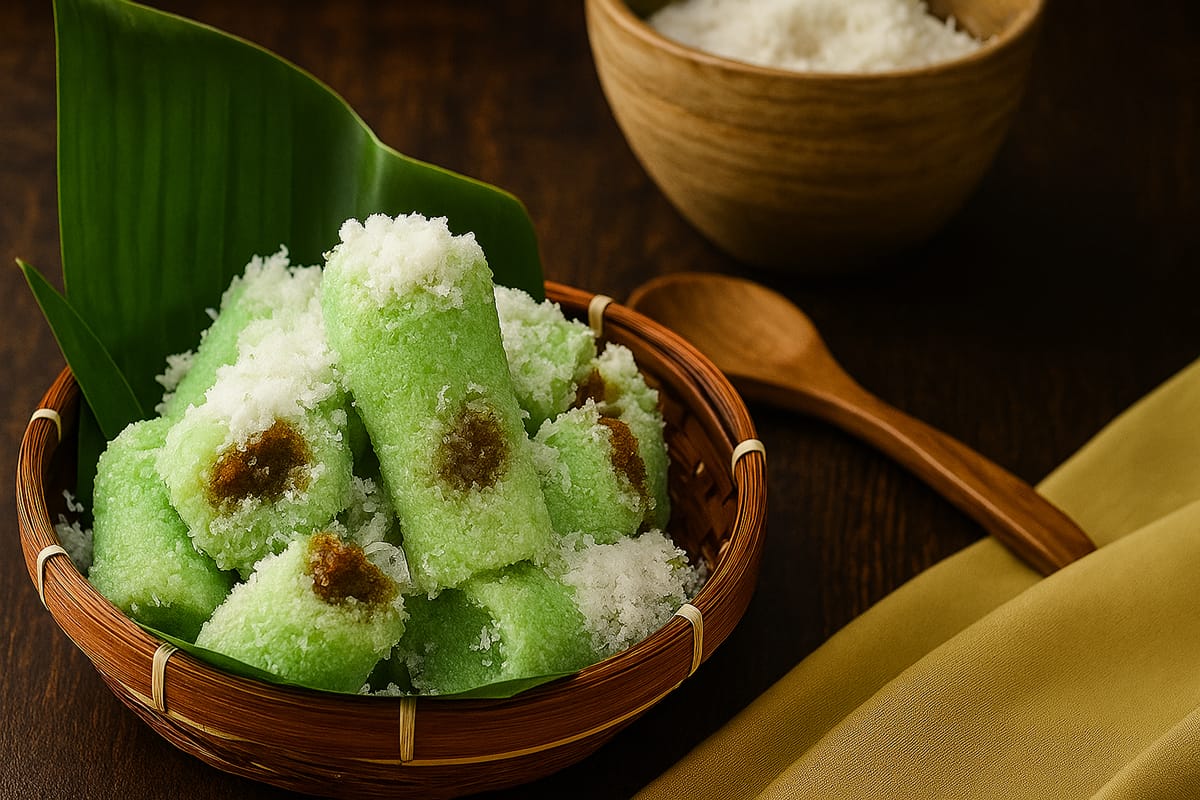
Putu Bambu Recipe: Indonesian Steamed Rice Cake
Ingredients
Instruction
- In a mixing bowl, combine rice flour, salt, and pandan extract.
- Slowly sprinkle water while mixing until the flour feels slightly damp but still crumbly, not sticky.
- Traditionally, the mixture is steamed inside small bamboo tubes. For a home kitchen, you can use silicone cupcake molds, stainless steel pudding molds, or even shot glasses lined with parchment paper.
- Place a thin layer of the rice flour mixture into the bottom of each mold.
- Add 1–2 teaspoons of grated palm sugar in the center.
- Cover with more rice flour mixture until filled, but do not pack tightly—keep it loose so steam can penetrate.
- Prepare a steamer with boiling water.
- Place molds inside and steam for 8–10 minutes, until the mixture is firm and releases a fragrant aroma.


- Gently remove the cakes from molds.
- Sprinkle generously with freshly grated coconut before serving.
Notes
- Palm Sugar Substitute: If palm sugar (gula aren) is hard to find, use dark brown sugar or muscovado sugar for a similar caramel flavor.
- Pandan Extract: Widely available in Asian grocery stores. If unavailable, vanilla or a few drops of coconut extract can work as alternatives.
- Coconut: Fresh grated coconut gives the best texture. In the US/EU, use unsweetened shredded coconut; lightly steam or moisten it with warm water to soften.
- Molds: Since bamboo tubes are not common in Western kitchens, use small heatproof cups, mini pudding molds, or silicone molds. To add a “bamboo effect,” wrap molds in parchment or banana leaf strips before steaming.
- Viral Serving Tip: Serve hot and let guests open the mold themselves—releasing the steam and aroma makes it a dramatic, share-worthy moment (perfect for TikTok/Instagram).
What Is Putu Bambu?
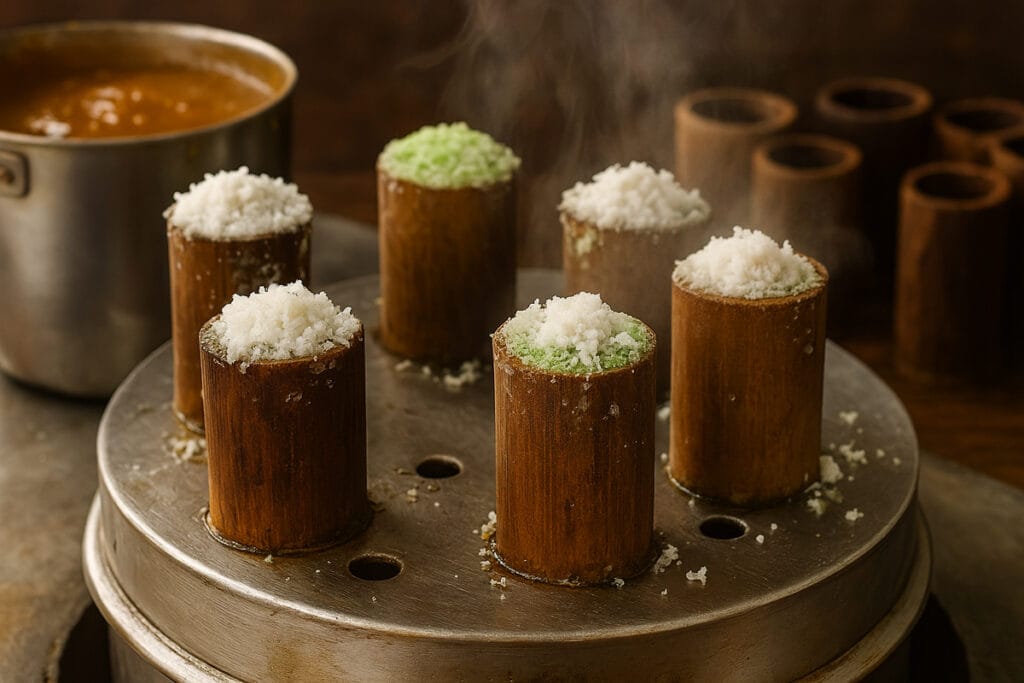
Putu Bambu, also called Putu Bumbung, is a traditional Indonesian steamed rice cake made from coarse rice flour filled with palm sugar and topped with grated coconut. What sets it apart is its unique cooking method: the batter is steamed inside small bamboo tubes, giving the cake its cylindrical shape and subtle smoky aroma.
In Indonesia, putu is not just food—it is an evening street performance. Vendors steam the cakes on the spot, and the sound of steam whistles becomes both a cooking method and marketing strategy. Children run out of their houses when they hear the sound, knowing fresh putu is on its way.
Is Putu Bambu Originally Indonesian?
The origins of putu can be traced back over 1,200 years, during the Ming Dynasty in China. At that time, a similar cake known as XianRoe Xiao Long was made from rice flour and mung beans, steamed in bamboo molds.

Through cultural exchanges and trade, this cake traveled across Southeast Asia. In Java, Indonesia, the cake evolved into what we now call putu. Historical texts such as the Serat Centhini (1814) mention puthu as a morning snack, often served alongside serabi. Over time, the filling shifted from mung beans to palm sugar, a locally abundant ingredient.
So while its roots may be influenced by Chinese culinary traditions, Putu Bambu has become a distinctly Indonesian creation, infused with local flavors, philosophy, and cultural meaning.
The Etymology of Putu
The word putu in Indonesian is derived from the Javanese term puthu, which comes from the older word puthon, meaning round or circular. This refers to the hollow bamboo tube (bumbung) traditionally used as the mold for steaming the cake.
Over time, the name spread across regions with slight variations:
- In Indonesia, it is called putu bumbung.
- In Bali, it is known as puthu bumbung.
- In the Philippines, through cultural links, it became puto bumbong, a Christmas specialty made with purple rice.
Interestingly, in Balinese culture, Putu is also a common name given to the first-born child in a family. Some believe this connection between the name and everyday people may have contributed to the association of “kue putu” as “the cake sold by Putu.”
This etymology shows how language, culture, and food are deeply connected—turning a simple rice cake into a story of history and tradition.
Putu Bambu in Java vs. Medan
There are generally two well-known versions in Indonesia:
- Putu Bambu (Java): Green-colored, thanks to pandan or food coloring. Soft, aromatic, and usually sold in the evenings.
- Putu Medan: White in color, often slightly larger and denser. The taste profile is similar, but its identity is tied to North Sumatra.
Though the shape looks the same—cylindrical and steamed in bamboo—the difference in color, regional traditions, and taste memories makes each version unique.
Other Variants and Cultural Symbolism
Beyond the well-known Javanese and Medan versions, there are other fascinating forms of putu across Indonesia. One of them is Putu Bugis, originating from South Sulawesi. Unlike the green or white putu, this variety is made with black glutinous rice flour and often served with grated coconut and chili sambal. Traditionally, it is sold only in the morning as a quick breakfast substitute.
Through the migration of Javanese and Bugis people, putu has also traveled beyond Indonesia. It became popular in neighboring countries such as Malaysia and Singapore, where variations are still enjoyed today.

Culturally, putu carries deep philosophical meaning in Javanese tradition. The process of patiently steaming the cake symbolizes endurance and mindfulness, while the careful preparation of ingredients reflects diligence and dedication. The cylindrical bamboo mold itself represents continuity and balance in life.
The harmonious blend of simple ingredients—rice flour, palm sugar, and coconut—embodies the idea of unity in diversity, a reflection of social harmony where differences coexist to create something greater. Thus, putu is not just a sweet snack; it is a living symbol of resilience, balance, and community spirit in Indonesian culture.
Cultural Significance and Philosophy
In Javanese culture, putu is more than a snack. Its making reflects patience and mindfulness. The batter must be carefully moistened, steamed with attention, and served hot.
The cylindrical bamboo shape symbolizes continuity and balance in life. The simple yet harmonious blend of ingredients—rice flour, palm sugar, and coconut—represents diversity united in one whole, echoing the cultural value of harmony within Indonesian society.
Even the sound of steaming putu carries meaning: a reminder of community, childhood, and togetherness.
Varieties of Putu in Indonesia
Indonesia is home to many variations of putu:
- Putu Bambu – The legendary street version, steamed in bamboo.
- Putu Cangkiri – Cup-shaped, made with glutinous rice, filled with coconut and sugar.
- Putu Mayang – Colorful, noodle-like cakes served with palm sugar coconut milk syrup.
- Putu Pesse – A favorite of former President B.J. Habibie, made from roasted glutinous rice flour, coconut, and sugar.
- Putu Ayu – Mini sponge-like cakes shaped like flowers, with grated coconut topping.
Each variation reflects local creativity and resources, proving how versatile and beloved the putu family is.
Health Benefits of Putu
Though considered a snack, putu has modest nutritional benefits:
- Rice flour provides gluten-free carbohydrates.
- Palm sugar contains minerals like iron and potassium, though it should still be enjoyed in moderation.
- Fresh coconut adds fiber and healthy fats.
It’s a dessert that balances indulgence with simplicity.
Serving Putu in the West
Can Putu Bambu be made and enjoyed in the United States, Europe, or other Western countries? Absolutely, but with some adaptations:

- Bamboo molds may be hard to find. Substitutes include small silicone molds, stainless steel pudding cups, or shot glasses lined with parchment.
- Palm sugar can be replaced with dark brown sugar or panela.
- Fresh coconut is rare; use frozen grated coconut from Asian groceries or rehydrated desiccated coconut.
- Steaming equipment can be replaced with a bamboo steamer, a stovetop steamer basket, or even an Instant Pot in steam mode.
The biggest challenge is replicating the theatrical aspect: the sound of steam from bamboo. While this may be difficult in a modern kitchen, creative chefs can replicate the experience with presentation—serving putu in mini bamboo cups, for example, to keep the traditional feel alive.
Similar Cakes Around the World
Interestingly, putu has cousins in other countries:
- Puto Bumbong (Philippines): Made with purple rice and coconut, steamed in bamboo.
- Kueh Tutu (Singapore): Rice flour cakes filled with coconut or peanut, steamed in small molds.
- Songpyeon (Korea): Half-moon rice cakes with sweet fillings, steamed on pine needles.
These parallels show how rice-based steamed cakes are a unifying culinary tradition across Asia, each adapted to local ingredients and culture.
Why Putu Bambu Still Matters
Putu Bambu is not just a cake—it is a cultural performance, a childhood memory, and a piece of living history. For Indonesians, it connects us to our roots. For international audiences, it offers a glimpse of Southeast Asia’s culinary richness.
Adapting it in Western kitchens may require substitutions, but the spirit of putu—the harmony of simple ingredients, the joy of steam and sound, and the warmth of community—can still be experienced anywhere.