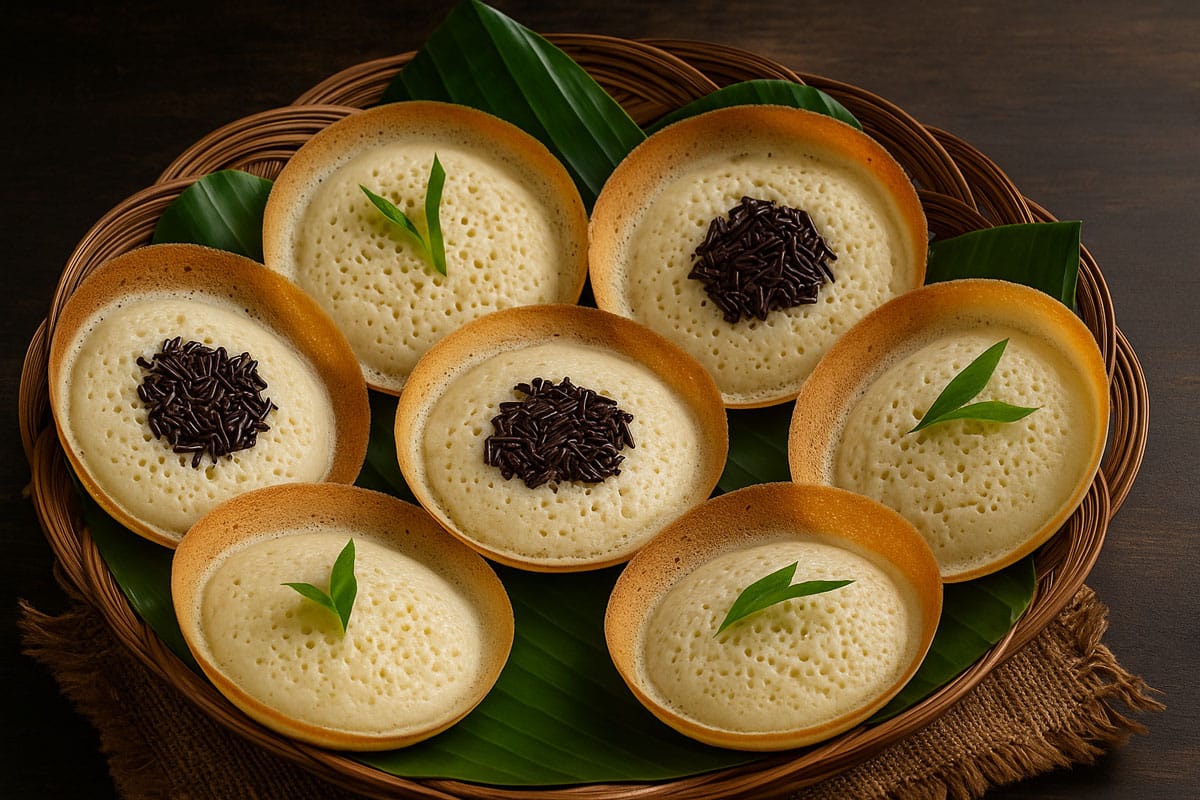
If you’ve ever wandered through a traditional Indonesian market in Java, you might have stumbled upon a golden, round, slightly chewy cake with a comforting coconut aroma. That, dear reader, is apem – a humble yet culturally rich treat that has been part of Javanese life for centuries.
Today, we’re going to dive deep into the world of Javanese baked apem – not just to learn how to make it (don’t worry, the detailed recipe will follow), but also to discover its origins, cultural meaning, and why it might just become your new favorite dessert for parties and gatherings.

Easy Indonesian Baked Rice Flour Fritters (Apem Panggang)
Ingredients
Instruction
- Prepare the Palm Sugar SyrupIn a small saucepan, combine palm sugar with 3 tablespoons water. Heat over medium until melted. Strain to remove any impurities and let cool slightly.
- Make the BatterIn a large mixing bowl, combine rice flour and instant yeast. Add coconut water and the palm sugar syrup, whisking until smooth. Beat in eggs until the batter is lump-free. The texture should be pourable, similar to pancake batter.
- Ferment the BatterCover the bowl with a clean cloth and let rest in a warm spot for about 1 hour, or until the batter is slightly bubbly and airy.
- Cook the FrittersHeat a nonstick mini pancake pan, small cast-iron skillet, or serabi pan over low-medium heat. Lightly brush with oil. Pour about ¼ cup batter into each mold. Cover with a lid and cook for 3–5 minutes, until the top is set and the bottom turns golden brown. Transfer to a plate and repeat with the remaining batter.
- Make the Sweet Coconut Milk SauceIn a saucepan, combine coconut milk, palm sugar, granulated sugar, pandan leaf, and salt. Simmer gently over low heat, stirring frequently, until the sugar dissolves and the sauce slightly thickens. Strain if desired.
- ServeServe the warm fritters with the sweet coconut milk sauce drizzled on top or on the side for dipping.
Notes
- Palm Sugar (Gula Merah): In the U.S. and Europe, look for “coconut sugar” or “Thai palm sugar” in Asian grocery stores. Dark brown sugar works as a last resort, though flavor will be slightly different.
- Rice Flour: Make sure to use regular rice flour (not glutinous rice flour), which is similar to Bob’s Red Mill White Rice Flour or Thai rice flour.
- Pandan Leaf: Adds a distinct floral aroma. Available frozen in most Asian supermarkets. If unavailable, omit or replace with ½ teaspoon vanilla extract for a different but pleasant aroma.
- Cooking Pan: A mini pancake pan, aebleskiver pan (without flipping), or small nonstick skillet can substitute for a traditional serabi pan.
- Texture Tip: Low heat ensures the inside cooks through without burning the bottom.
A Sweet Journey from Mecca to Java
The story of apem is one of travel, faith, and community. According to Javanese history apem was introduced by Ki Ageng Gribig, a respected figure and descendant of the Javanese king Prabu Brawijaya. After returning from a pilgrimage to Mecca centuries ago, Ki Ageng brought with him a small cake – believed to be the early form of apem.
When he returned to his home in Jatinom, Central Java, many people gathered to hear his stories and spiritual guidance. Realizing he didn’t have enough of the original cake for everyone, his wife recreated it using local ingredients: rice flour (tepung beras), coconut milk (santan), palm sugar (gula merah), and yeast (ragi). The cake was shared with everyone present, and thus, apem became a symbol of generosity and togetherness.
The name “apem” is believed to come from the Arabic word “afwan” or “afuwwun”, meaning “forgiveness.” Over time, the pronunciation softened into “apem” in the Javanese tongue. To this day, apem carries the meaning of seeking forgiveness and expressing gratitude.
Cultural Traditions: More Than Just a Cake
In Javanese culture, apem isn’t just eaten casually; it plays a central role in various traditions:
- Yaqowiyu (Saparan) Festival – Every year in Jatinom, thousands of apem are made, stacked into giant “mountains” (gunungan), blessed in a mosque, and then distributed to crowds in a joyful scramble. This ritual has been ongoing since the Mataram Kingdom era.
- Ruwahan – A communal feast to honor ancestors, held before Ramadan. Apem is shared along with other foods as part of a village-wide gathering.
- Megengan – Before the holy month of Ramadan, families distribute apem to neighbors as a way of seeking forgiveness and strengthening community bonds.
These customs reflect the cake’s symbolic role in forgiveness, humility, and sharing.
From Steamed to Baked: The Javanese Baked Apem Twist
Traditionally, apem is steamed, resulting in a soft, fluffy cake with a delicate crumb. But in recent decades, apem panggang (baked apem) has become popular – cooked in small pans, giving it a golden crust and a slightly caramelized flavor.
This version is more adaptable to Western kitchens since it doesn’t require a steamer. You can use a small nonstick skillet, a mini pancake pan, or even a well-seasoned cast iron pan to make it.
Before we move on, it’s worth noting that luxcrato.com previously featured kue serabi, a coconut pancake that shares a similar history with apem. Both are rice-based, coconut-infused treats, but apem leans more towards a cake-like texture due to fermentation, while serabi is softer, more pancake-like, and often served with toppings.
Types of Apem and How They Differ
Apem has evolved into several types across Indonesia:
- Apem Kukus (Steamed Apem) – Soft and spongy, steamed in round molds.
- Apem Panggang (Baked Apem) – Golden and slightly crisp on the outside, softer inside.
- Apem Selong – Known for its thin, lacy edges and soft center, often colorful.
- Apem Betawi – From Jakarta, slightly denser, usually made with coconut milk and pandan leaves.
The baked apem we’re making today is perfect for Western kitchens because it doesn’t require special steaming equipment, making it easy for anyone to try at home.
Making Apem Panggang in a Western Kitchen
Creating apem panggang at home is a joyful process that blends simplicity with a touch of tradition. It begins with combining rice flour with a little instant yeast, which gives the cake its subtle lift and airy texture. Instead of plain water, coconut water is used to bring a natural sweetness and a faint tropical aroma, a nod to Indonesia’s abundant coconut trees.


The heart of apem’s flavor lies in palm sugar. Traditionally, this deep caramel-like sweetener is melted down into a syrup before being mixed into the batter. This not only infuses the entire cake with a rich golden hue but also ensures that every bite has the same depth of sweetness.
Eggs are then whisked in to create a smooth, lump-free batter. This mixture is left to rest for about an hour, allowing tiny bubbles to form as the yeast works its magic — the sign that the batter is alive and ready to be cooked.
Unlike the classic steamed version, Javanese baked apem is cooked in small individual molds or pans over gentle heat. This method caramelizes the base, creating a golden crust while keeping the inside tender. The slow cooking also releases a gentle coconut aroma that fills the kitchen.
No apem panggang is complete without its silky sweet coconut milk sauce. This is made by gently simmering coconut milk with palm sugar, a touch of white sugar, salt, and a fragrant pandan leaf (or vanilla for a Western pantry adaptation). The sauce is then drizzled over the warm cakes, soaking into their soft crumb and giving every bite a luxurious, tropical sweetness.
The result is a dessert that feels both comforting and exotic — a perfect bridge between Indonesian tradition and Western home cooking. Whether served at a summer garden party or a cozy winter tea, apem panggang offers a taste of Java that will have guests asking for seconds.
Why Apem Works for Western Palates
For American and European dessert lovers, apem checks all the right boxes:
- Naturally gluten-free (when using pure rice flour).
- Rich, coconut flavor balanced by caramel-like palm sugar.
- Lightly sweet – not overpowering, making it perfect for pairing with coffee or tea.
- Unique texture – somewhere between a pancake and a cupcake.
It’s easy to see why apem could become the best Indonesian dessert for parties and gatherings in the West. Its bite-sized portions and beautiful golden color make it visually appealing, and the coconut-palm sugar combination is familiar yet exotic.
When to Serve Apem in Western Settings
While in Java apem is tied to cultural and religious events, in the West it fits perfectly into:

- Afternoon tea parties – Served alongside scones, macarons, or tea cakes.
- Holiday dessert platters – Adds a tropical twist to the usual Christmas cookies.
- Brunch buffets – A gluten-free alternative to pancakes.
- Summer gatherings – Its light coconut flavor pairs wonderfully with fresh tropical fruit.
A Dessert with a Story Worth Sharing
What makes apem truly special isn’t just its taste, but its story. Serving authentic Javanese apem is like offering a slice of history – a dessert that traveled across continents, adapted to new lands, and still carries the spirit of community and forgiveness.
So next time you’re planning a get-together, consider serving apem Indonesian coconut rice cake. Not only will your guests enjoy a new culinary experience, but they’ll also leave with a story that lingers as sweetly as the dessert itself.
If you enjoyed exploring this recipe, check out Luxcrato.com for our feature on kue serabi, another delightful Javanese treat with roots intertwined with apem. Together, these cakes paint a picture of Indonesia’s rich culinary heritage – one bite at a time.