When travelers think of Bali, they often picture its golden beaches, emerald rice terraces, and the deep spiritual hum of temple bells carried on the breeze. But if you truly want to understand the soul of Bali, you need to taste it—and there’s no better way than through a dish called Ayam Betutu.
Pronounced “ah-yahm beh-too-too,” this slow-cooked chicken delicacy isn’t just food—it’s a ritual, a memory, a celebration, and a sacred offering all wrapped in one.
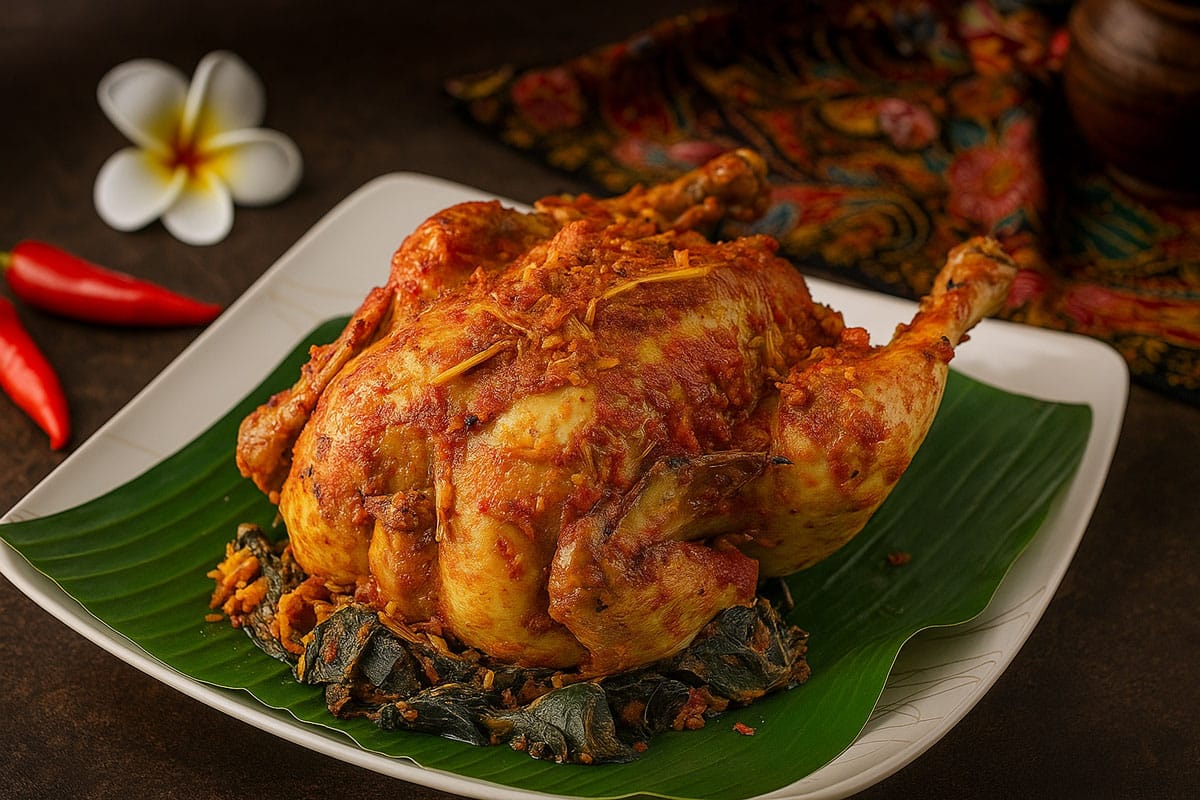
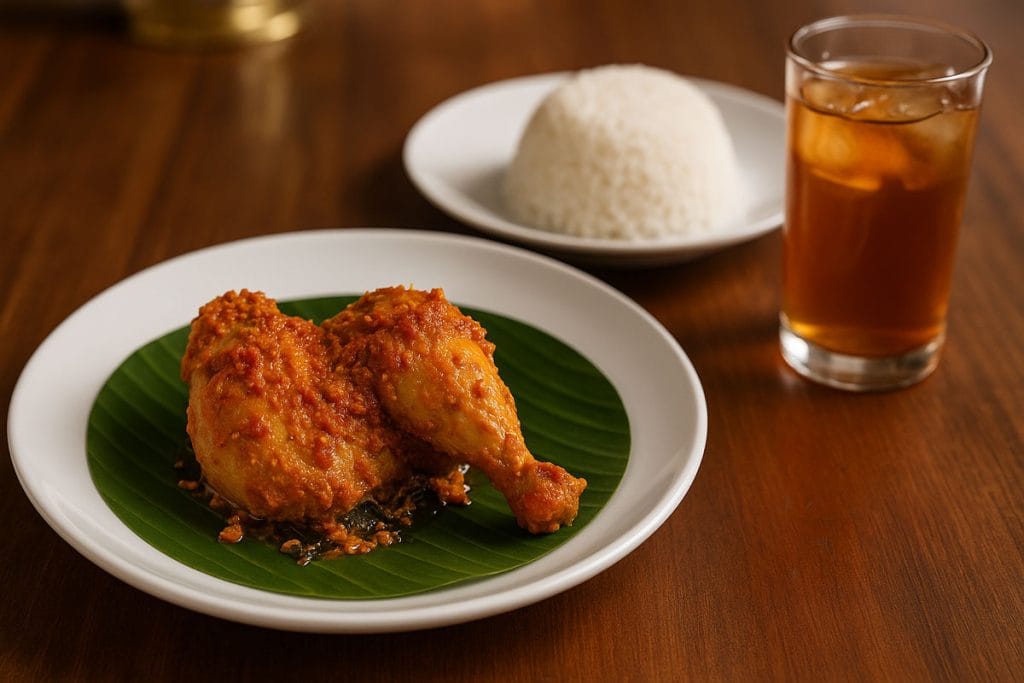
Ayam Betutu Recipe (Balinese Steamed and Grilled Chicken)
Ingredients
Instruction
- Marinate the ChickenRub the chicken with lime juice and salt. Let sit for 15 minutes, then rinse and pat dry.
- Make the Spice PasteBlend all spice paste ingredients into a smooth paste. Sauté in a bit of oil until fragrant, 5–7 minutes. Add the sliced lemongrass and cook another minute. Remove from heat.
- Stuff and SeasonDivide the cooked paste into two portions. Mix half of it with the chopped cassava leaves and kaffir lime leaves. Stuff this into the chicken cavity. Secure the opening with toothpicks or twine. Rub the remaining spice paste all over the outside of the chicken.
- Wrap and SteamWrap the chicken tightly in banana leaves. If unavailable, use parchment paper followed by aluminum foil. Steam over boiling water for 45 minutes or until fully cooked and tender.
- Grill to FinishUnwrap the chicken and grill over charcoal or in a grill pan until slightly charred and aromatic, about 5–10 minutes per side. Serve hot, cut into pieces or halved.
Notes
- Candlenuts (kemiri): Add richness and help bind the spice paste. Substitute with macadamia or blanched almonds if needed.
- Cassava leaves: Found in frozen form at Asian or African groceries. Substitute with kale, collard greens, or spinach.
- Banana leaves: Usually available frozen. If not, parchment and foil preserve moisture well.
- Shrimp paste: Very traditional but can be replaced or omitted depending on dietary preferences.
- Chilies: Adjust heat level to your liking. For a mild version, use red bell peppers or omit entirely.
- Grilling: An outdoor grill gives the best flavor, but a stovetop grill pan or oven broiler works well too.
- Traditional Cooking Method: While the modern version of Ayam Betutu takes around 2 hours to cook using steaming and grilling, the traditional Balinese method is far more elaborate. The chicken is wrapped in banana or pinang leaves, buried underground, and slow-cooked over hot coconut husk embers for 8 to 10 hours. This technique results in incredibly tender meat with deep, smoky, earthy flavors—reflecting centuries of culinary tradition. If you have the time and tools, it’s a unique and rewarding way to experience Betutu the way it’s been prepared in Bali for generations.
A Dish Rooted in Rituals and Royalty
Ayam Betutu originated from Gianyar, a region in central Bali rich in cultural heritage. It was first popularized in 1976 by a local culinary pioneer named Ni Wayan Tempeh, who, along with her husband I Nyoman Suratna, opened a humble food stall serving this ancestral recipe to the public. What had once been reserved for religious ceremonies and royal banquets became a favorite among locals and, eventually, international visitors.
The word “Betutu” comes from two Balinese words: be, meaning meat, and tutu, meaning to roast or burn. The name hints at the traditional cooking technique: a whole chicken is generously coated and stuffed with base genep—a complex Balinese spice paste—and then slow-cooked for hours, traditionally buried in hot embers and wrapped in banana or pinang leaves.
This process dates back to the Majapahit era in the 16th century, a time when Hindu culture flourished in Bali as it faded from Java. Betutu, along with other ceremonial dishes, was a culinary imprint of the migration and preservation of that culture.

Base Genep: The Flavor of Bali
To understand Ayam Betutu, you must first understand base genep—the Balinese holy grail of spice mixes. This potent blend includes garlic, shallots, ginger, galangal, turmeric, candlenuts (similar to macadamia nuts), chili peppers, black and white pepper, coriander seeds, shrimp paste, lemongrass, kaffir lime leaves, and palm sugar.
The result? A rich, earthy, and deeply aromatic flavor that is not only delicious but carries layers of symbolic meaning. In Balinese philosophy, each ingredient has spiritual value—purification, protection, vitality—and the act of grinding and preparing the spices is often done with mindfulness.
When the spice paste is applied to the chicken—both inside and out—it’s not just marination; it’s a ritual.
Sacred from Beak to Tail
Historically, Ayam Betutu wasn’t an everyday dish. It was prepared for sacred ceremonies, such as odalan (temple anniversaries), otonan (Balinese birthdays), weddings, and even for the Dewa Yadnya offerings to the Hindu trinity: Brahma, Vishnu, and Shiva.
Each part of the dish is symbolic. The whole chicken represents unity and wholeness. It is often presented in a curled pose that resembles Ganapati, the meditating elephant god. The careful wrapping in banana leaves symbolizes purity and protection, while the slow cooking underground reflects patience, devotion, and respect—virtues deeply valued in Balinese culture.
Later, Betutu was also adopted as a dish for royal families and community feasts, cementing its role not just in spiritual life but in social life.
Bali on a Plate — and Beyond
What makes Ayam Betutu fascinating is how it bridges the sacred and the accessible. Today, it’s available from roadside stalls to five-star resorts. You can even find it pre-packed at Bali’s international airport as a souvenir.
While its preparation can be time-consuming, modern kitchens have found shortcuts—using steamers, ovens, and grill pans instead of fire pits buried underground. But even when made with modern tools, the spirit of the dish remains unchanged.

Interestingly, many cultures have their own version of stuffed or slow-cooked whole chicken:
- In Morocco, djaj m’hammar is rubbed with spices and cooked over low heat.
- In Mexico, pollo pibil is marinated in achiote paste and cooked in banana leaves.
- In the southern United States, slow-smoked BBQ chicken with dry rub shares a similar reverence for time, smoke, and bold flavors.
Yet Ayam Betutu stands apart for its balance of heat, sweetness, and spice, combined with the gentle fragrance of banana leaves and the earthiness of traditional cooking.
A Culinary Invitation to Indonesia
If you’ve never been to Bali, Ayam Betutu offers a flavorful preview. Imagine enjoying it with a plate of fluffy rice, fresh sambal matah (Balinese raw chili relish), and perhaps a side of stir-fried vegetables. The spices open your palate, the aroma takes you to the tropics, and every bite tells a story.
It’s not just a dish; it’s an invitation—to explore, to appreciate, to connect.
Bali itself is a destination where spirituality, nature, and artistry blend seamlessly. From terraced rice fields in Ubud to cliffside temples in Uluwatu, the island offers a sensory experience far beyond beaches and nightlife. And its cuisine is no exception.
When you visit Bali, make it a point to try Ayam Betutu—not in a hotel buffet, but from a family-run warung where the spices are ground fresh and the chicken was marinated by hand that morning. If you’re lucky, it may have been cooked the traditional way—buried in hot coconut husk embers for 8 to 10 hours.
Is Ayam Betutu Suitable for Western Palates?
Absolutely. While Balinese cuisine is known for its boldness, Ayam Betutu is surprisingly adaptable to Western tastes:
- Its flavors are deep and savory, not overwhelmingly spicy unless you ask for extra chili.
- The aromatics are familiar to lovers of global cuisine—think ginger, garlic, lemongrass.
- The use of banana leaves might be novel, but the cooking technique aligns with slow-roasting or steaming traditions in the West.
In fact, if you’re a fan of Middle Eastern, Thai, Indian, or even Cajun food, Ayam Betutu will feel exciting yet comfortable.
A Cultural Souvenir
Many tourists bring back Ayam Betutu as a culinary souvenir. You’ll find it vacuum-packed or frozen in Balinese markets. Some versions even come with spice paste kits you can use at home—just rub it on chicken, wrap it in foil, and slow roast.

But the true value of Ayam Betutu lies not in convenience—but in connection. Cooking it from scratch allows you to recreate a piece of Bali in your kitchen, wherever you are in the world.
Final Thoughts: Cooking More Than a Meal
Ayam Betutu is not just a recipe—it’s a cultural expression. It teaches us that food can be sacred, that flavors can be carriers of history, and that dishes can bring people together across oceans.
So whether you’re an adventurous home cook, a culinary traveler, or someone looking to bring new life to your kitchen table, let Ayam Betutu be your starting point.
Cook it. Taste it. Share it. And with every bite, celebrate the spirit of Bali.