Ingredients
Instruction
- Marinate the ChickenRub the chicken with lime juice and salt. Let sit for 15 minutes, then rinse and pat dry.
- Make the Spice PasteBlend all spice paste ingredients into a smooth paste. Sauté in a bit of oil until fragrant, 5–7 minutes. Add the sliced lemongrass and cook another minute. Remove from heat.
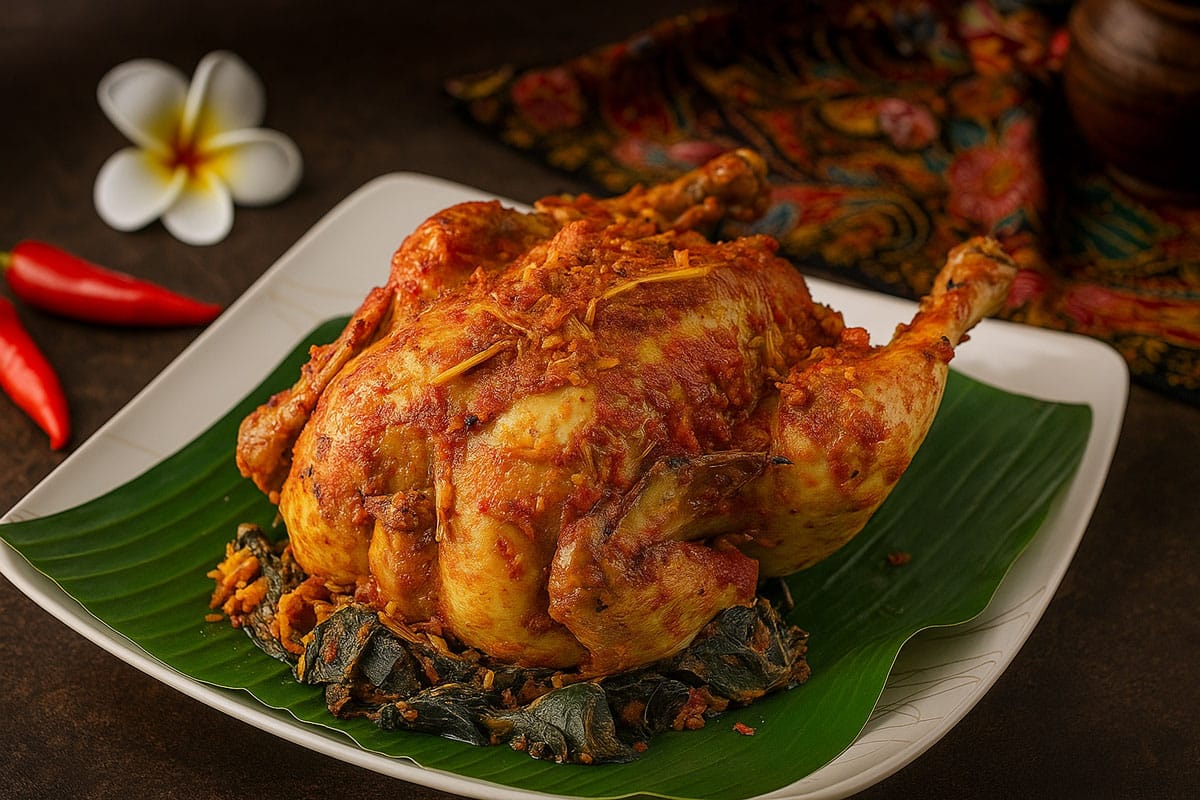
- Stuff and SeasonDivide the cooked paste into two portions. Mix half of it with the chopped cassava leaves and kaffir lime leaves. Stuff this into the chicken cavity. Secure the opening with toothpicks or twine. Rub the remaining spice paste all over the outside of the chicken.
- Wrap and SteamWrap the chicken tightly in banana leaves. If unavailable, use parchment paper followed by aluminum foil. Steam over boiling water for 45 minutes or until fully cooked and tender.
- Grill to FinishUnwrap the chicken and grill over charcoal or in a grill pan until slightly charred and aromatic, about 5–10 minutes per side. Serve hot, cut into pieces or halved.
Notes
- Candlenuts (kemiri): Add richness and help bind the spice paste. Substitute with macadamia or blanched almonds if needed.
- Cassava leaves: Found in frozen form at Asian or African groceries. Substitute with kale, collard greens, or spinach.
- Banana leaves: Usually available frozen. If not, parchment and foil preserve moisture well.
- Shrimp paste: Very traditional but can be replaced or omitted depending on dietary preferences.
- Chilies: Adjust heat level to your liking. For a mild version, use red bell peppers or omit entirely.
- Grilling: An outdoor grill gives the best flavor, but a stovetop grill pan or oven broiler works well too.
- Traditional Cooking Method: While the modern version of Ayam Betutu takes around 2 hours to cook using steaming and grilling, the traditional Balinese method is far more elaborate. The chicken is wrapped in banana or pinang leaves, buried underground, and slow-cooked over hot coconut husk embers for 8 to 10 hours. This technique results in incredibly tender meat with deep, smoky, earthy flavors—reflecting centuries of culinary tradition. If you have the time and tools, it's a unique and rewarding way to experience Betutu the way it's been prepared in Bali for generations.