A Coconut Milk Pudding Recipe That Captures the Soft, Sweet Side of Indonesian Culture
A Taste of Beauty and Sweetness
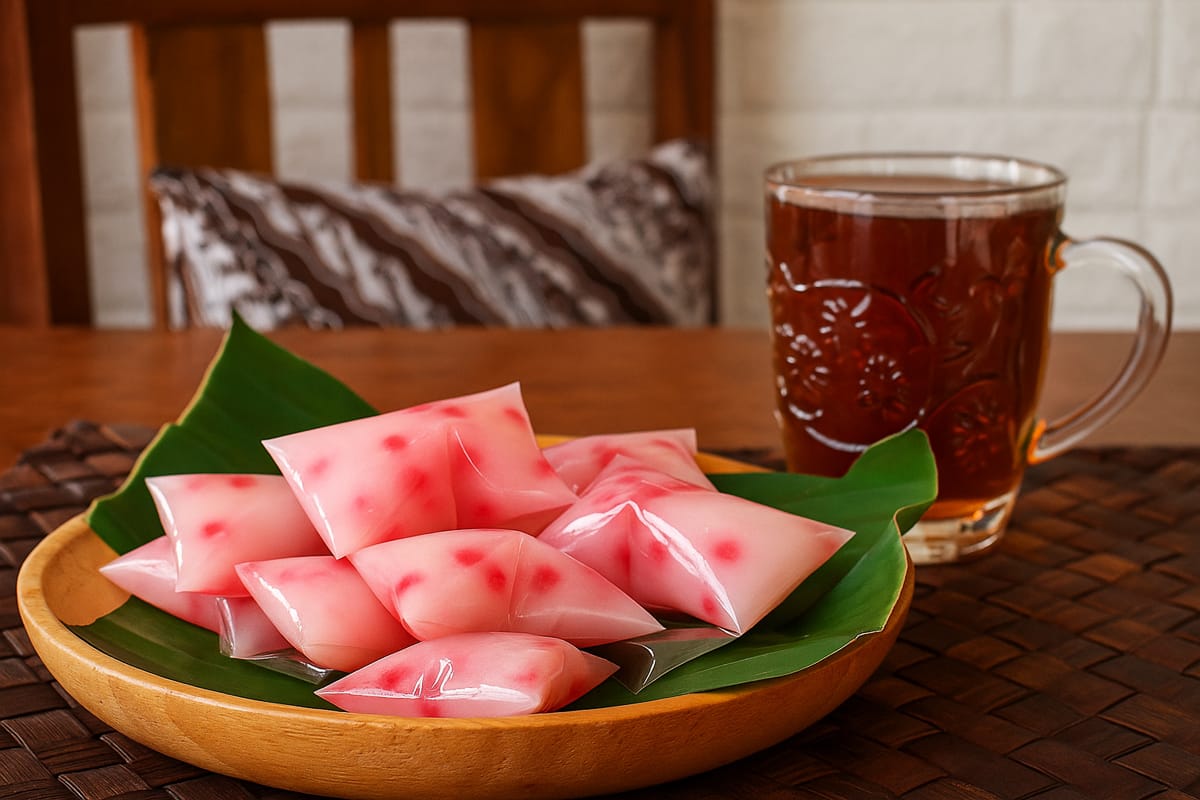
In the vibrant streets of Jakarta or any traditional Indonesian market, you might encounter a humble dessert wrapped in clear plastic or banana leaves — small, glossy, and dotted with pink pearls. Locals call it Cente Manis or Cantik Manis, which translates to “beautiful sweetness.”
More than just a pudding, this dish is a cultural symbol — one that mirrors the Indonesian spirit of simplicity, tenderness, and joy. It’s made from coconut milk, mung bean starch (tepung hunkue), sugar, and tiny tapioca pearls (pacar cina) that glisten like gems inside soft white jelly.
To Western eyes, it might look like a tropical panna cotta sprinkled with boba pearls. But to Indonesians, it’s a nostalgic delicacy — one that evokes memories of childhood, festive gatherings, and the gentle warmth of home.
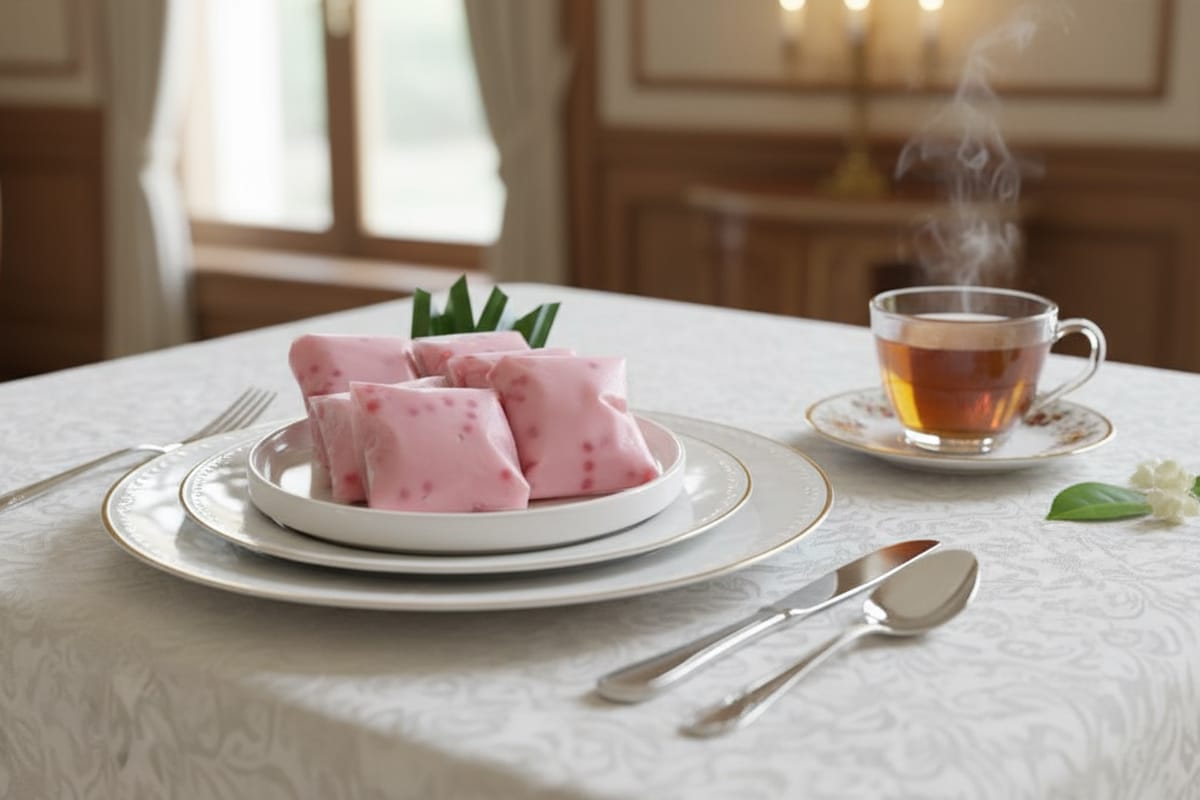
Sweet Coconut Jelly with Tapioca Pearls (Cente Manis / Cantik Manis)
Ingredients
Instruction
- Cook the Tapioca PearlsBring a pot of water to a boil. Add the tapioca pearls and cook until translucent and tender, about 10–12 minutes. Stir occasionally to prevent sticking.Once cooked, drain and rinse under cold water to stop the cooking. Set aside.
- Prepare the Hunkue MixtureIn a small bowl, combine ½ cup (100 ml) of the coconut milk with the mung bean starch (tepung hunkue). Stir until completely dissolved and smooth — this prevents lumps later.
- Heat the Coconut MilkIn a medium saucepan, add the remaining coconut milk, sugar, salt, and pandan leaf. Heat gently over medium heat, stirring constantly until warm and the sugar dissolves. ⚠️ Do not let it boil vigorously — this keeps the coconut milk from splitting.
- Thicken the MixtureSlowly pour the starch mixture into the warm coconut milk while whisking continuously. Keep stirring until the mixture thickens and starts to bubble like pudding (about 5–7 minutes).Remove from heat and discard the pandan leaf.
- Combine and ShapeAdd the cooked tapioca pearls into the thickened coconut mixture. Stir gently until evenly distributed.
- Chill and SetSpoon about 1–2 tablespoons of the mixture into small cups, silicone molds, or ramekins. Smooth the surface.Let it cool to room temperature, then refrigerate for at least 2 hours until fully set and chilled.
- ServeServe cold, optionally topped with a drizzle of coconut cream or a sprinkle of toasted coconut.
Notes
- Tapioca Pearls (Pacar Cina): These are small colored pearls used in Southeast Asian desserts. If unavailable, substitute with mini white tapioca pearls (sold for boba tea) and tint them pink using natural food coloring.
- Tepung Hunkue (Mung Bean Starch): Found in Indonesian or Filipino stores, or online. If not available, use a mix of 3 tbsp cornstarch + 1 tbsp rice flour for similar texture.
- Pandan Leaf: Adds floral aroma like vanilla crossed with coconut. Substitute with vanilla extract or a drop of pandan essence.
- Coconut Milk: Use full-fat canned coconut milk for richness. Avoid “lite” versions — they make the texture watery.
- Serving Suggestion: Instead of banana leaves, use small glass jars, cups, or ramekins. It gives a modern, minimalist touch that Western diners will love.
The History and Origins of Cente Manis
The true origins of Cente Manis are somewhat mysterious, reflecting the intertwined histories of Indonesia and the broader Asian world.
According to Betawi oral tradition (the native culture of Jakarta), this sweet treat has been part of local life for generations. It was commonly served at weddings, circumcision ceremonies, and traditional gatherings, symbolizing beauty, grace, and the sweetness of life.

Some historians believe that the dish may have Chinese influences, brought by early Hokkien traders who arrived in the Indonesian archipelago centuries ago. The word “kue” (meaning cake or snack in Indonesian) itself is derived from the Hokkien term “koé” (粿) — referring to glutinous rice-based delicacies popular in southern China.
The theory makes sense: the combination of starch-based jelly, coconut milk, and delicate colors mirrors many Chinese sweet snacks, while the use of pandan leaves, palm sugar, and coconut clearly anchors it in Indonesian tradition.
Over time, the Betawi people adopted and transformed it, giving birth to a unique dessert — soft, fragrant, and full of symbolism. The pink hue represents beauty, the soft texture represents gentleness, and the sweet flavor symbolizes happiness and prosperity.
Cultural and Symbolic Meaning
In Indonesian culture, food is often more than nourishment — it’s an expression of values and emotions.
For the Betawi community, Cente Manis embodies three key virtues:
- Beauty (Cente): Represented by its elegant appearance and soft color.
- Gentleness: Reflected in its tender, jelly-like texture.
- Sweetness of Life: Expressed through its flavor — simple, pleasant, and memorable.
This is why the dessert is often found at celebrations, marking moments of joy, unity, and blessing. It’s not just eaten — it’s shared, symbolizing harmony and affection among family and neighbors.
Ingredients and Nutritional Value
Cente Manis uses everyday Indonesian ingredients, many of which are now easily available in Western supermarkets and Asian stores:
- Coconut Milk (Santan): Provides creaminess and healthy fats (medium-chain triglycerides).
- Mung Bean Starch (Tepung Hunkue): A gluten-free starch that gives a silky pudding texture.
- Tapioca Pearls (Pacar Cina): Adds a chewy contrast, similar to boba pearls.
- Sugar and Salt: Balance sweetness and enhance flavor.
- Pandan Leaves (Optional): Adds floral fragrance similar to vanilla.
Nutritional Highlights (per serving, ~200g):
- Calories: ~220 kcal
- Fat: 7g (mostly from coconut milk)
- Carbohydrates: 35g
- Protein: 2g
- Naturally gluten-free and dairy-free.
Although it’s sweet, Cente Manis is relatively light — perfect for warm weather or a summer dessert table.
Traditional Presentation in Indonesia
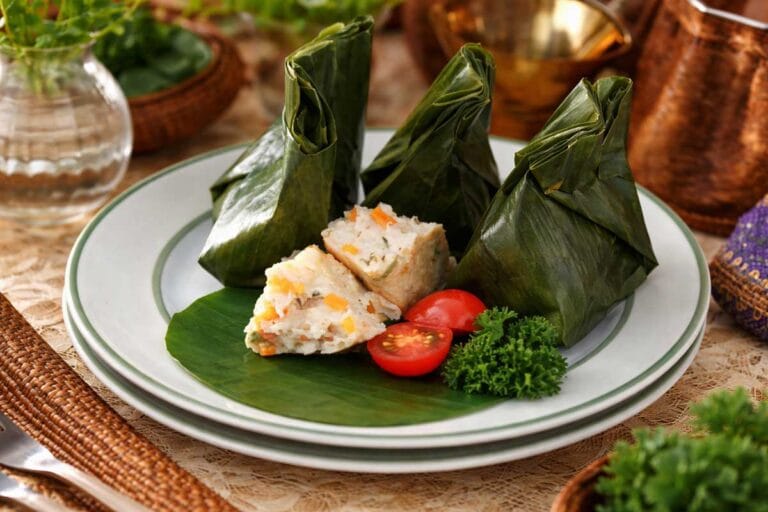
In Indonesia, Cente Manis is sold in pasar tradisional (traditional markets) and small snack stalls. It’s typically wrapped in plastic or banana leaves, forming small rectangular or pillow-shaped portions.

At traditional ceremonies — especially among the Betawi people — it’s often arranged neatly on serving trays or skewered with bamboo sticks for easier sharing. The wrapping isn’t only practical; it’s part of the experience. The banana leaves lend a natural fragrance that enhances the coconut aroma.
Locals enjoy it chilled, usually in the afternoon, accompanied by a cup of hot tea or black coffee. The contrast between warm tea and cold, silky pudding creates a balance that feels deeply comforting.
Modern Serving Ideas for Western Tables
For Western audiences, Cente Manis translates beautifully into modern, minimalist plating:
- Serve in small glass cups, ramekins, or dessert jars — much like panna cotta.
- Garnish with toasted coconut flakes or tropical fruits such as mango or kiwi.
- For a refined twist, drizzle with coconut cream or palm sugar syrup.
It’s ideal for summer gatherings or as a conversation-starting dessert in Asian fusion restaurants.
The soft pudding texture and chewy tapioca pearls are reminiscent of Thai “Tako” pudding or Vietnamese Che Ba Mau, yet its subtle flavor and coconut richness make it distinctively Indonesian.
Global Parallels: Similar Desserts Around the World
Cente Manis shares DNA with several other Asian and tropical desserts:
| Country | Dessert | Similarity |
|---|---|---|
| Thailand | Tako or Woon Gati | Coconut pudding with tapioca base and pandan flavor |
| Vietnam | Che Ba Mau (Three-color dessert) | Uses mung beans, jelly, and coconut milk |
| Malaysia | Kuih Sago | Made with sago pearls and coconut coating |
| Philippines | Maja Blanca | Coconut milk pudding thickened with cornstarch |
| China | Coconut Jelly (Ye Zi Gao) | Clear coconut pudding often served cold |
Yet, Cente Manis stands apart for its delicate balance between chewiness and creaminess, and for the symbolism behind its name — “beautiful sweetness.”
Challenges and Solutions for Western Cooks
Challenge 1: Unfamiliar Ingredients
- Mung Bean Starch (Tepung Hunkue) isn’t common in Western kitchens.
Solution: Substitute with 3 tbsp cornstarch + 1 tbsp rice flour. - Pacar Cina (Tapioca Pearls): Found in Asian stores or online under “mini tapioca pearls.”
Tip: Boil until translucent and rinse under cold water to prevent sticking.
Challenge 2: Pandan and Coconut Milk
- Pandan leaf can be replaced with vanilla extract or pandan essence (available online).
- Use full-fat canned coconut milk — avoid light versions, as they make the pudding watery.
Challenge 3: Texture and Setting
- Cente Manis isn’t as firm as gelatin-based puddings — it’s meant to be soft and silky.
- Chill for at least 2 hours to achieve perfect texture.
Flavor and Texture Description
The first bite of Cente Manis offers a silky-smooth texture from the mung bean starch, followed by a gentle chew from the tapioca pearls. The flavor is a fusion of creamy coconut milk, delicate sweetness, and a hint of tropical aroma — somewhere between panna cotta and mochi pudding.
It’s light yet satisfying — a dessert that feels luxurious but not heavy, perfect for summer afternoons or tropical-themed dinner parties.
The Philosophy Behind the Dessert
Indonesian cuisine often carries symbolic meaning, and Cente Manis is no exception.
The pink color represents beauty, the soft texture embodies tenderness, and the sweet taste expresses the joy of life itself.
That’s why it’s served in joyous occasions — it reminds people that life, like this dessert, is meant to be savored slowly, with gratitude and grace.
Why the World Should Know Cente Manis
As global curiosity about Asian desserts grows, Cente Manis deserves recognition alongside Japanese mochi, Thai mango sticky rice, and Filipino halo-halo.
It’s a dessert that tells a story — of migration, adaptation, and cultural harmony. Born from the meeting of Chinese culinary influence and Indonesian creativity, it’s a symbol of how food transcends boundaries.
For Western audiences, it’s an invitation: to experience a taste that’s not just sweet on the tongue, but beautiful in meaning — a true “Beautiful Sweet Cake.”