Pelu Sepat Lengak (Sumbawa Smoky Black Sesame & Grilled Prawn Coconut Stew)
✨ Key Takeaways
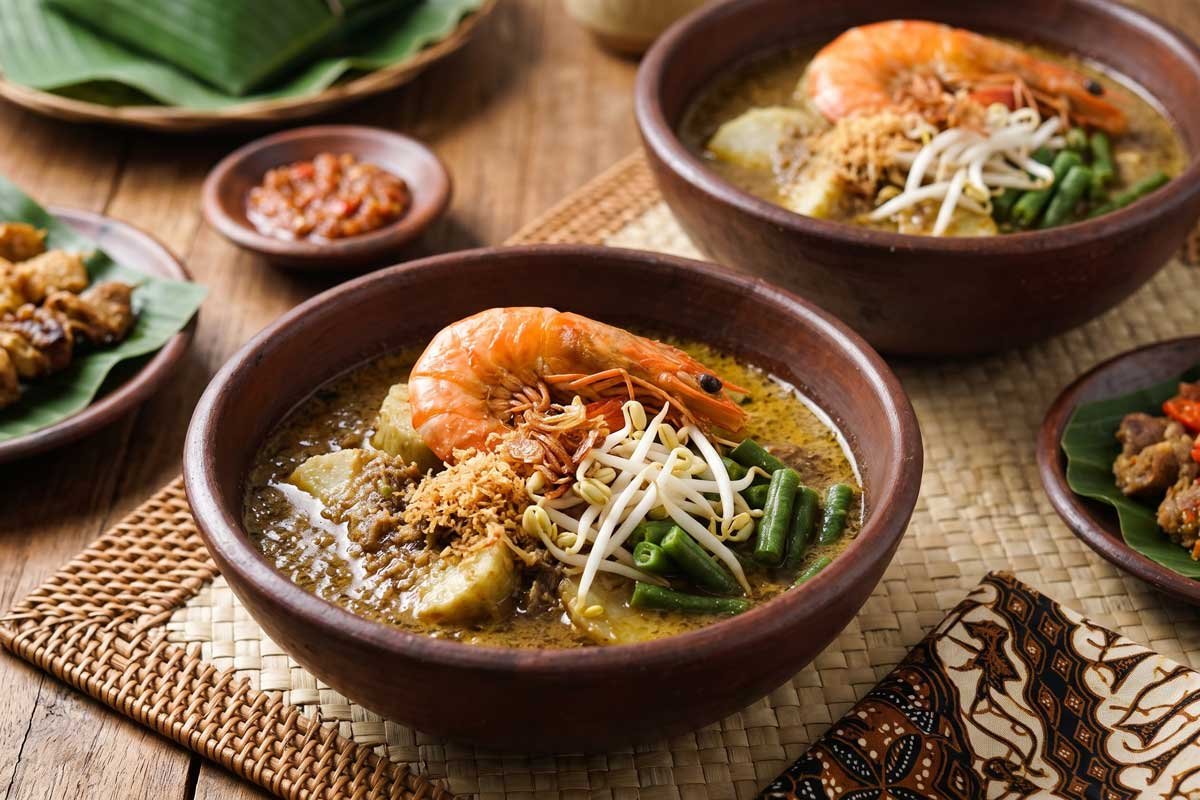
- Pelu Sepat Lengak is a traditional Sumbawa dish defined by its use of ground black sesame and charred young coconut.
- The dish features smoky grilled prawns simmered in a thick, nutty coconut milk sauce with yardlong beans.
- It offers a distinct flavor profile that is earthier and nuttier than typical turmeric-based Indonesian curries.
- The recipe is adaptable for Western kitchens using standard supermarket substitutes for rare aromatics.
Pelu Sepat Lengak is a traditional Eastern Indonesian stew from Sumbawa Island. It is characterized by a thick, nutty sauce made from coconut milk, ground black sesame seeds, and charred young coconut. The dish features smoky grilled prawns and vegetables, offering a unique alternative to standard turmeric curries.
Discover the unique smoky and nutty profile of Pelu Sepat Lengak, a traditional Sumbawa stew that redefines Indonesian coconut curries.
When most home cooks outside Indonesia think of Indonesian seafood in coconut milk, they picture bright yellow turmeric curries or fiery Padang-style gulai. Pelu Sepat Lengak from the island of Sumbawa breaks that mold completely. Instead of relying on turmeric or sweet soy sauce, this traditional Eastern Indonesian stew gets its signature depth from two unexpected stars: ground black sesame seeds (lengak) and charred young coconut, simmered with smoky grilled prawns, yardlong beans, and crisp bean sprouts.
If you love bold, nutty, and smoky flavors, Pelu Sepat Lengak is one of the most memorable dishes you can cook from the Indonesian archipelago. It takes under an hour from start to finish, uses a surprisingly short ingredient list, and delivers a rich, textured sauce that tastes like it has been slow-simmered all afternoon.
The History and Cultural Roots of Pelu Sepat Lengak
Pelu Sepat Lengak hails from Sumbawa Island (Tana Samawa) in West Nusa Tenggara, a sun-drenched, rugged island east of Lombok. Unlike the lush, wet volcanic plains of Java and Bali, much of Sumbawa has a drier savanna climate bordered by rich coastal waters. That geography shaped every detail of Samawa cuisine.
According to Indonesian culinary records—including the Ensiklopedia Kuliner Nusantara and regional heritage documentation from West Nusa Tenggara—Sumbawa’s coastal communities historically built their daily diet around fresh-caught seafood, coconuts, and drought-tolerant crops like sesame (lengak) and yardlong beans. Because refrigeration did not exist in traditional fishing villages, grilling (membakar) prawns and fish over coconut-husk embers was both a preservation method and a way to impart deep, smoky flavor.
In traditional Sumbawa households, combining charred seafood with roasted grated coconut and ground sesame seeds became a hallmark of resourcefulness. Every part of the coconut was used: the husks fueled the fire, the mature coconut yielded rich milk (santan), and the tender young coconut flesh was charred over the same coals before being grated directly into the spice paste. Today, Pelu Sepat Lengak remains a beloved regional specialty—often prepared for family gatherings, coastal celebrations, and honored guests visiting Sumbawa Besar and surrounding districts.
Pelu Sepat Lengak (Sumbawa Smoky Black Sesame & Grilled Prawn Coconut Stew)
An authentic Eastern Indonesian stew from Sumbawa featuring smoky grilled prawns, yardlong beans, and crisp bean sprouts simmered in a rich coconut milk sauce thickened with ground black sesame seeds (lengak) and charred grated coconut.
Ingredients
Instruction
- Grill the Prawns: Preheat a charcoal grill, gas grill, or heavy cast-iron skillet over medium-high heat. Grill the prawns for 1½–2 minutes per side until lightly browned, smoky, and just cooked through. Remove from the heat and set aside.
- Prepare the Spice & Coconut Mixture: Grind all the Bumbu Halus ingredients (black sesame seeds, shallots, garlic, candlenuts, red chilies, bird’s eye chilies, and galangal) in a mortar and pestle or food processor until smooth. Transfer to a bowl, add the charred grated young coconut, and mix thoroughly until evenly coated. Set aside.
- Simmer the Coconut Milk & Beans: Pour the 400 ml of coconut milk into a medium pot or wok over medium heat. Bring to a gentle boil, stirring constantly so the coconut milk does not split. Add the yardlong beans and simmer for 3–4 minutes until they begin to soften.
- Combine & Thicken: Add the grilled prawns, the spiced coconut mixture, makrut lime leaves, and 3 tablespoons of cooking oil into the pot. Reduce the heat to medium-low and simmer uncovered for 8–10 minutes, stirring occasionally, until the flavors meld and the coconut broth thickens into a rich, glossy stew.
- Finish & Serve: Stir in the bean sprouts and 1 teaspoon of salt. Cook for just 1–2 minutes more so the bean sprouts stay crisp-tender. Taste and adjust seasoning if needed, then remove from the heat and serve warm with steamed white rice.
Notes
- Toast the Black Sesame First: Dry-toasting the black sesame seeds in a skillet for 1–2 minutes until they start to pop dramatically unlocks their nutty aroma before grinding.
- Don’t Overcook the Prawns: Because the prawns are grilled first and then simmered in the coconut milk, pull them off the grill the moment they turn pink and lightly charred so they stay juicy and snappy.
- Preventing Split Coconut Milk: Keep the heat at a gentle simmer and stir regularly once the coconut milk is in the pot. Avoid a violent, unattended boil.
- Shell-On vs. Peeled Prawns: Traditionally in Sumbawa, prawns are often grilled with their shells on (heads and tails intact) for maximum flavor, then peeled at the table. For easier Western dining, peel the bodies and leave the tails on for presentation.
- Candlenut Safety: If using authentic Indonesian candlenuts (kemiri), always dry-toast them for 2 minutes before grinding—never eat candlenuts raw.
The Name and Culinary Philosophy
Understanding the name Pelu Sepat Lengak tells you almost everything about how the dish is built:
- Pelu: In Sumbawa culinary terminology, pelu refers to a thick, textured stew or spiced vegetable-and-protein dish cooked down with grated coconut and coconut milk until the sauce clings generously to every ingredient.
- Sepat: Sumbawa’s most famous culinary family, traditionally defined by the unmistakable aroma of fire-grilled (bakar) seafood—usually fish or prawns—combined with bright, savory aromatics.
- Lengak: The local Samawa word for sesame seeds (wijen), specifically roasted or ground black sesame (wijen hitam), which gives the stew its earthy, nutty backbone and subtle dusky hue.
Philosophically, the dish reflects the Samawa principle of layering smoke and creaminess. Rather than masking the natural sweetness of fresh prawns under heavy spices, Pelu Sepat Lengak uses fire twice—first on the prawns, then on the young coconut—so that smokiness is woven into the very foundation of the coconut milk broth.
What Does Pelu Sepat Lengak Taste Like?
If you have never tasted black sesame in a savory Indonesian coconut stew, the flavor profile is a pleasant revelation:
- Deeply Nutty & Earthy: Ground black sesame seeds (lengak), candlenuts (kemiri), and charred young coconut create a triple-layered nuttiness that feels almost like a savory, spiced tahini-coconut sauce.
- Smoky & Sweet-Savory: Grilling the prawns beforehand locks in their natural briny sweetness while infusing the broth with a gentle wood-fire aroma.
- Vibrant Heat: A mix of large red chilies and fiery bird’s eye chilies (cabai rawit) cuts right through the richness of the coconut milk. You can easily dial the heat up or down to suit your palate.
- Bright & Textural: Makrut lime leaves (daun jeruk) and galangal add a crisp, citrusy lift, while tender yardlong beans and last-minute bean sprouts keep every bite fresh and crunchy.
How It Is Traditionally Served in Indonesia
In Sumbawa, Pelu Sepat Lengak is served as a main side dish (lauk) alongside a generous mound of steamed white rice (nasi putih). Because the sauce is thick, nutty, and flecked with grated roasted coconut, diners spoon it directly over hot rice so every grain absorbs the smoky broth.
At a traditional Samawa lunch table, you will often see it paired with:
- Ikan Bakar Sumbawa (charcoal-grilled reef fish) or Ayam Bakar Sumbawa for a full coastal feast.
- Singang (Sumbawa’s tangy turmeric-tamarind fish soup) to provide a sour, refreshing contrast to the creamy richness of the pelu.
- Crisp Crackers (Kerupuk or Emping) for extra crunch.
When to Serve It
Pelu Sepat Lengak is an ideal weeknight dinner because it comes together in about 45 minutes, yet it looks and tastes impressive enough for weekend dinner parties or summer cookouts. Since the prawns are grilled first, it is especially fun to make when you already have an outdoor grill going—though a cast-iron skillet works just as well indoors.
Can Pelu Sepat Lengak Be Adapted Internationally?
Absolutely. In fact, Pelu Sepat Lengak is one of the easiest Eastern Indonesian dishes to adapt in a Western kitchen. Black sesame seeds, large prawns, coconut milk, and bean sprouts are now widely available in standard supermarkets across North America, Europe, and Australia.
Also check out:
Kue Pancong – Indonesia’s Beloved Coconut Delight
The only component that takes a tiny bit of creativity outside Southeast Asia is the charred young coconut (kelapa muda bakar). If you cannot find a fresh young coconut, dry-toasting unsweetened shredded coconut in a hot skillet until deeply golden-brown captures roughly 90% of that same smoky, caramelized coconut character.
Ingredient Substitutions for Western Supermarkets
Use this quick guide to shop confidently at any standard Western grocery store without losing the dish’s authentic Samawa character:
| Authentic Indonesian Ingredien | Role in the Dish | Best Western Supermarket Substitute |
|---|---|---|
| Lengak (Black sesame seeds) | Earthy, nutty depth & color | Standard black sesame seeds (Asian aisle or spice section). In a pinch, use toasted white sesame seeds + 1 tsp toasted sesame oil. |
| Kelapa Muda Bakar (Charred young coconut, grated) | Smoky sweetness & thick texture | Unsweetened shredded coconut (about ½ cup), dry-toasted in a skillet until dark golden-brown, then rehydrated with 2 tbsp warm water. |
| Kemiri (Candlenuts) | Creamy body & rich finish | Macadamia nuts (1:1 ratio) or raw cashews. |
| Daun Jeruk (Makrut / Kaffir lime leaves) | Citrusy, floral aroma | ½ tsp freshly grated lime zest added during simmering + 1 bay leaf. |
| Kacang Panjang (Yardlong beans) | Crisp-tender vegetable bulk | Green beans (French beans / haricots verts) cut into 2-inch (5 cm) pieces. |
| Lengkuas (Galangal) | Piney, peppery-citrus sharpness | Fresh ginger (equal amount) plus a tiny squeeze of lime juice at the end. |
| Cabai Rawit Merah (Red bird’s eye chilies) | Sharp, punchy heat | Thai chilies, serrano peppers, or red pepper flakes (adjust to taste). |
| Bawang Merah (Indonesian shallots) | Sweet, concentrated aromatic base | 2 medium French shallots or ½ small red onion. |
| Santan (Fresh coconut milk) | Creamy stew base | 1 can (400 ml / 13.5 oz) full-fat coconut milk. |
Global Culinary Cousins: Similar Dishes Around the World
If you want to place Pelu Sepat Lengak on the global flavor map, it shares fascinating culinary DNA with several well-known dishes:
- Malaysian Kerisik-Based Stews (like Kerabu or Rendang): Malaysia also uses toasted grated coconut to thicken sauces and add smoky depth, though kerisik is ground into a dark paste, whereas Sumbawa’s pelu keeps the grated coconut pleasantly textured.
- Thai Choo Chee Goong: Thailand’s red curry prawns share the rich coconut milk, makrut lime leaf, and seafood pairing, but Choo Chee leans brighter and sweeter with shrimp paste and palm sugar, while Pelu Sepat Lengak is earthier and nuttier from black sesame.
- Japanese Goma-ae & Korean Kkaetnip Sauces: East Asian cuisines celebrate ground sesame as a savory seasoning for vegetables, proving how naturally sesame elevates crisp greens like yardlong beans and bean sprouts.
- Indian Prawn Malai Curry: Both dishes bathe large prawns in a luscious, gently spiced coconut milk sauce, though Pelu Sepat Lengak swaps warm Indian garam masala for smoky grilling and fresh Southeast Asian aromatics.
Nutritional Overview, Health Benefits, and Precautions
A single serving of Pelu Sepat Lengak (based on 4 servings) contains approximately 395 kcal, 18g of protein, 31g of fat, and 12g of carbohydrates.
Key Health Benefits
- Mineral-Rich Black Sesame: Black sesame seeds are packed with calcium, iron, magnesium, and lignans (like sesamin), which act as powerful antioxidants.
- Lean Seafood Protein: Prawns deliver high-quality protein, vitamin B12, iodine, and selenium with very few carbohydrates.
- Fresh Fiber & Micronutrients: Yardlong beans and bean sprouts add dietary fiber, vitamin C, and folate, balancing out the richness of the coconut milk.
Precautions to Keep in Mind
- Shellfish & Nut Allergies: This recipe contains crustacean shellfish (prawns), sesame, and tree nuts (candlenuts/macadamias). All three are major allergens—always check with guests before serving.
- Saturated Fat & Cholesterol: Full-fat coconut milk is high in saturated fat, and prawns contain dietary cholesterol. If you are watching your fat intake, you can use light coconut milk for half the liquid and reduce the added cooking oil to 1 tablespoon.
- Spice Sensitivity: Five bird’s eye chilies pack real heat. If you are sensitive to spice, start with 1 chili (or omit them entirely) and rely on the 3 milder red chilies.
Estimated Cost Breakdown (Western Supermarket)
Making Pelu Sepat Lengak at home is surprisingly affordable for a seafood dish. Here is a realistic cost estimate for 4 servings at a typical US or European supermarket:
- 250 g (½ lb) large raw prawns/shrimp: $6.50 – $8.50
- 1 can (400 ml) full-fat coconut milk: $2.00 – $2.75
- Fresh vegetables (green beans/yardlong beans + bean sprouts): $3.00 – $4.00
- Fresh aromatics (shallots, garlic, chilies, galangal/ginger, lime): $3.50 – $4.50
- Black sesame seeds, shredded coconut, macadamia/candlenuts & oil: $2.50 – $3.50 (prorated)
- Total Estimated Cost: $17.50 – $23.25 (roughly $4.40 – $5.80 per serving).
Frequently Asked Questions
What makes Pelu Sepat Lengak different from other Indonesian coconut curries?
It uses ground black sesame seeds and charred young coconut instead of turmeric, creating a nuttier, smokier, and earthier flavor profile.
Can I substitute the charred young coconut if I cannot find it?
Yes, you can dry-toast unsweetened shredded coconut in a skillet until deeply golden-brown to mimic the smoky, caramelized character.
Is this dish suitable for people with nut allergies?
No, the recipe contains candlenuts (tree nuts) and sesame seeds, which are major allergens, so it should be avoided by those with such allergies.