Gule Rampoe is one of the most distinctive vegetable soups from Aceh, a province on the northern tip of Sumatra known for its deep Islamic heritage, bold culinary identity, and abundant use of herbs and fresh produce. Unlike many Indonesian “gulai” (curries) that are rich with coconut milk and spices, Gule Rampoe stands apart: its broth is clear, subtly sweet–savory, lightly spicy, and celebrated for the layered flavors contributed by a wide variety of vegetables.
In Acehnese tradition, gule simply means vegetable dish, while rampoe translates to assorted, mixed, or complete. The name reflects exactly what the dish is: a soup made with a colorful medley of vegetables, all cooked in a clear broth and seasoned simply with fresh aromatics such as belimbing wuluh (bilimbi), chili, salt, and sometimes a touch of sugar for balance.
To Acehnese families, especially during Ramadan, Gule Rampoe is a comforting, hydrating, and nourishing dish—one that breaks the fast gently while complementing spiced meat dishes also popular in the region. Yet despite its long history, this soup remains relatively unknown outside Indonesia, making it an excellent candidate for Western home cooks seeking an authentic yet accessible Indonesian dish.
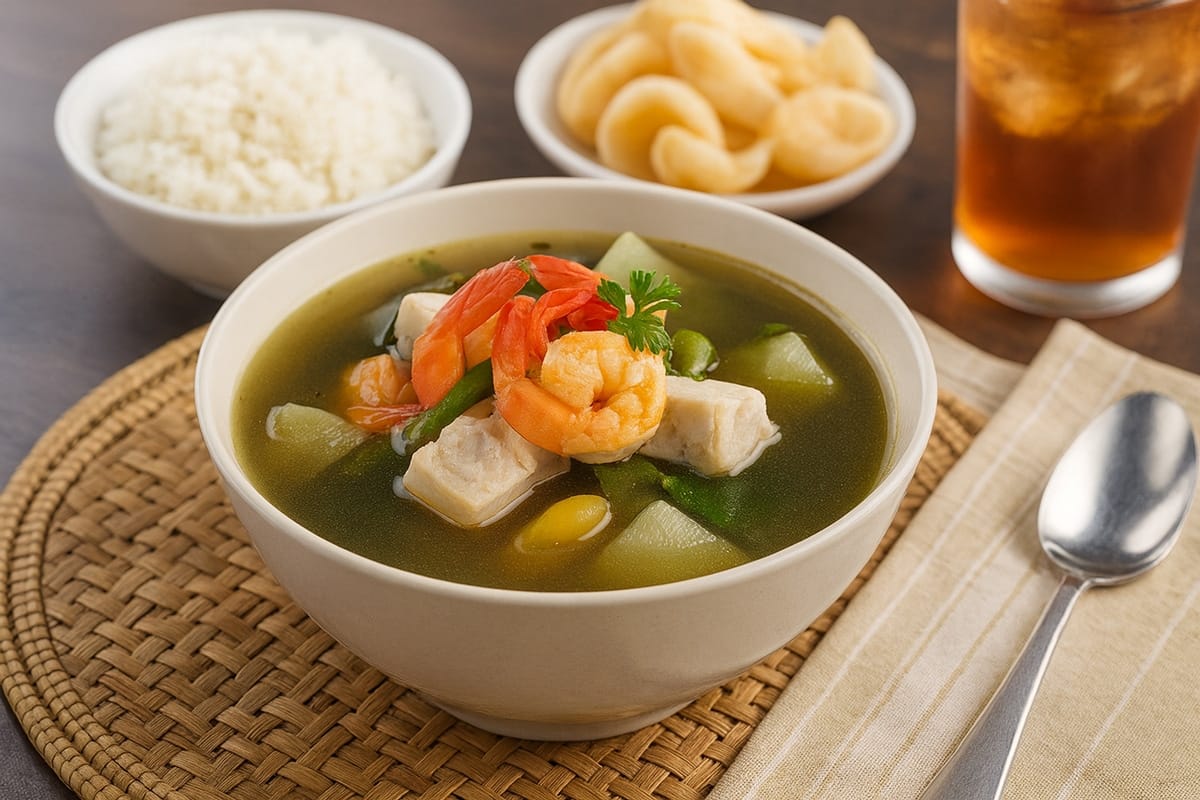
Acehnese Clear Mixed-Vegetable Soup (Gule Rampoe / Gulene Rampaue)
Ingredients
Instruction
- Bring the broth to a boil.In a large pot, heat the chicken broth with the kaffir lime leaves.
- Cook long-cooking vegetables.Add melinjo seeds and young jackfruit (nangka muda).Simmer for 10–15 minutes until they begin to soften.
- Prepare the seasoning paste.Blend or grind the chilies, belimbing wuluh, salt, and sugar into a coarse paste.
- Add the seasoning paste and medium vegetables.Add the paste to the pot, stirring well.Add young papaya and long beans, simmering for 8–10 minutes.
- Add shrimp.Add the shrimp and cook for 2–3 minutes until just pink.
- Finish with leafy greens.Add melinjo leaves, long-bean leaves, sweet potato leaves, and water spinach (kangkung).Cook 1–2 minutes, just until wilted.
- Taste and adjust.Add more salt or acidity (lime/extra bilimbi) as needed.Serve hot.
Notes
1. Belimbing Wuluh (Bilimbi)
- Authentic Acehnese acidity comes from bilimbi, a sharply sour fruit.
-
American/European substitute:
- 1–2 tsp fresh lime juice + ½ tsp rice vinegar or white wine vinegar.
- This gives a similar bright, sharp acidity (not identical but effective).
2. Melinjo Seeds & Leaves
- Melinjo seeds have a firm, nutty texture.
-
If unavailable:
- Replace seeds with unsalted peanuts (added at the start).
- Replace leaves with spinach or Swiss chard.
3. Young Jackfruit (Nangka Muda)
- Widely available in canned form at Asian and health-food stores.
- Rinse and pre-boil to remove brine flavor.
4. Water Spinach (Kangkung)
- Kangkung is common in Southeast Asia but rare in U.S./EU grocery stores.
- Substitute spinach, baby bok choy, or chard.
5. Heat Level
- Acehnese cooking can be quite spicy.
- Reduce to 2–3 chilies for a milder, family-friendly soup.
6. Broth Options
- Chicken broth is standard in modern households.
- Vegetable broth can be used for a pescatarian version.
7. Flavor Profile Guide for Western Cooks
- This is not a curry (no coconut milk, no turmeric in the original).
- Think of it as a bright, tangy clear vegetable soup with Southeast Asian aromatics.
A Brief History of Gule Rampoe
Unlike spiced Acehnese curries influenced by South Asian and Middle Eastern maritime trade, Gule Rampoe emerges from local agricultural tradition, where communities relied heavily on vegetables from home gardens: melinjo, long beans, young jackfruit, papaya, sweet potato leaves, and kangkung (water spinach). This soup evolved as a harian—an everyday dish—nourishing families with whatever seasonal produce was available.
Historical food literature from Aceh consistently describes Gule Rampoe as:
- broth-based (not coconut milk–based)
- clear in color
- vegetable-dominant
- lightly seasoned
- balanced with natural acidity from belimbing wuluh
- served with rice
Because of this clean flavor profile, Acehnese communities often prepare it for iftar (breaking fast): the mild broth supports digestion after many hours without food, while the vegetables offer natural sweetness and nutrients.
Cultural Significance in Aceh
Aceh’s cuisine is famously bold—beef dishes spiced with cardamom and cloves, seafood infused with turmeric and chili, and rich coconut-based curries. Yet Gule Rampoe offers an important counterbalance: a dish that is humble, refreshing, and rooted in the earth rather than trade-route spices.
Its cultural roles include:
1. A Ramadan Favorite
Locals appreciate its gentle flavor and hydrating broth, perfect for the first savory dish after sweet snacks like kolak. It pairs perfectly with fried foods, grilled fish, or savory rice cakes.
2. A Symbol of Abundance
Because it uses “a little of everything,” the soup represents family unity and the blessings of a harvest. More vegetables = more prosperity.
3. A Practical, Everyday Dish
Farmers and fishermen often eat it with steamed rice before heading out to work. It is filling yet light, keeping the body energized.
Flavor Profile: What Gule Rampoe Really Tastes Like
Many Western readers expect Indonesian soups to be spicy or coconut-heavy. But Gule Rampoe breaks the stereotype.
The flavor notes typically include:
- Light and clear broth from chicken stock or vegetable stock.
- Natural sweetness from young jackfruit, papaya, and long beans.
- Gentle heat from red chilies.
- Bright acidity from belimbing wuluh (bilimbi), contributing a clean citrus-like sharpness.
- Slight savory depth from melinjo and its leaves, which have an earthy, slightly bitter undertone.
Overall, it is refreshing, balanced, and incredibly aromatic without being heavy.
How Gule Rampoe Is Served in Indonesia
In Aceh, Gule Rampoe is rarely eaten alone. It usually accompanies:
- Steamed rice
- Fried chicken or fish
- Grilled dishes like ayam bakar Aceh
- Sambal (fresh chili paste)
- Iftar snacks during Ramadan
Families may serve it in a large bowl at the center of the table, inviting everyone to ladle soup onto their plates. The variety of vegetables also makes it a popular way to “stretch” meals economically.
Can Western Cooks Make Gule Rampoe? Absolutely.
Even though some ingredients may be unfamiliar, the soup is surprisingly adaptable. Western home cooks can easily prepare it using ingredients available in Asian grocery stores, farmers’ markets, or substitutes such as:
- Swiss chard or spinach for kangkung
- Green beans for long beans
- Fresh cranberries or sorrel for belimbing wuluh acidity
- Baby kale for Acehnese leafy greens
- Canned young jackfruit (widely available in the West)
The key is maintaining the clear broth, mixed vegetables, and balancing tang, which define the dish’s character.
Challenges and Tips for Western Kitchens
1. Finding belimbing wuluh (bilimbi)
This star ingredient provides a unique acidity. Substitute options:
- sorrel
- green apple slices
- lemon juice (sparingly)
2. Preserving the “clear soup” identity
Avoid adding too many aromatics like onions or garlic. Acehnese cooks traditionally keep the broth simple.
3. Vegetables with different cooking times
Add the firm ones (jackfruit, papaya, melinjo) first, leafy ones last.
4. Jackfruit selection
Use young green jackfruit, not ripe jackfruit.
5. Avoid over-spicing
This is not an Indian-style curry. The beauty of Gule Rampoe lies in restraint.
Nutritional Benefits
Gule Rampoe is naturally:
- low-calorie
- high in fiber
- rich in vitamins A, C, and K
- anti-inflammatory (melinjo leaves and papaya contain beneficial compounds)
- hydrating and digestion-friendly
When made with shrimp or chicken broth, it also provides light protein while keeping the dish refreshing.
Estimated nutritional value per serving (1 medium bowl):

- Calories: ~120–150
- Fat: 2–3g
- Protein: 6–10g
- Carbohydrates: 18–22g
- Fiber: 4–6g
Why Western Food Lovers Should Try Gule Rampoe
This Acehnese dish is ideal for Westerners because it is:
- light yet flavorful
- vegetable-forward
- naturally gluten-free
- vegan-friendly if broth and protein are adjusted
- simple to cook
- deeply cultural without being intimidating
It’s a perfect introduction to the lesser-known side of Indonesian cuisine: dishes that highlight freshness rather than heat or heavy spices.
Suggested Serving Ideas for Western Tables
- Serve as a starter soup before grilled meats.
- Pair with jasmine rice or brown rice.
- Add grilled salmon or shrimp for a modern fusion bowl.
- Serve with crusty bread for a Southeast Asian–meets-European contrast.
- Accompany with chili oil for diners who love heat.
Final Invitation
If you’re exploring global soups, Gule Rampoe offers a rare opportunity: a dish that remains strikingly authentic yet wonderfully adaptable to Western kitchens. It introduces flavors of Aceh without overwhelming beginners, while providing a rich cultural story worth sharing.
Try making it at home—adapt it to the vegetables you have, adjust the acidity, and enjoy a bowl of Aceh’s culinary heritage. And when you do, share your experience: What surprised you the most? Which vegetables did you use? Did you serve it for a family gathering or Ramadan-inspired dinner?
Your version of Gule Rampoe may not only nourish your table but also bring a small part of Acehnese warmth into homes far beyond Indonesia.