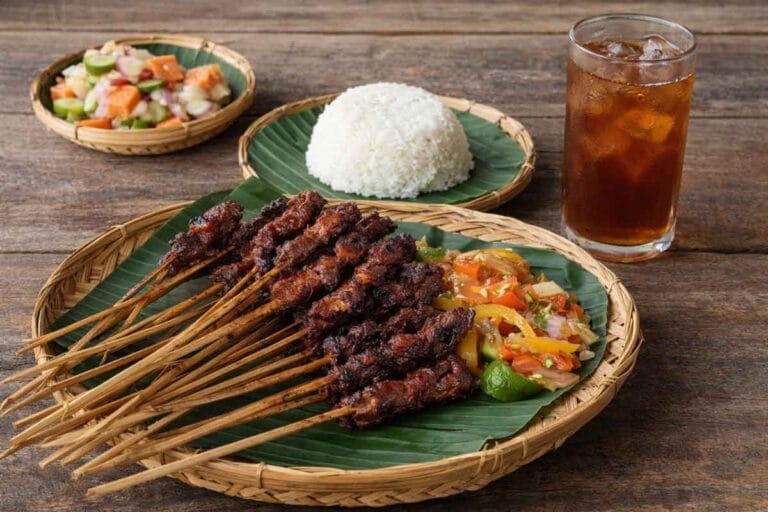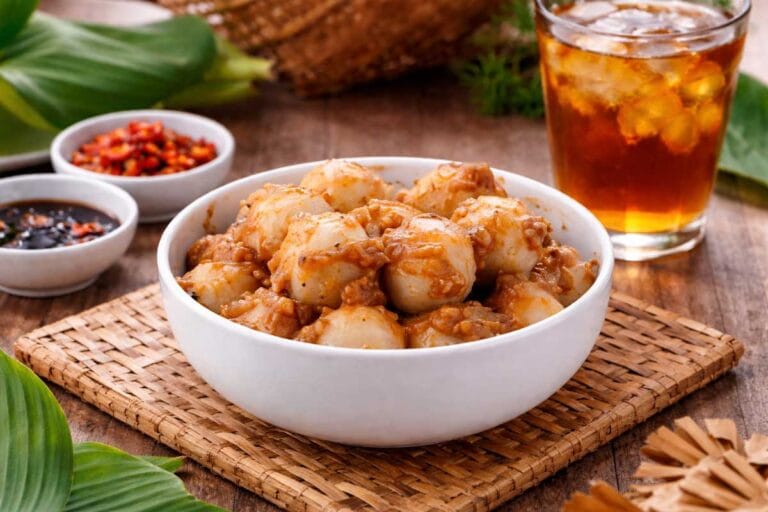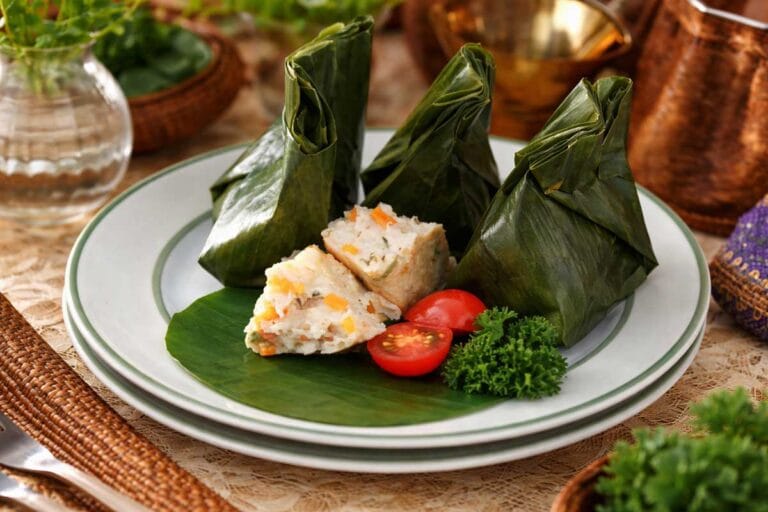
Semur Daging, a slow-braised beef stew simmered in dark, sweet soy sauce and warm spices, stands as one of Indonesia’s most comforting and culturally layered dishes. Behind its deep brown sauce lies a story that travels across oceans and centuries — from Dutch kitchens and Arab spice routes to Javanese royal courts and Betawi family tables during Eid celebrations.
It’s a dish that tells the story of how Indonesia, a crossroads of global trade and culture, turned foreign influences into something distinctly its own.
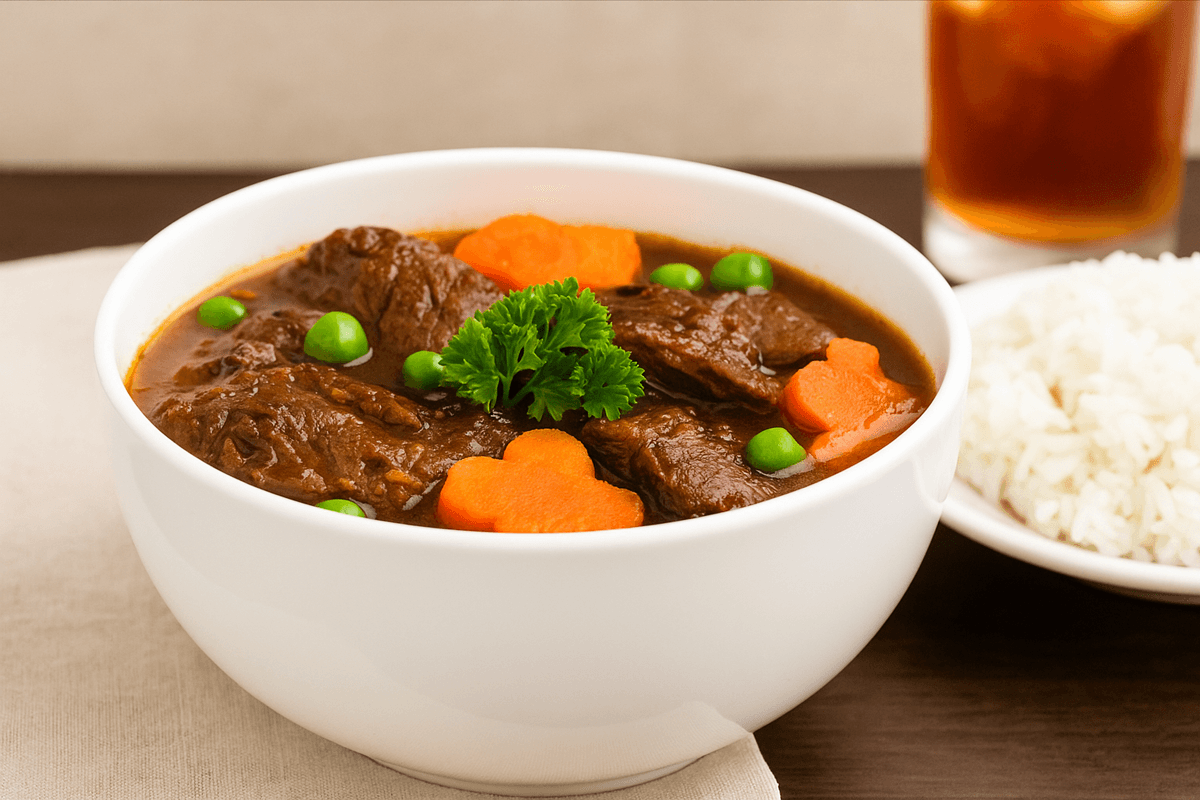
Indonesian Sweet Soy Braised Beef (Semur Daging Jawa)
Ingredients
Instruction
- Make the Bumbu HalusBlend shallots, garlic, candlenuts (or macadamias), and coriander into a paste.
- Caramelize the AromaticsHeat butter/oil in a pot over medium heat.Sauté the paste until fragrant and slightly caramelized (deep golden), about 6–8 minutes.This builds the stew’s rich flavor.
- Brown the BeefAdd beef pieces and stir until lightly browned on all sides.
- Add Spices & Kecap ManisAdd lemongrass, cinnamon stick, cloves, nutmeg, and bay leaf.Stir in kecap manis and brown sugar.
- Slow BraisePour in hot water. Bring to a boil, then reduce to a gentle simmer.Cover and cook 45–90 minutes, until beef becomes tender.Add more hot water if needed.
- Add VegetablesAdd carrots (and tomato if using).Simmer uncovered until carrots soften and sauce slightly thickens.
- Taste & AdjustAdjust salt, pepper, and sweetness to preference.
- ServeServe warm over steamed rice and top with fried shallots if available.
Notes
- If you can’t find kecap manis, combine soy sauce + molasses + brown sugar to approximate the flavor.
- Macadamia nuts or cashews can replace candlenuts (kemiri).
- If daun salam is unavailable, use a regular bay leaf.
- Lemongrass (serai) adds gentle fragrance but can be skipped if unavailable.
- For a thicker sauce, simmer uncovered in the last 10 minutes or mash a bit of carrot into the broth.
- Semur is intentionally slightly sweet—adjust sweetness at the end to match your preference.
The True Origins: From “Smoor” to “Semur”
Linguistically, the word semur originates from the Dutch term smoor, meaning “to braise slowly with onions and tomatoes.” During the Dutch colonial era in the 17th century, the Dutch settlers introduced the technique of smoor — a slow-cooked beef stew using simple European ingredients like beef, vinegar, onions, and broth.
But while the word came from the Dutch, the soul of semur did not. The flavor profile that defines Indonesian semur daging — the sweet depth of kecap manis (palm sugar soy sauce), the warmth of nutmeg, clove, and cinnamon — owes far more to the Arab and Indian traders who had already influenced the Javanese palate centuries before the Dutch arrived.
These traders brought techniques of slow-braising meats in aromatic spices, found in dishes such as Middle Eastern marak and Indian qorma, which would blend seamlessly with Indonesia’s spice-rich culinary tradition.
Thus, the birth of semur represents not a single origin, but an interweaving of Dutch terminology, Arab technique, and Javanese flavor identity.
A Cultural Fusion on the Stove
By the time Dutch colonists arrived, Javanese cooks were already adept at slow-cooking spiced meats. The interaction between these two cooking traditions birthed a new hybrid: beef simmered not just with onions and tomatoes but enriched with local ingredients — shallots, garlic, kemiri (candlenut), daun salam (Indonesian bay leaf), and most importantly, kecap manis.
The story of kecap manis itself mirrors this cultural exchange. While soy sauce came from Chinese migrants, Indonesians transformed it by adding palm sugar, producing a thick, sweet, molasses-like condiment found nowhere else in the world. This ingredient turned the color of semur dark and gave it the signature caramelized sweetness that makes it unforgettable.
The result was a new culinary identity — a European-style braise reborn through Asian ingredients and Islamic sensibilities.
Ancient Traces: Was Semur Older than the Dutch?
Archaeological evidence suggests that Indonesia had long known methods of simmering meat. In 9th-century Javanese inscriptions and poems (kakawin), references to ganan hadanan prana wdus — goat and buffalo dishes prepared with spices — hint at early forms of meat stews.
Although we cannot confirm these were precursors to modern semur, they demonstrate that slow-cooked spiced meat was already part of the local culinary repertoire long before colonial contact.
This means the Dutch word “smoor” didn’t create the dish; it named an existing tradition that already made sense to the local palate.
When Cultures Meet at the Table: The Role of Colonialism
During the colonial period, semur flourished in the so-called Indische keuken — the “Indo-European kitchen” of mixed Dutch and local households. A famous cookbook from 1902, Groot Nieuw Volledig Oost-Indisch Kookboek, included several recipes for “Smoor Ajam” (braised chicken) and “Smoor Banten van Kip,” showing that semur had already evolved as an established hybrid cuisine of the Indies.
Over time, semur transcended the colonial elite and became embedded in everyday Indonesian life. By the early 20th century, it was no longer a symbol of colonial dining but rather a fixture in local households — particularly among the Betawi people of Jakarta, who would later claim semur as part of their culinary heritage.
Semur and Its Many Faces Across Indonesia
Indonesia’s vast archipelago nurtured endless variations of semur. Each region adapted it to local tastes and available ingredients:
- Semur Betawi – The most iconic version from Jakarta, rich with nutmeg and sweet soy sauce, served during Eid (Lebaran). It symbolizes warmth and family unity.
- Semur Malbi (Palembang) – Served with pineapple sambal, featuring a slightly tangy finish from southern Sumatran influence.
- Semur Aceh – Spicier, often incorporating chili and strong aromatics typical of Acehnese cuisine.
- Semur Manado – A coastal version that might use fish or chicken, reflecting Minahasan boldness.
- Semur Goreng from Samarinda – A “dry” version where the sauce is reduced until it coats the meat.
- Semur Santan from Maluku – Enriched with coconut milk, showing eastern Indonesian creativity.
This diversity reflects not just regional adaptation but also the flexible character of semur itself — a dish that welcomes transformation while retaining its essence: slow-cooked sweetness and spice harmony.
Cultural Context: Why Semur Became Indonesian
In Indonesia, semur transcended its colonial roots and became a dish of celebration. It is most closely associated with Lebaran (Eid al-Fitr), when Muslim families break their Ramadan fast and gather for festive meals. Alongside opor ayam (chicken in coconut curry) and ketupat (compressed rice cake), semur daging sits at the heart of the feast, representing warmth, abundance, and family unity.
Food historian JJ Rizal noted that this blend of influences — Dutch, Chinese, and Malay — mirrors Indonesia’s social history. The Chinese brought soy sauce, the Malays added palm sugar, and the Dutch gave it a name. The symbolism of semur being eaten during Eid, he argues, turns it into a celebration of Indonesia’s multicultural harmony — a national identity forged through food.
As Rizal said, “From the dining table, we can see the unity and kinship that make Indonesia a nation.”
Flavor Philosophy — Why Semur Works
What makes semur daging universally appealing is its balance — the meeting of sweet, savory, and aromatic warmth.
Unlike Western stews that rely on butter or wine, semur layers its flavor through slow caramelization of shallots and soy sauce, grounding sweetness with the earthy depth of nutmeg, cinnamon, and clove. These are the very spices that once drove European explorers to Indonesia during the Age of Discovery — now coming full circle in a dish that outlived colonialism.
To the Western palate, semur feels both familiar and exotic:

- Familiar, because it shares DNA with braised beef dishes like French boeuf bourguignon or Belgian carbonnade flamande.
- Exotic, because it introduces tropical sweetness and aromatic spices foreign to European stews.
It’s comfort food with a story — tender beef, soulful sweetness, and a whisper of ancient spice routes.
How Semur Differs from Rendang and Other Indonesian Stews
Western eaters often confuse semur with rendang, another Indonesian icon.
While both are beef-based and slow-cooked, they differ profoundly in texture, philosophy, and spirit:
| Aspect | Semur Daging | Rendang |
|---|---|---|
| Cooking Method | Braised in soy sauce and broth | Slowly reduced in coconut milk until dry |
| Flavor Profile | Sweet, savory, aromatic | Spicy, earthy, coconut-rich |
| Cultural Role | Home and festive comfort food | Ceremonial dish of honor |
| Symbolism | Warmth and togetherness | Strength and endurance |
In essence, semur comforts, while rendang impresses. The former brings family closer; the latter celebrates triumph and tradition.
Cooking Semur for Western Kitchens: Challenges and Tips
For Western home cooks trying semur for the first time, the key is patience and balance.
✅ Choose the Right Cut
Use beef cuts that can withstand long cooking — chuck roast, short ribs, or brisket. Indonesian cooks often use sengkel (shank) or sandung lamur (brisket), which melt beautifully into tenderness after two hours of slow simmering.
✅ Respect the Simmer
Semur is never rushed. True flavor develops only when beef, soy, and spices have time to merge into a deep umami sweetness.
In Western kitchens, a Dutch oven or slow cooker works perfectly for this.
✅ Substitute Smartly
If kecap manis is unavailable, combine soy sauce with molasses or brown sugar. But for authenticity, brands like ABC or Bango (widely available online) deliver the true flavor of Indonesia.
✅ Flavor Layering
Start by frying shallots and garlic until golden and aromatic. Only then add the spices — nutmeg, clove, cinnamon — and finally the soy sauce and beef. This layering mimics the traditional tumis bumbu halus method that builds depth in Indonesian cuisine.
Nutrition and Balance
Despite its indulgent flavor, semur daging can be nutritionally balanced.
- Protein: Beef provides high-quality protein and iron.
- Spices: Clove, cinnamon, and nutmeg contribute antioxidants and digestive benefits.
- Low Dairy & Gluten-Free: Unlike European stews, semur contains no dairy or flour thickener, making it suitable for lactose-intolerant or gluten-free diets.
Pairing it with steamed rice and vegetables creates a satisfying, wholesome meal that feels comforting yet light.
Similar Dishes Around the World
Global parallels to semur can be found across continents:

- French Boeuf Bourguignon – beef braised in wine and herbs
- Japanese Nikujaga – soy-based beef stew with sweet and savory balance
- Chinese Hong Shao Rou – braised pork belly in soy and sugar
- Korean Galbi Jjim – sweet soy-braised short ribs
What makes semur distinct is its tropical warmth — the fusion of sweetness from palm sugar and spice notes that echo both Middle Eastern and Southeast Asian culinary heritage.
The Philosophy of Semur: Harmony in Diversity
At its heart, semur daging is a metaphor for Indonesia itself: a fusion of differences simmered into harmony. Each influence — Dutch word, Chinese soy, Arab spice, Javanese sweetness — represents a cultural ingredient that shapes the nation.
The dish teaches a gentle philosophy: “Good things take time.”
Just as semur requires hours of slow simmering to achieve perfection, cultural harmony and national identity also take generations to blend.
A Dish to Share, A Story to Tell
In modern Indonesia, semur daging remains a symbol of celebration. Families cook it for weddings, communal feasts, and above all, for Eid. The act of sharing semur — ladling it over rice, swapping stories at the dinner table — preserves not only a recipe but a sense of connection.
For Western readers, making semur daging is more than trying a new recipe; it’s a way to taste history — a flavor born from global trade, colonial encounters, and human creativity.
So, gather your spices, pour the soy sauce, and let the pot simmer slowly.
When the aroma fills your kitchen, you’re not just cooking beef stew — you’re reviving centuries of shared flavor and friendship between cultures.
Final Invitation
If you try semur daging at home, share your story — how you adjusted it, what you felt when the sweetness met the spice. Like Indonesia itself, this dish evolves with every cook who embraces it. And that, perhaps, is the truest legacy of semur:
A dish born from encounter, perfected through sharing.