How “Pie” Found Its Place in Indonesia
For most Americans and Europeans, a pie is a symbol of home — warm, buttery, often filled with sweet fruits or creamy custard like Strawberry Coconut Custard Pie. But in Indonesia, pie (or pai, sometimes pastei) carries a different, yet fascinating, identity. It arrived through layers of colonial history and global exchange, eventually becoming a beloved snack that bridges cultures.
The most famous example is Bali’s “Pie Susu” — a petite, silky custard tart with a crisp, thin crust. It’s sold everywhere, from airport gift shops to small village bakeries, often wrapped as souvenirs. For Indonesians, this sweet, simple pastry embodies both tradition and adaptation.
Now imagine taking that concept and infusing it with tropical flair — creamy coconut custard and bright strawberries, nestled in a flaky Western-style crust. That’s where our Strawberry Coconut Custard Pie is born — a dessert that celebrates both Western technique and Indonesian soul.
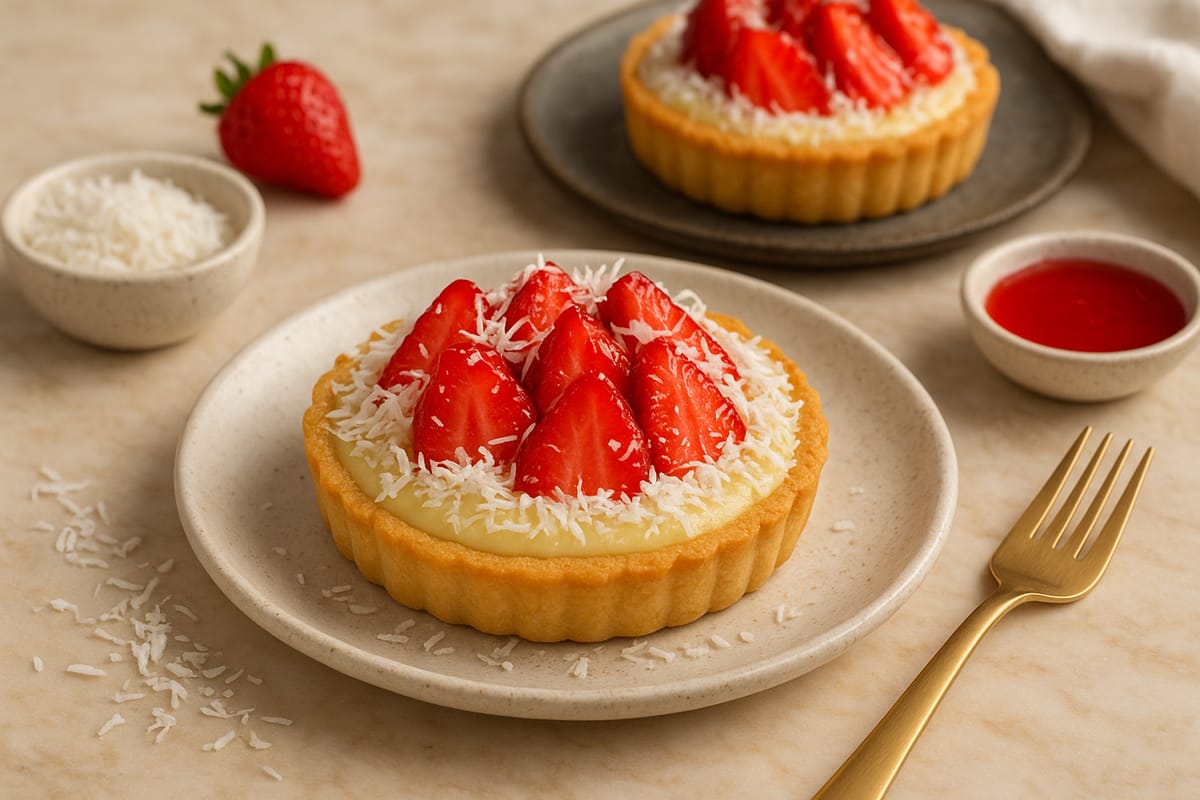
Strawberry Coconut Custard Pie (Pie Custard Stroberi Kelapa)
Ingredients
Instruction
- In a large bowl, cream together the butter, powdered sugar, and salt until smooth and fluffy.
- Add the eggs one at a time, mixing until incorporated.
- Gradually add the flour and mix until a soft dough forms.
- Shape the dough into a disk, wrap in plastic, and refrigerate for about 15 minutes.
- On a lightly floured surface, roll the dough to about ⅛ inch (2 mm) thick.
- Line individual pie tins (about 3 inches / 8 cm in diameter) with the dough and trim the edges.
- In a mixing bowl, whisk together sour cream, sugar, vanilla, egg yolk, flour, and grated coconut (kelapa parut) until smooth.
- Pour the mixture into the prepared pie shells, filling them about ¾ full.
- Bake at 340°F (170°C) for 30–35 minutes or until the crust is golden and the custard is set.
- Let cool completely on a wire rack.
- Arrange sliced strawberries neatly on top of each cooled custard pie.
- Brush with melted jelfik (or a neutral fruit glaze) to give a glossy finish and help preserve freshness.
- Chill briefly before serving.
Notes
-
Coconut (kelapa parut):
If you can’t find fresh grated coconut, use unsweetened desiccated coconut or lightly toasted shredded coconut. To mimic the tropical creaminess, you can also add 1 tbsp coconut milk or coconut cream to the custard. -
Jelfik substitute:
Jelfik is an Indonesian-style fruit jelly glaze used to coat fresh fruit. You can replace it with apricot jam thinned with warm water or a neutral mirror glaze sold in baking stores. -
Flour type:
All-purpose flour works well; for a more tender crust, mix ¾ all-purpose with ¼ pastry flour if available. -
Serving suggestion:
Serve chilled, with a sprinkle of toasted coconut flakes or a small mint leaf for a refined Western-style presentation. -
Make ahead:
The crust can be prepared up to 2 days in advance. Store baked pies in an airtight container in the fridge for up to 3 days.
From Ancient Egypt to Modern Kitchens
To truly appreciate this pie, let’s step back in time.
- Ancient Egypt (around 2000 BC) – The earliest “pies” were made from grain dough used to hold fillings like honey or meat. They were more like portable meals than desserts.
- Ancient Greece and Rome – The Greeks refined the crust, while the Romans filled it with meat, cheese, or fruit — marking the birth of sweet pies. Romans baked their pies not for taste, but to protect the meat from drying during long journeys.
- Medieval Europe – Pies became a staple food, often called coffyns (“coffins”) because the crusts were hard shells to contain fillings.
- 16th Century England – Fruit pies became fashionable, with the first recorded cherry pie served to Queen Elizabeth I.
- Colonial America – European settlers brought pie recipes across the Atlantic. With sugar becoming widely available in the 19th century, pie transformed from a savory main dish to a sweet comfort food — and soon became an American cultural icon.
Across time and continents, pie evolved because of its adaptability. Whether sweet or savory, each region shaped it according to local ingredients — and that same adaptability is what allowed pie to take root in Indonesia.
The Balinese Adaptation
In Indonesia, pie arrived through Dutch colonial influence — the term pastei came from the Dutch word pastei and the English pie. Over time, Indonesian bakers made it their own.

The most famous local adaptation is Pie Susu Bali, a delicate custard tartlet that emerged in the 1980s. With its thin, crisp crust and creamy yellow center, it’s a perfect example of how Indonesians reinterpret Western desserts. It’s lighter than a Western custard tart, less buttery, and subtly sweet — ideal for the tropical climate.
This local reinvention proves one thing: pie is a canvas, and culture paints its flavor.
And from that same spirit of reinvention comes our Strawberry Coconut Custard Pie, blending the nostalgia of Bali’s Pie Susu with the indulgence of Western custard pies.
Cultural Context — The Indonesian Touch
Coconut (kelapa) is one of Indonesia’s most cherished ingredients. It’s used in everything — from savory dishes like rendang to sweet delicacies like klepon and serabi. In many parts of the archipelago, coconut represents life, generosity, and abundance.
By combining coconut milk and grated coconut in a Western custard base, we bring a tropical heartbeat into a classic dessert. The fragrance of pandan leaves, often used in Indonesian sweets, can even be infused for an extra sensory layer.
So when you taste this pie, you’re not just tasting butter and sugar — you’re tasting the sun-drenched essence of the tropics.
Flavor Philosophy — Why It Works
What makes the Strawberry Coconut Custard Pie irresistible isn’t just its beauty — it’s the way flavors balance and play.
- Coconut custard adds smoothness and a nutty depth.
- Strawberries bring a natural tang and freshness that cut through the richness.
- Buttery pie crust provides texture and aroma.
Together, they form a conversation between tropical warmth and Western comfort.
The coconut’s creamy sweetness pairs harmoniously with the strawberry’s acidity, while the flaky crust adds the grounding crunch that ties it all together.
Modern Context — From Bali to Brunch Tables
Today’s global kitchens celebrate fusion — and this pie fits right in.

In the West, it’s a perfect summer pie recipe, light and refreshing yet decadent enough for celebrations. Serve it chilled during garden brunches, picnics, or weekend gatherings.
In Indonesia, it’s often enjoyed at room temperature, shared over afternoon tea or as a festive treat during holidays.
This dessert travels beautifully between cultures:
- For Western readers, it’s an easy coconut pie that brings a hint of the tropics.
- For Indonesians, it’s a Western-style pie elevated with familiar local ingredients.
Whether you call it a tropical custard pie or pie kelapa stroberi, it embodies the best of both worlds.
Pie Crust Recipe: The Foundation of Perfection
A great pie begins with a great crust.
To achieve that buttery, melt-in-your-mouth texture, the key is cold butter, minimal mixing, and a short chill before baking.
Here’s why this crust works for both humid tropical and dry Western climates:
- Butter gives flavor, but in hot regions, mix it quickly to prevent melting.
- A touch of sugar helps browning and crispness.
- Chilling the dough firms the fat, so it puffs slightly and stays flaky in the oven.
For American bakers, it’s a classic pie crust recipe you can use for fruit or custard pies alike.
For Indonesian bakers, it’s a step toward mastering Western pastry techniques — with a tropical twist.
Nutritional Tips & Fun Facts
Even indulgent desserts can carry a bit of goodness.
Here are a few interesting facts and tips for enjoying this pie the smart way:
- 🥥 Coconut milk is rich in healthy fats (MCTs), which can help boost energy and metabolism.
- 🍓 Strawberries are loaded with antioxidants and vitamin C — they brighten flavor and support your immune system.
- 🧈 Use less sugar: The natural sweetness of coconut and fruit means you can safely reduce added sugar by 15–20% without losing flavor.
- 🍃 Add lemon zest if you prefer a tangier, fresher profile.
- ❄️ Serve chilled — it enhances the creaminess and allows the coconut flavor to bloom.
And here’s a fun fact: in some parts of America, pies are eaten à la mode — topped with ice cream — while in Bali, locals often pair pie susu with a cup of hot tea. Two cultures, one comfort food.
How to Enjoy It
Whether served at a picnic table in California or a seaside café in Bali, the Strawberry Coconut Custard Pie shines best when shared.

- Slice it cold from the fridge for a clean, creamy bite.
- Pair with Earl Grey tea or light roasted coffee.
- For a true tropical flair, sprinkle toasted coconut flakes before serving.
- Add a mint leaf for color contrast — and a little elegance.
It’s not just dessert; it’s a conversation starter between two worlds.
A Sweet Invitation to Create and Share
Now it’s your turn to bring this global dessert to life.
Whether you’re an American baker curious about Southeast Asian ingredients, or an Indonesian home cook experimenting with Western pastry, this Strawberry Coconut Custard Pie welcomes you into a delicious dialogue of cultures.
Try it this weekend — and when you do, share your creation online or with friends. Tag it with #TropicalCustardPie or #StrawberryCoconutPie, and let others taste the blend of East and West that unites us all through the universal language of dessert.
Because at the end of the day, whether it’s served warm from the oven or cool from the fridge, pie is about comfort, connection, and joy.