The first image that comes to mind of Gulai is usually a golden broth enriched with coconut milk, fragrant with turmeric, lemongrass, and galangal. Yet in the coastal city of Pariaman, West Sumatra, there is one dish that breaks this expectation while remaining deeply rooted in Minangkabau culinary tradition: Gulai Bagar.
This dish, often prepared during Eid celebrations or large family gatherings, is not just a meal. It is a symbol of hospitality, kinship, and respect. To many locals, the holiday would feel incomplete without a big pot of Gulai Bagar simmering in the kitchen, ready to welcome relatives returning from afar.
The Origins of Gulai
The word gulai is familiar to anyone who has visited a Padang restaurant, where rows of dishes are displayed in pyramids of plates. Gulai refers to an Indonesian curry-like dish, usually prepared with a variety of meats (chicken, goat, beef), offal, or vegetables like young jackfruit and cassava leaves.
The concept of gulai is believed to have been influenced by Indian and Middle Eastern curries, brought to the Indonesian archipelago through trade and the spread of Islam centuries ago. Over time, the Minangkabau people of West Sumatra infused these foreign elements with local spices such as turmeric, ginger, galangal, nutmeg, and cinnamon, creating a uniquely Indonesian style of curry.

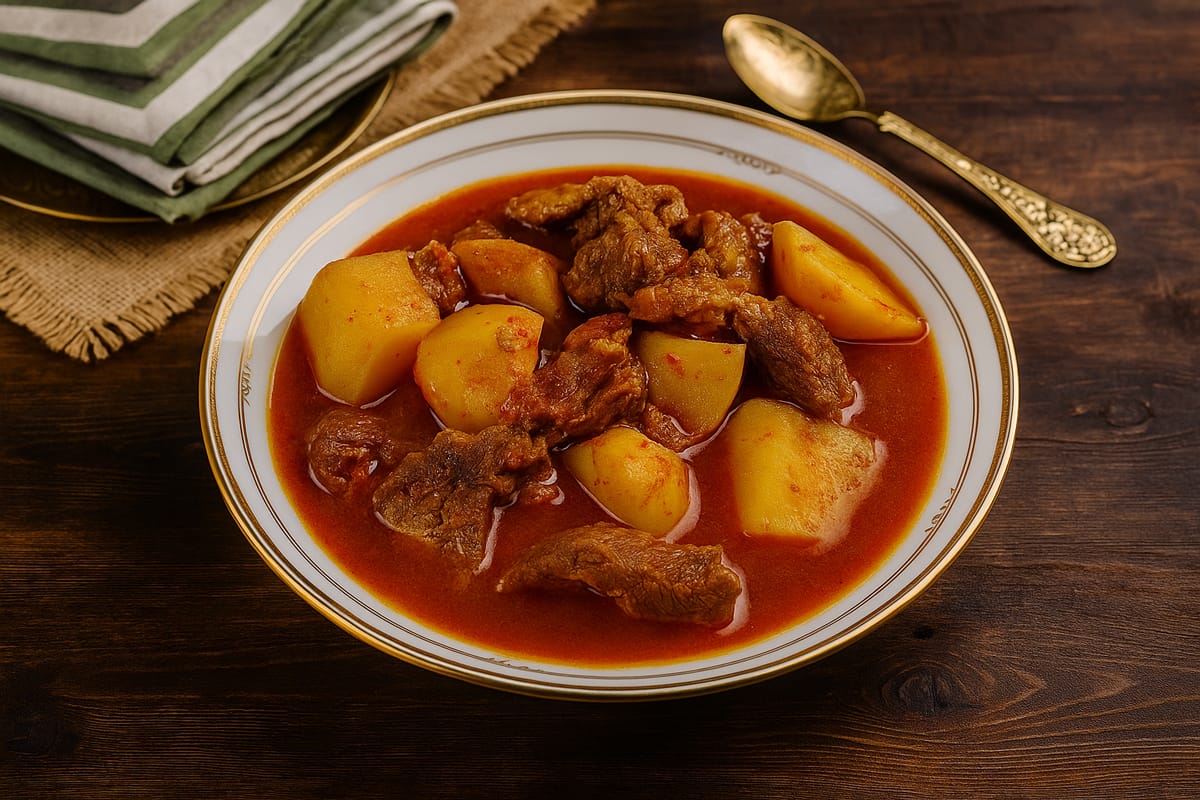
Gulai Bagar (Indonesian Spiced Beef Stew without Coconut Milk)
Ingredients
Instruction
- Heat a little oil in a large pot over medium heat.
- Sauté shallots, garlic, chili paste, ginger, and galangal until fragrant.
- Add the beef shank pieces and cook until lightly browned on all sides.
- Add the potatoes, coriander seeds, cloves, cardamom, star anise, cinnamon, and nutmeg. Stir well.
- Pour in water, add kaffir lime leaves, turmeric leaf (if using), and lemongrass.
- Bring to a boil, then reduce heat to low. Simmer uncovered for about 1.5–2 hours, or until the beef is tender and the broth is infused with spices.
- Adjust seasoning with salt to taste.
- Serve hot with steamed rice.
Notes
- Authenticity vs Variations: Traditionally, Gulai Bagar from Pariaman is cooked without coconut milk (santan). The richness and body come from beef shank collagen, potatoes, and layered spices. However, some local or modern recipes in West Sumatra do include coconut milk, making it closer to typical Indonesian curries.
- If you prefer with coconut milk: Add 250 ml (about 1 cup) coconut milk after the beef is half tender and before adding potatoes. Simmer gently on low heat so the coconut milk doesn’t split. This will give the dish a creamier, richer broth, more familiar to Western-style curries.
- Spice adjustment: Traditional recipes can be quite hot. Reduce the chili paste or mix it with tomato paste for a milder version.
- Beef cut substitutions: If beef shank (sengkel) is hard to find, short ribs or oxtail are good substitutes. They bring richness and gelatin, which helps thicken the broth.
- Serving ideas: Best enjoyed with steamed jasmine rice. For a Western table, you can also pair it with crusty bread, couscous, or mashed potatoes.
What Is Gulai Bagar?
Gulai Bagar, sometimes called Gulai Baga, is a particular variety of gulai found in Pariaman, a coastal city in West Sumatra. Unlike most gulai, this dish is cooked without coconut milk (santan). Instead, the rich flavor comes from beef shank (sengkel), potatoes, and a generous combination of sliced spices and whole aromatics: shallots, garlic, ginger, galangal, lemongrass, kaffir lime leaves, cinnamon, cloves, cardamom, and nutmeg.
Traditionally, a little beef fat (gomok) is added to the pot. This fat slowly renders into the broth, giving the dish a thicker consistency and deeper flavor. For modern audiences—especially in the West—this additional fat is often omitted to make the stew lighter and healthier, though the essence of Gulai Bagar remains.
The result is a dish that tastes bold, aromatic, slightly spicy, savory, and in some versions, lightly tangy. The absence of coconut milk allows the spices to shine with greater clarity, making Gulai Bagar a different experience from the creamy curries most people associate with Indonesian food.
How It Differs from Other Padang Curries
Most Padang curries are instantly recognizable by their thick, coconut milk-based gravies. Gulai Bagar is different in three main ways:
- No Coconut Milk – This is the most defining feature. Instead of richness from santan, the stew relies on collagen from the beef shank and starch from potatoes to give body to the broth.
- Use of Beef Shank (Sengkel) – The dish specifically calls for shank meat, which is tough but becomes tender and gelatinous after long cooking. This cut gives Gulai Bagar its signature texture.
- Beef Fat (Traditional) – Some authentic recipes add a bit of beef fat for extra depth, though many modern cooks skip this for a lighter version.
This makes Gulai Bagar more transparent, spiced-forward, and less creamy than typical Padang gulai.
Where Is Gulai Bagar From?
Gulai Bagar hails from Pariaman, a port city in West Sumatra. For the Minangkabau people, food is more than nourishment—it is culture, identity, and family. In Pariaman, Gulai Bagar is inseparable from festive occasions like Idul Fitri and Idul Adha. Cooking it is a communal activity, often done the day before the holiday in large quantities to feed extended families and guests.
As one local resident said, “If it’s Eid and there’s no Gulai Bagar, it just doesn’t feel complete.”
Gulai vs. Gule: Same or Different?
In Indonesia, you may also encounter the word gule. At first glance, gulai and gule seem similar—they both refer to curry-like dishes. The difference often lies in regional pronunciation and style.

- Gulai is the Minangkabau and Sumatran style: bold, heavily spiced, often rich with coconut milk.
- Gule is more common in Java, with a lighter, soupier broth and often milder seasoning.
So while the names are related, the dishes can differ in consistency and intensity. Gulai Bagar firmly belongs to the gulai family, but with its no-coconut-milk identity, it sets itself apart even within Sumatra.
Health Benefits and Risks
Like many traditional dishes, Gulai Bagar comes with both benefits and cautions:
- Benefits:
- Beef shank is rich in collagen and protein, good for joint and muscle health.
- Spices like ginger, galangal, turmeric, and cloves have anti-inflammatory and antioxidant properties.
- Potatoes add fiber and potassium, balancing the dish.
- Risks (if overconsumed):
- High in saturated fat if beef fat is used generously.
- Spicy and oily broth can be heavy for sensitive stomachs.
- Overindulgence may contribute to high cholesterol or digestive discomfort.
Enjoyed in moderation, Gulai Bagar can be both a flavorful and nourishing meal.
Serving in Indonesia vs. the West
In Indonesia, Gulai Bagar is always served with steamed white rice. The combination of fluffy rice and deeply spiced broth is essential. During festivals, it is usually presented in large bowls for communal dining.
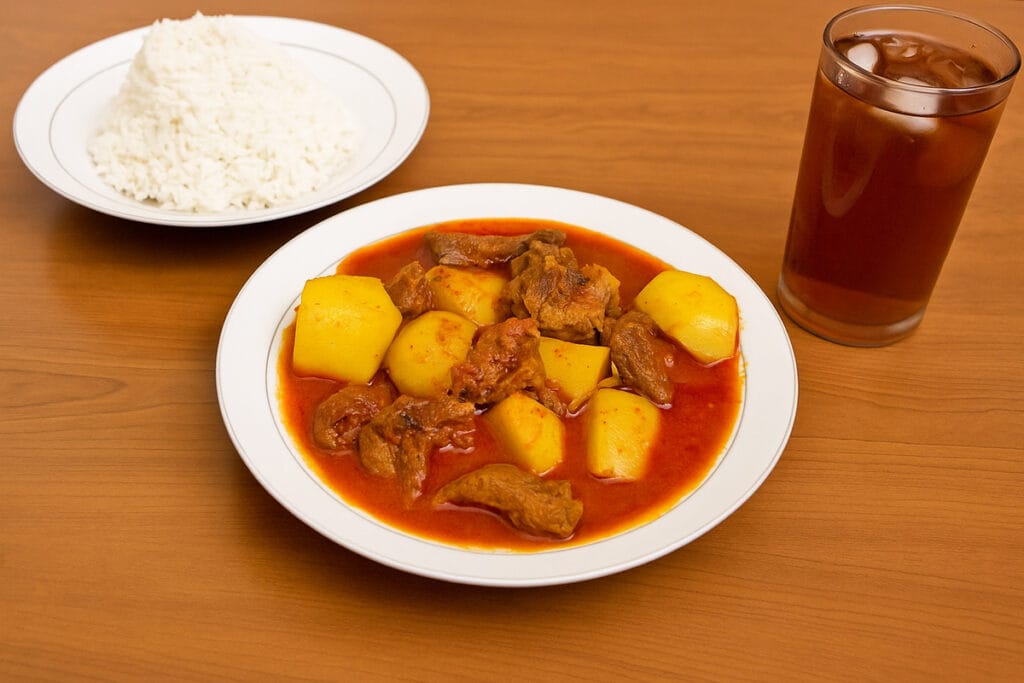
For Western audiences, Gulai Bagar can be enjoyed in creative ways:
- With jasmine or basmati rice as a traditional option.
- With crusty bread to soak up the broth.
- Over mashed potatoes or couscous, adapting it into a fusion comfort dish.
- Paired with steamed vegetables for a lighter balance.
Similar Dishes Abroad
Gulai Bagar shares similarities with several international dishes, yet remains unique:
- Indian Nihari – A slow-cooked beef shank stew with spices, though usually without potatoes.
- Middle Eastern Beef Stews – Use warm spices like cinnamon and cardamom, resembling the spice profile of Gulai Bagar.
- Hungarian Goulash – Beef, paprika, and potatoes simmered together, though the flavor is very different.
- Moroccan Tagine – Uses beef or lamb with aromatic spices, but cooked with dried fruits instead of potatoes.
These comparisons help Western audiences imagine Gulai Bagar’s bold, spice-driven character.
Flavor Profile
So, what does Gulai Bagar taste like? Imagine this:
- The beef shank gives it depth, with tender meat that almost melts after long simmering.
- Potatoes absorb the broth, becoming soft, savory, and slightly creamy.
- Spices—cloves, cinnamon, nutmeg, cardamom—create a warm, almost festive aroma.
- Chili paste adds a fiery backbone, balanced by the herbal freshness of lemongrass and kaffir lime leaves.
- Without coconut milk, every spice note is sharper, more pronounced.
The result is a stew that is hearty yet not heavy, complex yet comforting.
Why You Should Try Gulai Bagar at Least Once
Gulai Bagar is more than just a regional curry—it is a cultural emblem of West Sumatra, a dish that celebrates family, tradition, and the power of shared meals. For audiences abroad, it offers a refreshing departure from the coconut-rich curries often associated with Indonesian cuisine.
Whether served with rice, bread, or potatoes, Gulai Bagar is a dish that deserves to be known beyond Indonesia. It bridges history, flavor, and identity in every simmering pot.