Bangka is a lush island off the eastern coast of Sumatra, Indonesia. Known for its tin mining history and vibrant mix of cultures, the island has produced some of the nation’s most beloved dishes, including the legendary Pantiaw Bangka, a noodle soup with a unique story.
Many Western visitors might already be familiar with martabak Bangka—a decadent thick pancake layered with crushed peanuts, chocolate, cheese, and sesame seeds, celebrated for its chewy yet crisp texture. But Bangka’s culinary gems don’t stop at sweet treats. On the savory side lies a noodle dish locals cherish deeply: pantiaw Bangka.
At first glance, pantiaw looks similar to the better-known kwetiau (flat rice noodles). Yet pantiaw holds a distinct identity, a story of migration, cultural blending, and survival that stretches back centuries. To understand pantiaw is to travel back in time, when Bangka was not just a land of tin but also a melting pot of traditions.
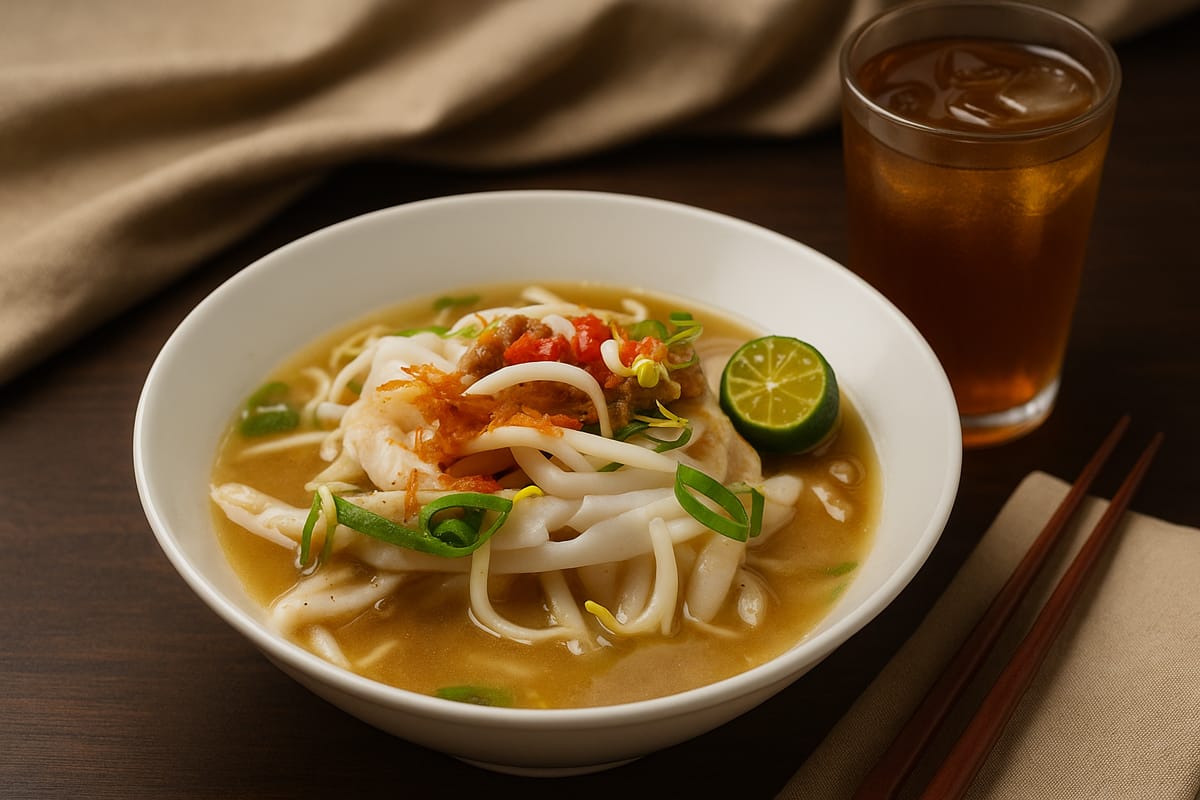
Bangka-Style Fish Noodle Soup (Pantiaw Kuah Bangka)
Ingredients
Instruction
- Heat 4 Tbsp cooking oil in a large wok or pot.
- Sauté garlic, shallots, and ginger until fragrant and slightly golden.
- Add the ground mackerel, stirring until it firms up and turns opaque.
- Pour in the chicken or fish broth. Bring to a gentle boil.
- Season with soy sauce, sweet soy sauce, oyster sauce, salt, sugar, and white pepper. Stir well.
- Add the fresh rice noodles (pantiaw) and cook for 2 minutes until heated through and softened.
- Stir in bean sprouts, scallions, and sesame oil. Cook briefly so the vegetables stay crisp and fresh.
- Serve hot in bowls. Garnish with fried shallots or chili sauce if desired.
Notes
- Pantiaw (kwetiau basah): This is the Bangka term for fresh flat rice noodles. If unavailable, substitute with wide dried rice noodles (like Pad Thai noodles), cooked according to package instructions.
- Fish substitution: Spanish mackerel (ikan tenggiri) is traditional, but cod, tilapia, or salmon work well. Ground chicken can also be used for convenience.
- Sweet soy sauce (kecap manis): Look for ABC Sweet Soy Sauce in Asian stores, or substitute with soy sauce mixed with brown sugar.
- Broth choice: Chicken broth is easiest, but fish stock gives a more authentic Bangka flavor.
- Flavor profile: Bangka dishes balance savory, slightly sweet, and peppery notes. Adjust the sweetness to your preference.
The Roots of Pantiaw: A Story of Migration and Fusion
The origins of pantiaw can be traced to the early 18th century, around the 1710s, when tin mining began to flourish on Bangka Island. This booming industry attracted migrants from Southern China, particularly the Hakka people, who journeyed across the seas in search of livelihood. Most of these early migrants were men. When they settled in Bangka, many married local women, giving rise to what is now called Peranakan culture—a blending of Chinese heritage with local Indonesian traditions.
Food became one of the most telling expressions of this cultural fusion. The Hakka migrants taught their Indonesian wives the culinary techniques of Southern China, particularly noodle-making. But as these dishes were adapted with local ingredients and cooking styles, they transformed into something distinctly Bangkanese. Out of this union emerged pantiaw—a noodle dish born of Chinese technique but flavored by the heart of Indonesia.

The Philosophy of Pantiaw Bangka
The word “pantiaw” itself carries symbolic meaning. It is said to derive from the words pan (half) and tiau (heavy). Together, “half-heavy” reflects its role in daily life: pantiaw was never meant to replace rice completely, but served as a filling, practical substitute—an energy booster for tin miners who needed something quick yet sustaining.
This simple philosophy still resonates today. Pantiaw is not a dish of luxury, but of comfort and practicality. It embodies the idea that food doesn’t need to be elaborate to be meaningful—it just needs to nourish body and soul.
Pantiaw vs. Kwetiau: Similar Yet Different
For those unfamiliar, pantiaw might look identical to kwetiau, the Chinese-style flat rice noodles popular across Southeast Asia. In fact, kwetiau itself comes from Southern China, known as guo tiao or sha he fen. In Indonesia, kwetiau became widespread thanks to Hokkien and Teochew migrants, and variations are now found everywhere—from Medan’s char kway teow to Jakarta’s street-side fried kwetiau.
Pantiaw Bangka, however, remained more localized to Bangka-Belitung. While kwetiau is almost always made from rice flour (sometimes mixed with wheat), pantiaw demonstrates Bangka’s creativity. Depending on availability, pantiaw may be made not only with rice flour but also with tapioca, sago, or even sweet potato flour. This gives pantiaw a unique chewiness and resilience, reflecting the islanders’ resourcefulness.
Another distinction lies in flavor. Kwetiau across Indonesia can be stir-fried with beef, chicken, or pork, or served with rich gravies. Pantiaw, on the other hand, leans toward a lighter, fish-based broth, often enhanced with ground mackerel (ikan tenggiri) and simple aromatics like garlic, shallots, pepper, and sometimes chili. The taste is clean, savory, and slightly sweet—an echo of Bangka’s seas and its Chinese roots.

How Pantiaw is Traditionally Made
Making Pantiaw Bangka noodles is itself a labor of love. Traditionally, flour (often rice mixed with sago) is blended with water to form a batter, steamed into thin sheets, dried slightly, then cut into noodle strips. These noodles are dusted with flour to prevent sticking and sometimes reboiled briefly to achieve the right consistency.
Once the noodles are ready, the cooking process begins. Locals often prepare a broth base by sautéing garlic, shallots, and freshly ground pepper (sahang, as the Bangkanese call it). Ground fish is added for protein and flavor. The noodles are then combined with this broth, topped with bean sprouts, scallions, and fried shallots for crunch and aroma. The result? A warm, comforting bowl that feels like home in every bite.
Nutritional and Practical Benefits
While pantiaw is primarily loved for its flavor and heritage, it also carries modest nutritional benefits. The fish-based broth provides lean protein and minerals, while the bean sprouts add vitamins and fiber. Compared to heavier noodle dishes, pantiaw feels lighter yet still satisfying. For Bangka’s tin miners in the past, this balance of energy and digestibility was essential.
Adapting Pantiaw for International Palates
For American and European audiences, Pantiaw Bangka offers a gateway into Indonesian-Chinese fusion food without being overwhelming. Its flavor profile—savory broth, a hint of sweetness, and subtle peppery warmth—is approachable, somewhat reminiscent of chicken noodle soup but with an Asian twist.
Here are a few adaptations that make pantiaw more accessible abroad:
- Noodles: If fresh pantiaw noodles are not available, wide rice noodles (like pad Thai noodles) make an excellent substitute.
- Fish protein: While mackerel (ikan tenggiri) is traditional, cod, tilapia, or salmon are widely available alternatives. For those hesitant about fish, ground chicken can be used.
- Sweet soy sauce: A crucial element of Indonesian cooking, kecap manis can be substituted with soy sauce mixed with a touch of brown sugar or molasses.
- Heat level: Pantiaw is usually mild. Those who enjoy spice can add chili sauce or fresh chili, while others can enjoy it as a gentle, warming dish.
Serving Suggestions for the West
In Bangka, pantiaw is enjoyed as a casual everyday meal, often at home or in small eateries. To introduce it to Western tables, presentation can be elevated slightly:
- Serve pantiaw in deep ceramic bowls, topped with fried shallots and fresh cilantro for a pop of color.
- Pair with a side of pickled vegetables (acar) or a light cucumber salad to balance the richness of the broth.
- For gatherings, pantiaw can be served “family-style” in a large pot with ladles, much like how chicken noodle soup is shared.
- Wine pairing: a crisp white wine such as Sauvignon Blanc complements the light fish broth, while a light beer or jasmine tea works for casual dining.
Why Pantiaw Matters
Pantiaw Bangka is more than just another noodle dish. It’s a story of migration, cultural exchange, adaptation, and resilience. It represents how communities blend traditions to create something new yet rooted in history. For Bangka, pantiaw is identity in a bowl: Chinese technique, Indonesian ingredients, and the soul of an island shaped by both the sea and the mines.
As Indonesian cuisine continues to gain recognition worldwide, pantiaw deserves its place alongside rendang, satay, and nasi goreng as a dish that introduces the world to the archipelago’s rich diversity. For Western audiences, trying pantiaw isn’t just about tasting noodles—it’s about tasting history, heritage, and the warmth of a culture that thrives on connection.
Bringing Pantiaw to Your Home
From the bustling tin mines of the 18th century to the dining tables of modern families, pantiaw has traveled a long journey. Though less famous than kwetiau, pantiaw remains a culinary gem of Bangka Island. Its light yet flavorful broth, its grounding in Peranakan culture, and its adaptability make it an ideal dish to bring into Western kitchens.
So next time you crave comfort food, think beyond chicken noodle soup. Reach for Pantiaw Bangka noodle soup—a dish that carries the spirit of an island, the legacy of migration, and the universal language of noodles.