When I talk about Indonesian food, one dish that always comes to mind is gulai kambing. Somehow, I never get tired of its rich, spiced coconut gravy—whether it’s made with chicken, beef, or goat. In my hometown, goat-based gulai isn’t as common; most people cook it with beef or offal, known as gulai cincang. That version is loaded with chopped meats and organ cuts—sometimes it’s even hard to tell which is which! But one thing is sure: when a pot of gulai is served, one plate of rice is never enough.
The funny part is, in my family, I’m almost alone in this passion. Only one of my kids shares the same love for goat dishes. The rest avoid it, mostly because of its distinctive smell. This is actually a common story in Indonesia: goat or mutton can be more pungent than beef, yet the flavor is deeply rewarding once you embrace it. In fact, I often joke that it’s not a problem—because the fewer people like it, the more gulai I get for myself!
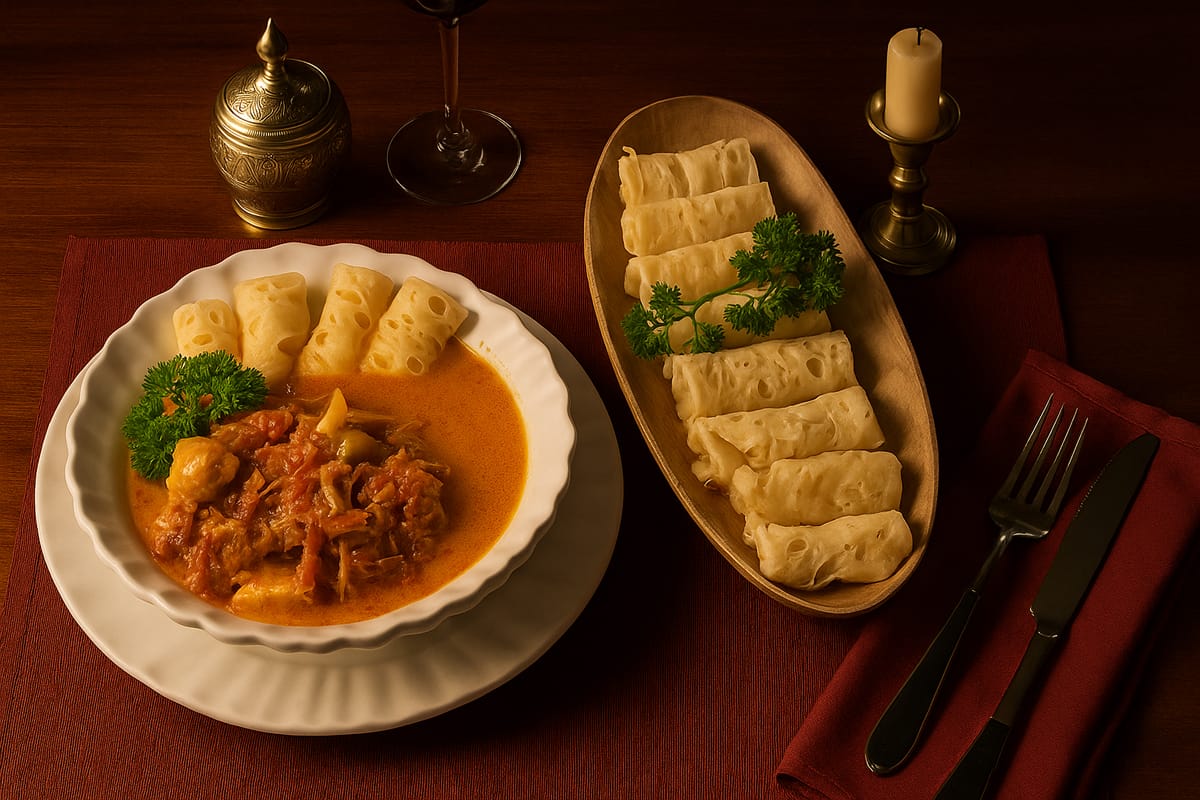
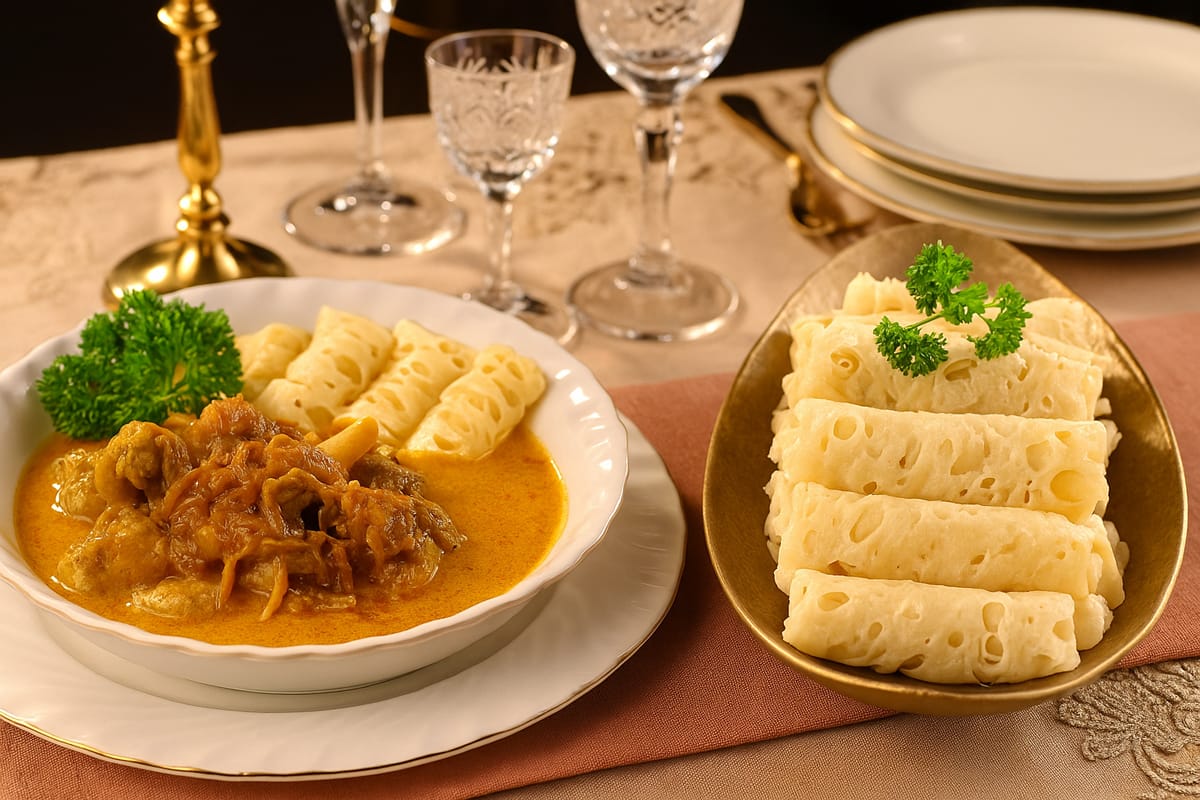
Indonesian Goat Curry – Gulai Kambing with Roti Jala
Ingredients
Instruction
- Make the spice paste: Blend red chilies, shallots, garlic, turmeric, candlenuts, coriander, cumin, black pepper, and salt into a smooth paste. Add a splash of water if needed.
- Sauté the paste: Heat oil in a large pot. Fry the spice paste along with lemongrass, ginger, galangal, kaffir lime leaves, cardamom, cloves, cinnamon, and (optional) bay leaves and turmeric leaf until fragrant and the oil begins to separate (5–7 minutes).
- Cook the meat: Add the goat meat. Stir until coated and the color changes.
- Simmer with thin coconut milk: Pour in the thin coconut milk. Cook uncovered over medium-low heat until the meat is tender, about 45–60 minutes. Stir occasionally to prevent curdling.
- Finish with thick coconut milk: Lower the heat. Add thick coconut milk and simmer gently until the curry turns rich, slightly oily, and thickened. Adjust seasoning with salt if needed.
- Serve: Ladle the curry into bowls and sprinkle with fried shallots. Serve hot with rice or Roti Jala.
- Prepare the batter: In a bowl, whisk flour, rice flour, eggs, coconut milk, salt, and oil until smooth. Strain to remove lumps.
- Shape into lace crepes: Heat a nonstick skillet over low heat. Using a roti jala mold, squeeze bottle, or piping bag, drizzle the batter in a lacy circular pattern. Cook until set, about 1–2 minutes. No need to flip.
- Fold: Remove and fold into quarters or roll into cylinders.
- Serve: Enjoy warm with Gulai Kambing, letting the crepes soak up the flavorful curry.
Notes
- Goat meat: If goat is hard to find, lamb shoulder or shank works well. Beef can also be used, though flavor differs.
- In Indonesia, young papaya leaves (daun pepaya) are sometimes used to wrap goat meat to tenderize and reduce strong odors. If not available, slow cooking or using a pressure cooker works perfectly.
- Coconut milk: Canned coconut milk is fine. For “thin coconut milk,” dilute 1 part canned coconut milk with 2 parts water. For “thick coconut milk,” use full-fat canned coconut cream.
- Candlenuts (kemiri): These are traditional thickeners. Macadamia nuts are the closest substitute in the U.S./Europe.
- Spice leaves: Daun salam (Indonesian bay leaves) and daun kunyit (turmeric leaf) are optional and can be skipped if unavailable.
- Roti Jala mold: If you don’t have the traditional mold, use a squeeze bottle with a small tip or even a piping bag to create the lace pattern.
- Serving tip: This dish is often enjoyed with plain steamed rice, but pairing with Roti Jala makes it a festive, authentic experience.
The Origins of Gulai Kambing
The history of gulai kambing is fascinating, with several versions of origin stories that overlap across cultures and centuries.
Version 1 – Sumatra and the spice trade
Many believe gulai kambing comes from West Sumatra, a region famous for its Padang cuisine. Here, traders from India and the Middle East brought spices through the maritime Silk Road. Local cooks combined these exotic flavors with coconut milk (santan), creating a dish that resembled curry but with a distinctly Indonesian soul. The yellow-golden broth, tinted by turmeric, became a signature of celebration meals, often served during Idul Adha (Eid al-Adha), weddings, and traditional gatherings.
Version 2 – Middle Eastern and Persian influence
Another version points to roots in the Persian karahi or Middle Eastern meat curries. Goat has long been a preferred protein across Islamic cultures, and as traders settled in Java and Sumatra, they adapted their recipes to local ingredients like coconut milk, lemongrass, and galangal. Over time, Indonesians embraced and localized it, producing regional variations like gule in Central Java, which uses fewer spices and tends to be lighter.
Version 3 – Indian heritage
From the Indian perspective, gulai kambing connects to Mughal-era dishes. Curries in India often served a dual role: they preserved meat in a hot climate (thanks to antimicrobial spices) and elevated dining in royal courts. Goat, being both practical and luxurious, was ideal. When Indian migrants and traders reached the Indonesian archipelago, they blended their curry traditions with local coconut and herbs, giving birth to the Indonesian gulai.
The truth? Most likely, gulai kambing is a beautiful fusion—born of the spice trade, adapted through migration, and perfected in Indonesian kitchens.
Culture, Philosophy, and Celebration
In Indonesia, food is never just about eating. Gulai kambing symbolizes prosperity, togetherness, and warmth.
Because goat meat is considered special and not eaten every day, gulai kambing is reserved for important occasions.
- Religious celebrations: During Idul Adha (Eid al-Adha), when Muslims sacrifice goats or sheep, gulai kambing is often the centerpiece of the feast.
- Weddings & community events: Large pots of gulai are cooked to feed guests, reflecting generosity and abundance.
- Everyday enjoyment: In Padang restaurants across Indonesia, gulai kambing is a staple, often displayed in the famous hidang style (dishes laid out on the table for communal sharing).
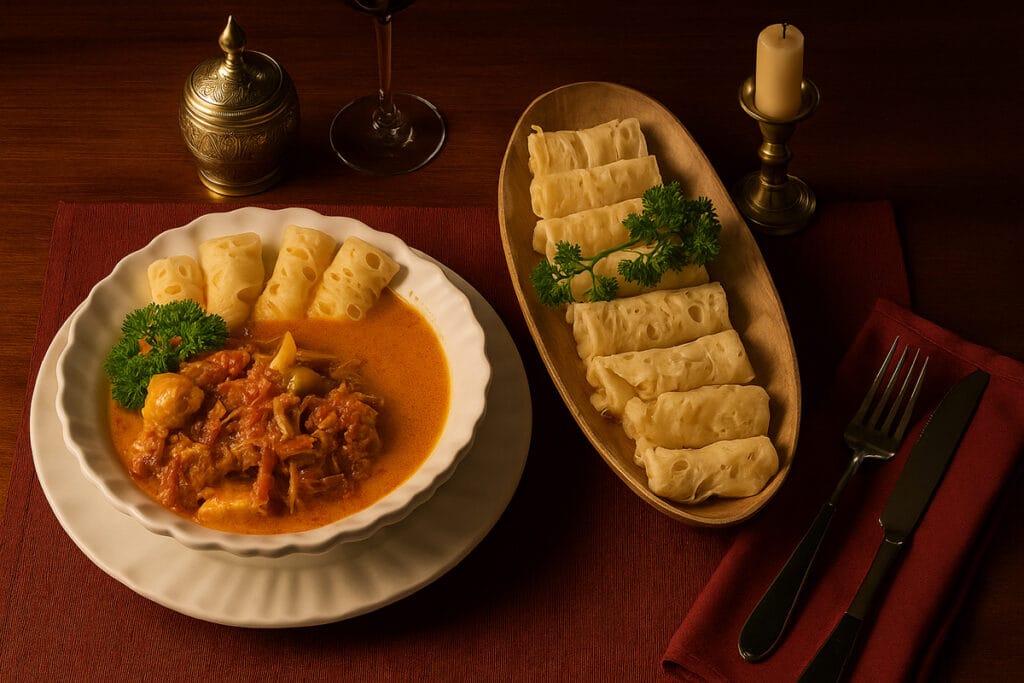
The dish is almost always served with steamed white rice, though in some regions, roti jala (lacy crepes influenced by Indian and Malay traditions) accompanies it perfectly, soaking up every drop of golden curry. Side dishes like sambal, pickles, emping crackers, or cucumber slices provide freshness and crunch.
The Flavor Profile
So, what makes gulai kambing different from other curries? It’s all about the layering of flavors.
- Spices: Lemongrass, ginger, galangal, kaffir lime leaves, cardamom, cloves, and cinnamon. These combine earthy, citrusy, and warm aromas.
- Coconut milk: Both thin (santan encer) and thick (santan kental) are used in stages. The thin coconut milk tenderizes the meat, while the thick one enriches the final sauce until it becomes slightly oily on top—a hallmark of authentic gulai.
- Chilies: Red chilies give the broth a gentle heat and a golden-red color.
- Herbs: Optional leaves like daun salam (Indonesian bay leaf) and daun kunyit (turmeric leaf) add layers of authenticity.
The result? A bold, spicy, coconut-rich curry that is hearty and warming.
Gulai Kambing vs. Opor Kambing
To international readers, gulai kambing is often confused with opor kambing, another Indonesian goat dish. Yet the two are quite different.

- Gulai Kambing:
- Uses chilies for heat and color
- Packed with dry spices like cardamom, cloves, cinnamon
- Cooked with both thin and thick coconut milk
- Ends with a glossy, oily finish
- Flavor is bold, complex, and layered
- Opor Kambing:
- No chilies → milder and creamier
- Uses simpler spice paste: coriander, turmeric, shallots, garlic, candlenuts
- Relies mostly on thick coconut milk
- Sauce is smooth, creamy, pale yellow
- Traditionally served during Lebaran (Eid al-Fitr) with rice cakes (ketupat or lontong)
In short: gulai is fiery and rich; opor is gentle and comforting. Both represent Indonesian hospitality, but they cater to different moods and occasions.
Cooking Techniques and Adaptation
Traditionally, Indonesians simmer goat meat in spiced coconut milk for an hour or more until tender. To reduce the “gamey” smell, cooks often rub the meat with lime juice or wrap it in papaya leaves. The latter is a traditional trick: enzymes in papaya leaves break down tough fibers and mellow the aroma.
In the U.S. and Europe, goat meat tends to be milder and cleaner (often imported from New Zealand or raised locally). Western kitchens might skip the leaf trick, relying instead on pressure cookers, slow cookers, or Dutch ovens for tenderizing. The result is just as satisfying.
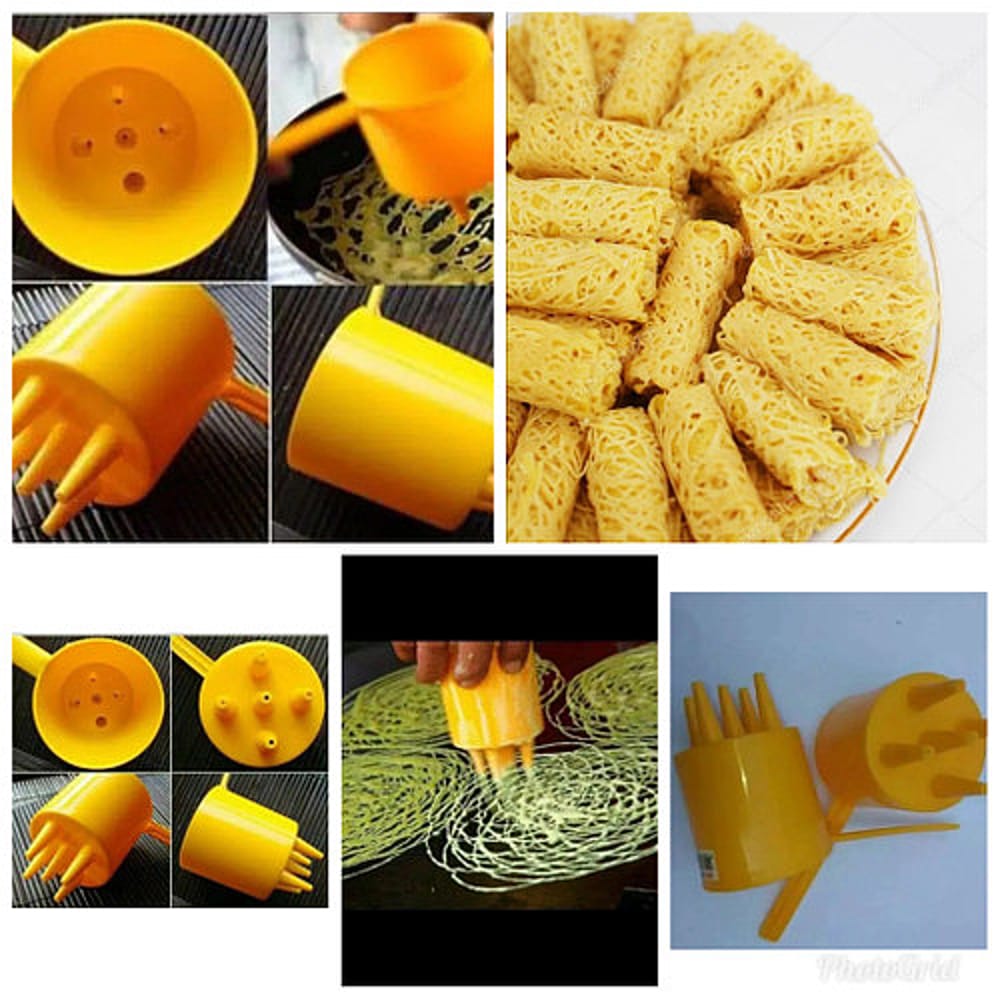
Roti Jala Mold
This collage shows a roti jala mold, a bright yellow plastic kitchen tool used to make the traditional Malaysian and Indonesian “net bread.” The mold looks like a small cup with a handle, featuring several spouts at the bottom where the batter flows out. One photo demonstrates how the mold is used: the batter is poured in and moved in circular motions over a hot pan, creating delicate lace-like patterns. Another image highlights the final result — beautifully rolled roti jala with a golden-yellow color, neatly arranged on a serving plate.
Why Western Palates Will Love It
While goat is not a staple protein in America or Europe, lamb is—and that makes gulai kambing surprisingly accessible. The spices may sound exotic, but they are increasingly available in international stores or online. Coconut milk, cardamom, cumin, and coriander are already familiar to anyone who enjoys Indian or Thai cuisine.
The combination of creaminess (from coconut milk), warmth (from cinnamon, cloves, cardamom), and heat (from chilies) makes gulai kambing both adventurous and comforting. Served with rice or roti jala, it can easily become a family favorite at international tables.
Personal Reflections
For me, gulai kambing is more than just food. It’s nostalgia, identity, and indulgence all in one bowl. Growing up, beef or offal gulai was more common in my area. Goat dishes were rarer, and perhaps that’s why I cherish them even more. I vividly remember the smell of spices filling the kitchen, the bubbling of coconut milk as it thickened, and that irresistible aroma promising a hearty meal.

Even though my family doesn’t always share my enthusiasm—most avoid goat because of the smell—I consider it a blessing in disguise. It means when gulai kambing is on the table, I get the bigger share! Food, after all, is also about joy and laughter, and gulai kambing has always given me plenty of both.
Conclusion
Gulai kambing is not just an Indonesian goat curry—it’s a story of trade, migration, and adaptation. From Persia to India to Sumatra, it carries centuries of history in its spices. In Indonesian culture, it represents prosperity and togetherness, celebrated at weddings, Eid feasts, and family gatherings.
Compared to its cousin, opor kambing, gulai is spicier, bolder, and layered with aromatics. Yet both dishes highlight the versatility of Indonesian cuisine: comforting, communal, and deeply flavorful.
For Western kitchens, gulai kambing offers a chance to travel through flavor. It bridges cultures, comforts the soul, and pairs beautifully with rice or roti jala. And for me personally, it remains one of my absolute favorite dishes—one that I will never grow tired of, no matter how many bowls I’ve had.