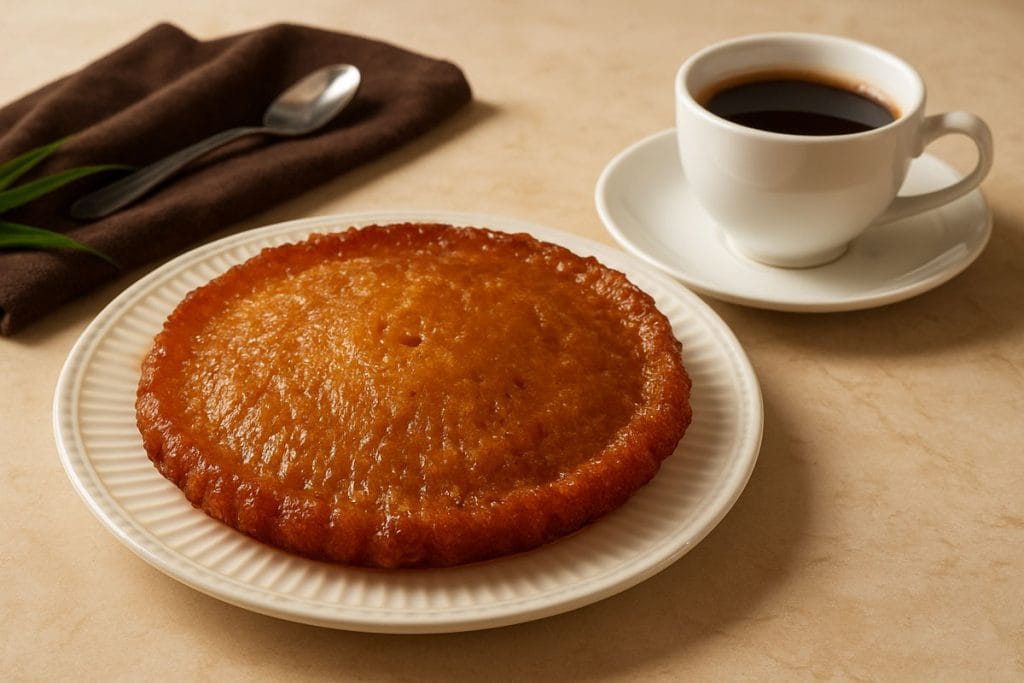
Imagine a golden, round fritter with delicately ruffled edges that shatter with crispness, revealing a thick, chewy center that melts on your tongue. The rich aroma of palm sugar (gula jawa) drifts upward, inviting you to take a bite.
This Kue Cucur recipe (pronounced koo-choor) is one of Indonesia’s most beloved traditional Indonesian snacks, cherished for centuries and now enjoyed by dessert lovers worldwide. Known as Indonesian rice flour fritters with a honeycomb-like interior, it offers a taste of heritage in every bite.
A Story Steeped in History
The origins of Kue Cucur are as layered as its honeycomb-like center.
Many food historians associate it with the culinary traditions of the Betawi people — the native inhabitants of Jakarta — whose food reflects a rich blend of Chinese, Malay, Arab, Indian, and local Indonesian influences. In Betawi culture, Kue Cucur has long been a fixture at weddings, thanksgiving ceremonies, and other community gatherings.
The word cucur itself comes from the Betawi and Javanese languages, meaning “to pour” or “to drip,” referring to the way the batter is poured into hot oil, forming thin, lacy edges and a plump center.

Some believe the cake dates back centuries, with early mentions in the 18th-century Javanese manuscript Serat Centini. The maritime trade routes of ancient Southeast Asia likely helped spread the recipe, as merchants exchanged not just goods but also flavors and cooking techniques.
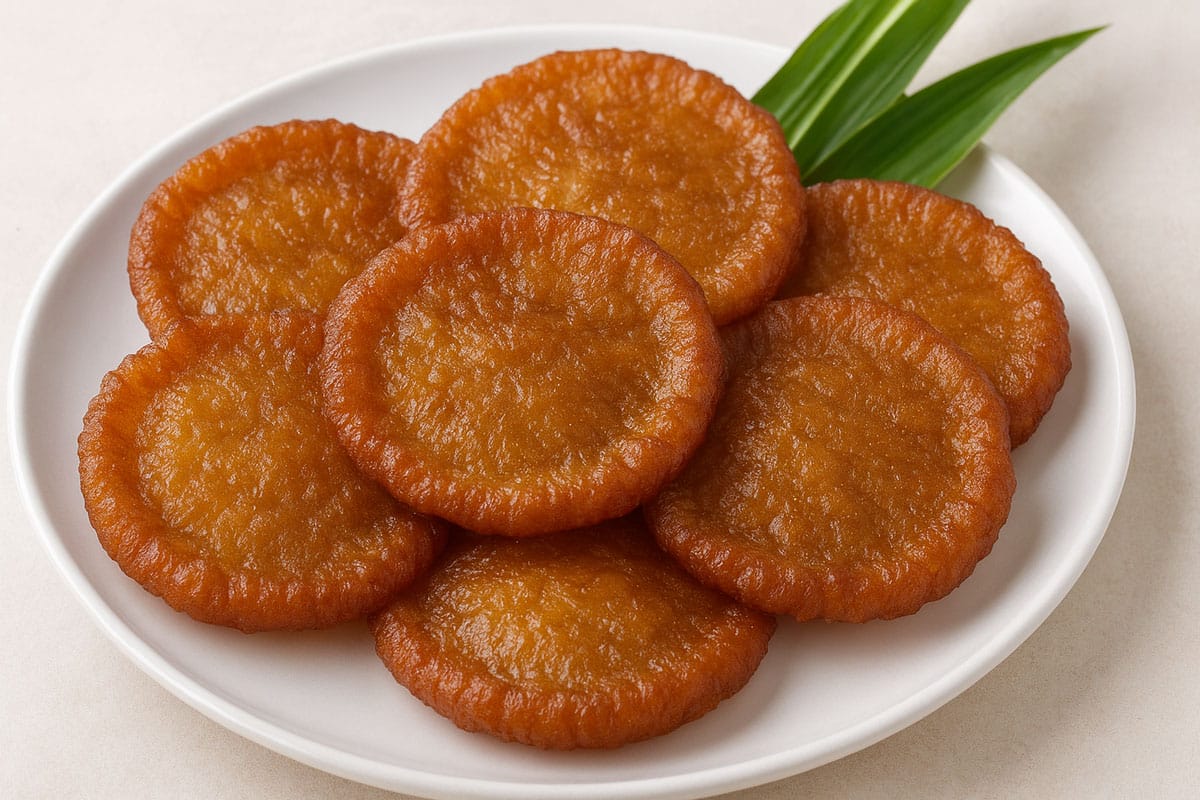
Indonesian Kue Cucur Recipe – Honeycomb Rice Flour Fritters
Ingredients
Instruction
- Make the Palm Sugar SyrupIn a saucepan, combine palm sugar, granulated sugar, water, and pandan leaves. Heat over medium until the sugar dissolves completely and the mixture comes to a boil. Strain to remove solids and let the syrup cool until warm.
- Prepare the BatterIn a large mixing bowl, combine rice flour, all-purpose flour, vanilla powder (if using), and salt. Gradually pour in the warm palm sugar syrup while mixing until well combined.
- "Slapping" Technique for Honeycomb TextureUsing clean hands, “slap” or fold the batter repeatedly by scooping from the bottom and letting it fall back into the bowl. Continue for about 15 minutes until the batter feels lighter and small bubbles appear.
- Rest the BatterCover and let the batter rest at room temperature for 30–60 minutes to develop the honeycomb texture.
- Fry the FrittersHeat about 1 cm of vegetable oil in a small frying pan (4–6 inches in diameter) over medium heat (around 160–170°C / 320–340°F).Stir the batter gently, then pour 1 ladleful into the center of the pan. Do not spread the batter; let it naturally form crispy edges and a raised center.
- Cook the CenterOnce the edges look crisp and the center begins to rise, use a wooden skewer to poke the middle and spoon hot oil over it until fully cooked. This helps the center cook through without flipping.
- Drain & ServeRemove the fritter, drain on paper towels, and repeat with remaining batter. Serve warm.
Notes
- Palm Sugar (Gula Jawa): If unavailable, substitute with dark brown sugar + 1 tbsp molasses for a closer flavor.
- Pandan Leaves: Common in Southeast Asian cooking; available frozen in Asian grocery stores. If not available, use vanilla extract and a few drops of pandan essence.
- Texture Tip: The “slapping” method is key to creating the signature honeycomb interior. A stand mixer with a paddle attachment on low speed can mimic this motion.
- Oil Temperature: Keep it medium — too hot and the outside will burn before the inside cooks; too low and the fritters will absorb too much oil.
- Serving Suggestion: Best enjoyed fresh and warm with coffee, tea, or as part of an Asian dessert platter.
From Local Delight to Southeast Asian Favorite
While Kue Cucur is iconic in Jakarta and surrounding areas, it has spread across Indonesia with unique local twists:
- Pinyaram/Paniaram in West Sumatra
- Kocor/Kucur in Madura and East Java
- Wadai Cucur in South Kalimantan
- Dumpi in West Sulawesi
Beyond Indonesia’s borders, this palm sugar dessert appears under different names:
- Penyaram in Brunei
- Kuih Cucur Jawa in Malaysia
- Khanom Fak Bua or Khanom Cucun in Thailand
- Neyyappam in southern India
The basic concept remains the same: a rice flour batter sweetened with palm sugar, fried until it develops its signature contrast of crispy edges and a soft, airy middle.
The Symbolism Behind the Sweetness
For many Indonesians, Kue Cucur is more than a snack — it’s a symbol of blessings and good fortune. Its round shape represents wholeness and perfection, while its sweetness is a wish for a joyful life.
In Betawi weddings, it’s often part of the ceremonial offerings. In Javanese traditions, it appears as part of a bridal gift tray. In Bali, it’s offered in temple ceremonies as a sign of balance and prosperity.

Texture, Flavor, and Serving Style
Kue Cucur’s beauty lies in its contrasts:
- Edges – crisp and delicate, almost lacy
- Center – thick, chewy, with tiny “honeycomb pancake” patterns inside
- Color & aroma – deep golden-brown from gula jawa, with notes of caramel and coconut
Because it’s deep-fried in generous oil, Kue Cucur naturally has a slight greasiness — but that’s part of its charm, adding richness to every bite.
In Indonesia, it’s often served:
- Warm or at room temperature
- Alongside hot sweet tea or traditional coffee (kopi tubruk)
- On platters mixed with other traditional treats like kue cincin, kue ape, or kue rangi
A Taste Western Palates Can Appreciate
For American and European audiences, Kue Cucur offers a unique yet approachable flavor. Its texture contrast recalls funnel cakes or thick pancakes, but the palm sugar brings a deeper, more complex sweetness than refined sugar.
It’s less sugary than a glazed donut and has an aromatic quality — especially when pandan leaves are used — that sets it apart from most Western pastries.
Serving ideas for the Western table:

- As an exotic street dessert at food festivals
- Paired with espresso, cappuccino, or herbal teas
- Served warm with a sprinkle of toasted shredded coconut or a drizzle of sweet coconut milk sauce
Fail-Proof Tips for Making Kue Cucur
Though the ingredients are simple, the technique is key:
- Use quality rice flour (tepung beras) for the right crisp-soft balance.
- Warm palm sugar syrup blends better into the batter.
- The “slapping” method – lift and drop the batter repeatedly for 15 minutes to create the honeycomb interior.
- Rest the batter for at least 30 minutes before frying.
- Maintain medium oil heat (160–170°C / 320–340°F) – too hot and the edges burn, too cool and the cake absorbs excess oil.
- Fry in a small pan to achieve a perfect round shape and even crispy edges.
When to Serve It in the West
- In America: Perfect for brunch, afternoon snacks, or as a warm dessert after dinner.
- In Europe: Ideal for tea time, international food fairs, or in coffee shops serving world pastries.
- Globally: A standout addition to fusion restaurant menus or Asian street food events.
Conclusion
This Kue Cucur recipe proves that a humble combination of rice flour, palm sugar, and water can carry centuries of history, tradition, and joy.
From the markets of Jakarta to kitchens abroad, this traditional Indonesian snack bridges cultures through its universal appeal: crispy, chewy, sweet, and deeply comforting. Introducing Kue Cucur to an American or European table is more than offering dessert — it’s sharing a piece of Indonesia’s soul, one honeycomb bite at a time.
Or as the Betawi saying might go: “Eat Kue Cucur, and life feels sweeter.”