- This tamarind chicken recipe uses a dual-acid foundation of tamarind and tomato for complex flavor.
- The tamarind chicken marinade tenderizes the meat while the glaze adds a velvety texture.
- Lemongrass and white pepper provide the aromatic warmth essential to this Indonesian dish.
- This tamarind chicken is a versatile family meal that bridges colonial and indigenous culinary traditions.
Discover the secret to perfect tamarind chicken with this authentic Indonesian recipe. This tamarind chicken dish features a unique lemongrass tomato glaze that balances sweet and tangy flavors.
Ayam Goreng Bumbu Tomat—translated for international kitchens as Indonesian Tamarind-Fried Chicken in Lemongrass Tomato Glaze—is a study in Southeast Asian flavor equilibrium. Unlike fiery chili-driven archipelago classics such as Ayam Rica-Rica or Ayam Balado, this dish builds complexity through a dual-acid foundation and aromatic warmth. Bone-in chicken pieces are marinated in earthy tamarind water, garlic, and white pepper, fried until golden and blistered, and folded into a glossy reduction of fresh tomatoes, sweet caramelized onions, bruised lemongrass, and tangy tomato ketchup. The result is a deeply savory, sweet-tart poultry dish where crisp fried skin absorbs a velvety tomato-lemongrass emulsion without losing its structural bite (tamarind chicken).
Across Indonesian households from Java to Sumatra, this preparation bridges everyday family comfort and celebratory peranakan and Indische banquet traditions. For global cooks and food lovers, it offers an accessible entry point into the Indonesian bumbu (spice paste and sauce) repertoire—delivering unmistakable Nusantara aromatics through ingredients available in almost any supermarket worldwide. (Ayam Taliwang: Authentic Indonesian Grilled Chicken – tamarind chicken).
The Round-Trip History of a Cosmopolitan Classic
Understanding how a tomato-glazed fried chicken became an Indonesian household staple requires tracing four centuries of maritime trade, colonial horticulture, and culinary cross-pollination. While chicken (ayam), tamarind (asam jawa), and lemongrass (serai) are ancient indigenous staples of Maritime Southeast Asia, the tomato and the globe onion arrived through global trade networks that reshaped the Indonesian pantry (tamarind chicken).
According to Indonesian culinary historian Fadly Rahman in Jejak Rasa Nusantara (Footprints of Archipelago Flavor), New World crops like tomatoes (Solanum lycopersicum) entered the Malay Archipelago during the late sixteenth and seventeenth centuries via Spanish and Portuguese galleon routes linking Manila, Malacca, and the Spice Islands. Initially cultivated as ornamental curiosities in coastal ports, tomatoes were gradually adopted by local cooks in Java, Sumatra, and Sulawesi as a bright, juicy counterbalance to rich coconut gravies and deep-fried proteins (tamarind chicken).
Even more fascinating is the circular global migration behind saus tomat (tomato ketchup), a defining component of this recipe’s glaze. As linguist and food historian Dan Jurafsky documents in The Language of Food, and Andrew F. Smith details in Pure Ketchup, the English word “ketchup” derives from the Hokkien Chinese term kê-tsiap (or kôe-chiap), referring to a fermented fish brine traded extensively by Chinese merchants across Indonesian ports like Batavia (modern Jakarta) and Banten in the seventeenth century. British and Dutch sailors brought barrels of this savory Indonesian-Chinese condiment back to Europe, where Western cooks eventually replicated its umami depth using mushrooms, walnuts, and finally ripe tomatoes and sugar in the nineteenth century. When commercial tomato ketchup returned to the Dutch East Indies during the late colonial era, urban Indische (Eurasian) and Peranakan (Straits Chinese) kitchens immediately embraced it, folding it back into local stir-fries alongside native lemongrass and tamarind (tamarind chicken).

The presence of bawang bombay (yellow globe onion) alongside native garlic tells a parallel story of maritime exchange. Whereas traditional Indonesian bumbu relies on small, pungent ruby shallots (bawang merah), colonial-era port cities imported larger, sweeter yellow onions shipped through Mumbai—hence the enduring Indonesian name bawang bombay (“Bombay onion”). In Ayam Goreng Bumbu Tomat, bawang bombay provides soluble sugars that caramelize in hot oil, rounding out the sharp acidity of fresh tomatoes and tamarind (tamarind chicken).
Historian Anthony Reid notes in Southeast Asia in the Age of Commerce that Nusantara culinary culture has always excelled at indigenizing foreign ingredients rather than merely imitating foreign dishes. When Dutch colonial tables popularized Smoor (braised meat) and Bistik Jawa (Javanese beefsteak in sweet tomato gravy), Indonesian home cooks adapted the glossy tomato-onion pan sauce by stripping away heavy dairy butter and infusing the base with bruised serai (lemongrass) and a preliminary asam jawa (tamarind) marinade. This synthesis gave birth to Ayam Goreng Bumbu Tomat: a dish where European-style tomato reduction meets Chinese wok-glazing technique and indigenous Indonesian herbal brightness (tamarind chicken).
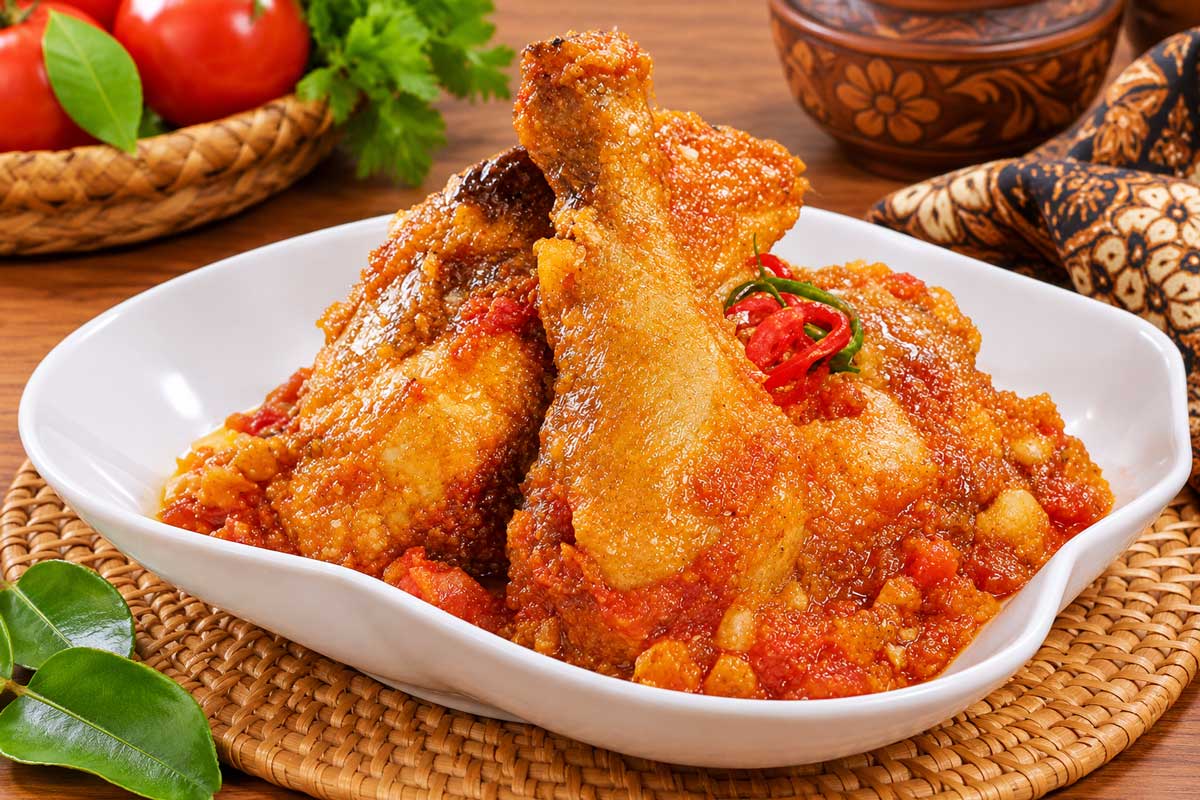
Indonesian Tamarind-Fried Chicken in Lemongrass Tomato Glaze (Ayam Goreng Bumbu Tomat)
Ingredients
Instruction
- Marinate the Chicken: Coat the chicken pieces thoroughly with the tamarind water, mashed garlic, ½ tablespoon of salt, and ground white pepper. Let it rest for 30 minutes to absorb the flavors and tenderize the meat.
- Fry until Crispy: Heat enough oil in a deep pan or wok over medium heat. Fry the marinated chicken pieces until cooked through to the bone and the outer skin turns golden, crisp, and blistered (berkulit). Remove from the oil, drain well, and set aside.
- Sauté the Aromatics: Heat 2 tablespoons of fresh cooking oil in a pan or wok. Sauté the minced garlic, chopped yellow onion, and bruised lemongrass until fragrant and translucent.
- Build the Tomato Base: Add the coarsely chopped red tomatoes to the pan. Stir-fry over medium heat until the tomatoes soften, wilt completely, and release their natural juices into the aromatics.
- Simmer the Glaze: Pour in the tomato ketchup, ¾ teaspoon of salt, granulated sugar, and 200 ml of water. Stir well and simmer over medium heat until the liquid reduces and thickens into a rich, glossy glaze.
- Coat and Serve: Return the fried chicken pieces into the pan with the tomato glaze. Toss continuously until every piece is evenly coated and the savory-sweet glaze clings to the crispy skin. Remove from heat and serve hot with warm jasmine rice.
Notes
- Chicken Selection: Best prepared using 500g to 700g of bone-in chicken pieces (such as thighs, drumsticks, or a cut-up whole chicken) to maintain juicy meat under the crispy fried skin.
- Tamarind Prep: If using seedless tamarind paste/concentrate, mix 1 tablespoon of paste with 3 tablespoons of warm water to create the required air asam jawa.
- Customization / Heat Option: This recipe is naturally mild and child-friendly (chili-free). If you prefer heat, stir in finely sliced bird’s eye chilies (cabai rawit) along with the onions during Step 2.
- Make-Ahead Tip: The fried chicken and the tomato-lemongrass glaze can be prepared ahead of time separately, then combined and tossed over medium heat just before serving to maintain the ideal crisp-to-saucy texture.
Culinary Philosophy: The Architecture of Rasa
In traditional Indonesian gastronomy, a dish is judged by its command of Rasa—not merely physical taste on the tongue, but the holistic sensory and emotional harmony of a meal. Ayam Goreng Bumbu Tomat embodies three foundational principles of Indonesian culinary philosophy: — tamarind chicken.
- Layered Acidity: Rather than relying on a single souring agent, the recipe pairs fermented-tasting tartness from tamarind pulp inside the meat with bright malic and citric acidity from tomatoes in the exterior glaze.
- Thermal Balance: In traditional Javanese foodways, deep-fried foods and tangy sauces are balanced with warming rhizomes or stalks like lemongrass and white pepper to aid digestion and prevent palate fatigue.
- Communal Resilience: Designed for makan tengah (family-style shared dining), frying the chicken until berkulit (crusty-skinned) before glazing ensures the meat remains succulent and flavorful at ambient room temperature across long communal meals.
Sensory Architecture and Global Palate Appeal
What makes Indonesian Tamarind-Fried Chicken in Lemongrass Tomato Glaze immediately captivating to international diners is its layered flavor progression. The first impression is aromatic: as the warm glaze hits the plate, volatile essential oils from bruised lemongrass—predominantly citral and myrcene—release a clean, lemony-herbal perfume that lifts the rich scent of caramelized onion and roasted garlic.
On the palate, the texture contrasts crisp, savory chicken skin with a jammy, clinging tomato reduction. Fresh tomatoes cooked down until wilted provide natural glutamic acid (savory umami) and rustic texture, while tomato ketchup contributes concentrated lycopene sweetness and vinegar tang that emulsifies with the pan drippings into a lacquer-like coating. Once you bite through the glazed exterior into the meat, the thirty-minute marinade reveals itself: tamarind water tenderizes the poultry fibers while imparting a subtle, woody fruitiness underscored by the earthy heat of ground white pepper.
Because the recipe contains zero chilies by default, it bridges culinary worlds effortlessly. Western diners recognize the comforting sweet-savory profile of a tomato-onion braise, while Asian diners appreciate the high-heat wok reduction and aromatic lemongrass backbone.
Global Culinary Relatives: How It Compares
While several world cuisines feature chicken cooked in tomato-based sauces, Ayam Goreng Bumbu Tomat occupies a distinct technical and aromatic niche.

| Dish Name | Origin | Primary Acid | Signature Aromatic | Chicken Technique |
|---|---|---|---|---|
| Ayam Bumbu Tomat | Indonesia | Tamarind and tomato | Whole bruised lemongrass | Deep-fried then glazed |
| Ayam Masak Merah | Malaysia | Tomato paste | Dried chili paste | Fried then simmered |
| Pollo alla Cacciatora | Italy | Wine and tomato | Rosemary and sage | Pan-seared then braised |
| Sweet and Sour Chicken | China | Rice vinegar | Ginger and bell pepper | Battered and wok-tossed |
| Chicken Afritada | Philippines | Tomato and fish sauce | Bay leaf and garlic | Pan-browned then stewed |
The defining divergence lies in moisture management and aromatic framing. Italian Pollo alla Cacciatora and Filipino Chicken Afritada are wet braises where raw or lightly browned chicken simmers in liquid until tender, yielding soft skin and a brothy sauce meant for crusty bread or spooning. Cantonese Sweet and Sour Chicken uses a cornstarch batter and sharp vinegar-sugar syrup that stays crisp only for minutes. By contrast, the Indonesian method fries bare, tamarind-marinated chicken without flour until the natural skin dehydrates into a blistered parchment (berkulit). When tossed briefly into the reduced tomato-lemongrass glaze, the skin acts like a sponge, absorbing flavor while retaining chew. Meanwhile, whereas Malaysian Ayam Masak Merah relies on blended dried chilies (cili kering), ginger, and galangal for pungent heat, Ayam Goreng Bumbu Tomat keeps the aromatics streamlined—letting garlic, sweet onion, and lemongrass shine cleanly through the tomato base.
International Pantry Substitutions
When cooking outside Southeast Asia, simple swaps preserve the dish’s chemical and sensory balance without sacrificing authenticity:
- Tamarind Water: Whisk one tablespoon of seedless tamarind concentrate into three tablespoons of warm water, or substitute equal parts pomegranate molasses and fresh lime juice.
- Fresh Lemongrass: Use frozen whole lemongrass stalks (available in international freezer aisles), or substitute one strip of pared lemon zest plus twoslices of fresh ginger and a sprig of lemon thyme.
- Bawang Bombay: Standard yellow globe onions, Vidalia onions, or Walla Walla sweet onions match the exact water content and caramelization profile used in Indonesia.
- Indonesian Ketchup: Western tomato ketchup works seamlessly; if using a high-vinegar American brand, reduce added sugar slightly to keep the glaze balanced.
- White Pepper: Freshly ground black pepper can substitute in a pinch, though white pepper delivers the signature earthy warmth prized in Indonesian poultry marinades.
Nutritional Profile, Bioavailability, and Demographic Guidance
From a nutritional science perspective, Ayam Goreng Bumbu Tomat offers a compelling synergy between fat-soluble phytonutrients and high-biological-value protein. A standard serving (approximately 180 grams of bone-in chicken with glaze) provides roughly 310 to 360 kilocalories, 27 grams of complete protein, 16 grams of fat, and 14 grams of carbohydrates, depending on oil absorption and sugar ratios.
The standout nutritional mechanism in this recipe occurs during Step 2 of the stir-fry: cooking fresh tomatoes and concentrated tomato sauce together in warm culinary oil. Raw tomatoes contain all-trans-lycopene, a rigid linear carotenoid bound tightly within plant cell walls that the human digestive tract absorbs poorly. Research published in the Journal of Agricultural and Food Chemistry (including foundational work by Cornell University food scientists) demonstrates that thermal processing in the presence of dietary lipids ruptures tomato cell walls and isomerizes trans-lycopene into cis-lycopene, increasing intestinal bioavailability up to threefold. Furthermore, garlic and onions contribute organosulfur compounds (allicin and quercetin), while tamarind provides tartaric acid and trace polyphenols.
Because nutritional needs vary across life stages and physiology, mindful adjustments allow every group to enjoy the dish optimally:
- Children and Teens: The chili-free, tangy-sweet glaze appeals strongly to young palates while supplying essential amino acids for growth; using low-sodium, no-high-fructose-corn-syrup ketchup keeps added sugars and sodium in check.
- Adult Men: Regular dietary intake of bioavailable cooked lycopene is widely studied in clinical literature for supporting prostate cellular health and reducing oxidative stress in cardiovascular tissues.
- Adult Women: Bone-in dark meat provides bioavailable heme iron and zinc that support menstruating and perimenopausal women; shallow-frying in high-oleic avocado or rice bran oil minimizes oxidized lipid intake for metabolic wellness.
- Older Adults: The tangy tamarind-tomato glaze naturally stimulates salivary and gastric acid secretion—helpful for seniors experiencing reduced appetite—while simmering the fried crust for an extra minute softens the exterior for easier chewing.
- Moderation Considerations: Consuming deep-fried, sugar-glazed dishes in excess can elevate caloric density, sodium load, and advanced glycation end-products (AGEs); individuals managing hypertension or insulin sensitivity should air-fry the marinated chicken and halve the added sugar.
Traditional Indonesian Service vs. International Plating
In Indonesia, Ayam Goreng Bumbu Tomat is served at the center of the table alongside steaming jasmine rice (nasi putih hangat), which absorbs the tangy-sweet tomato oil. Because the dish itself is mild, Indonesian hosts inevitably place a mortar of fiery sambal terasi (chili-shrimp paste relish) on the side for guests who want customizable heat, accompanied by cool sliced cucumbers, crisp cabbage wedges (lalapan), and airy prawn crackers (kerupuk udang) or slightly bitter melinjo nut crackers (emping).
For international dinner parties, bistros, or global catering menus, this dish adapts with remarkable versatility:
- Contemporary Bistro Plating: Serve a glazed bone-in chicken thigh over creamy coconut-infused polenta or garlic-herb mashed potatoes, garnished with crispy fried shallots and micro-cilantro.
- Global Grain Bowls: Slice boneless glazed chicken breast over warm quinoa or jasmine brown rice alongside charred broccolini, pickled red cabbage, and fresh mango ribbons.
- Tapas and Sharing Plates: Prepare the recipe using chicken wings or lollipop drumsticks as a sticky, aromatic bar snack paired with crisp citrus IPAs, dry Riesling, or sparkling rosé.
- Travel and Meal Prep: Because the reduced tomato-tamarind coating locks moisture inside the fried crust, the dish holds exceptionally well in refrigerated meal-prep containers or insulated catering chafers, reheating cleanly in an oven or skillet.
What does Ayam Goreng Bumbu Tomat taste like?
It delivers a balanced sweet, tangy, and savory flavor profile without spicy chili heat. The chicken interior carries subtle earthy sourness from tamarind and warmth from white pepper, while the exterior glaze tastes like a rich caramelized tomato reduction infused with bright, citrusy lemongrass.
Why is the chicken fried before adding it to the tomato sauce?
Frying the tamarind-marinated chicken until berkulit (crusty-skinned) renders excess subcutaneous fat, locks in meat juices, and creates a textured surface that grips the thick tomato glaze without turning soggy.

Is Ayam Goreng Bumbu Tomat spicy?
No, the authentic recipe contains no chilies, making it naturally mild and family-friendly. Those who prefer heat can add sliced bird’s eye chilies (cabai rawit) during the onion-sauté stage or serve it with sambal on the side.
Can I make this recipe healthier without deep-frying?
Yes, you can roast or air-fry the tamarind-marinated chicken at 200 degrees Celsius for 22 minutes until golden and crisp before tossing it in the stovetop tomato-lemongrass reduction.
Few dishes capture the cosmopolitan soul of the Indonesian kitchen quite like Ayam Goreng Bumbu Tomat. By uniting New World tomatoes, maritime trade onions, and the round-trip legacy of ketchup with indigenous tamarind and fragrant lemongrass, this recipe transforms humble pantry staples into a vibrant, crowd-pleasing centerpiece that belongs just as naturally on an international dining table as it does in an Indonesian home.