- This tempeh soup is an oil-free, low-calorie dish that highlights the natural flavor of fermented soy.
- The recipe relies on galangal and shallots to create a savory-sweet broth without heavy fats.
- Serving this dish in a Warteg style with rice and sambal creates the perfect textural balance.
- You can easily replicate this tempeh soup at home using affordable, widely available plant-based ingredients.
Discover the authentic taste of tempeh soup, a minimalist classic from Tegal that defines Indonesian home cooking. This guide explores the deep roots of Sayur Bening and its role in the vibrant Warteg culture.
Along the bustling streets of Jakarta and across the vast island of Java, the Warung Tegal—affectionately abbreviated as Warteg—stands as the undisputed backbone of Indonesia’s working-class dining scene. These humble, glass-fronted eateries originate from Tegal, a coastal city in Central Java, and are universally loved for serving fast, incredibly affordable, and deeply comforting home-style meals, much like the legendary duck noodle soup that also defines the region’s culinary identity, proving that simple tempeh soup can be just as iconic.
To understand Sayur Bening Tempe (Clear Tempeh Soup) is to understand the culinary ethos of Tegal. According to Indonesian culinary historians and frequent features in national publications like Kompas and Detik Food, Tegal cuisine is defined by agrarian practicality and resourcefulness. While tempeh—Indonesia’s legendary fermented soybean cake—is most commonly deep-fried or braised in thick coconut milk, the Sayur Bening method strips away all the heavy fats.
Historically documented in ancient Javanese manuscripts like the Serat Centhini, tempeh has been the primary protein source for Javanese commoners for centuries. By boiling the tempeh in a clear, oil-free broth seasoned simply with local rhizomes and shallots, Tegal cooks maximize the ingredient’s earthy flavor without the added expense of cooking oil. It is a testament to the beauty of frugality, resulting in a soup that is pure, hydrating, and distinctly Javanese. [Tempeh – Wikipedia] — tempeh soup.
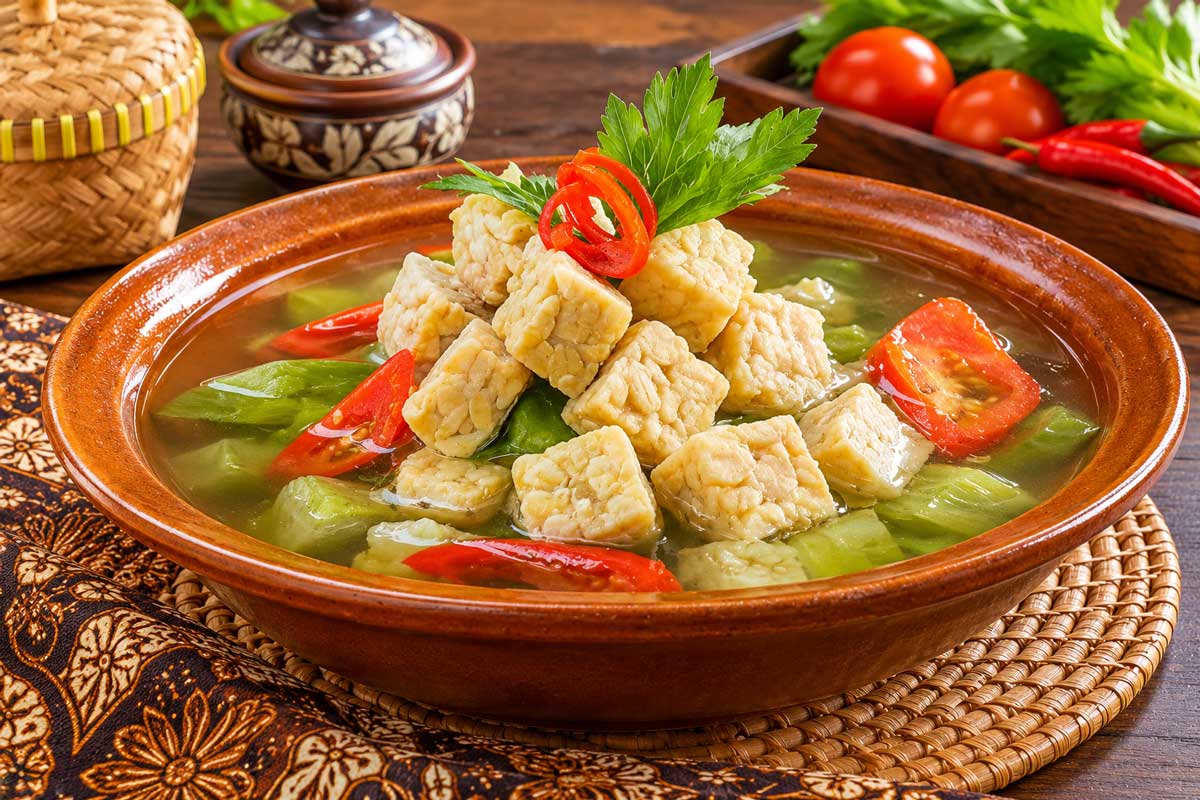
Sayur Bening Tempe (Tegal-Style Clear Tempeh Soup)
Ingredients
Equipment
Instruction
- Prepare the Aromatics:Begin by prepping all your ingredients. Slice the shallots as thinly as possible to ensure they release their maximum flavor into the water. Slice the red chilies diagonally for an elegant presentation. Take your piece of peeled galangal and smash it firmly with the back of a heavy knife or a pestle; it should be bruised and slightly split open, but still in one piece so it can be easily removed later.
- Build the Aromatic Broth:Place your soup pot on the stove over high heat and pour in the 1,150 ml of water. Immediately add the sliced shallots, the diagonally cut red chilies, the bruised galangal, and the daun salam (bay leaf). Bring the water to a rolling boil.Once the water is boiling, lower the heat slightly to medium. Let the broth simmer vigorously for about 3 to 5 minutes. This step is crucial; you want to see the water take on a very slight tint and smell the fragrance of the shallots and galangal filling your kitchen before you add the tempeh.
- Cook the Tempeh:Carefully drop the cubed tempeh into the boiling aromatic broth. Add the 1 tablespoon of salt and the 1 tablespoon of sugar. Stir gently to ensure the salt and sugar dissolve completely into the liquid.
- Simmer to Perfection:Allow the soup to return to a gentle boil, then lower the heat to medium-low. Let it simmer uncovered for 10 to 15 minutes. During this time, the tempeh will absorb the savory-sweet broth, and the slightly sharp, raw edge of the fermented soybeans will mellow out into a rich, nutty flavor.
- Taste and Serve:Taste the clear broth. It should be deeply savory from the shallots, lightly earthy, and feature a gentle, pleasant sweetness. Adjust the salt or sugar if necessary to suit your palate. Turn off the heat.Ladle the hot soup into bowls, ensuring each serving gets a generous amount of tempeh cubes and a few slices of the red chili for color. Serve immediately by ladling the broth and tempeh over a plate of warm steamed rice.
Decoding the Earthy Profile of Sayur Bening Tempe
For the uninitiated, the concept of boiled tempeh might sound plain, but the flavor profile of this dish is a brilliant exercise in aromatic infusion (tempeh soup).
Because the soup uses absolutely no oil, the water acts as a pure canvas for the spices. The broth is anchored by the sharp, pungent sweetness of thinly sliced shallots. This is immediately followed by the unique, piney, and slightly citrus-like aroma of bruised galangal (lengkuas), which cuts through the density of the soybeans. The daun salam (Indonesian bay leaf) adds a subtle, earthy astringency that ties the aromatics together (tempeh soup).

Central Javanese food is famous for its sweet-tooth tendencies, and this soup is no exception. The addition of a full tablespoon of sugar balances the salt, creating a savory-sweet broth that complements the naturally nutty, mushroom-like flavor of the tempeh. The large red chilies (cabai merah besar) used in this recipe are practically heatless; their purpose is to impart a mild, grassy bell-pepper flavor and a vibrant pop of red to the otherwise muted visual palette of the soup.
Global Relatives of This Fermented Soy Broth
While unique to Central Java, the culinary philosophy behind Sayur Bening Tempe shares striking similarities with several international dishes that celebrate fermented soy in a clear broth.
In Japan, the most obvious relative is Miso Soup (specifically when served with firm tofu). Both dishes rely on the umami of fermented soybeans suspended in a light, watery broth. However, where Japanese miso uses fermented soybean paste and a seafood dashi for umami, the Tegal soup uses the whole fermented soybean cake (tempeh) and relies strictly on shallots and galangal for its savory depth.
In Korea, Doenjang Jjigae (Soybean Paste Stew) shares a similar rustic, earthy DNA. The Korean stew, however, is much thicker, aggressively fermented, and often incorporates seafood or fatty pork. Sayur Bening Tempe remains much lighter, entirely vegan, and focuses on clarity and refreshment rather than heavy, winter-warming density.
In Mexico, Caldo de Frijoles (Pinto Bean Soup) shares a similar working-class, agrarian background. Both are highly nutritious, inexpensive, plant-based proteins boiled with local aromatics (epazote in Mexico, galangal/salam in Indonesia) to create a comforting daily staple.
The Nutritional Truths Behind Clear Tempeh Soup
Sayur Bening Tempe is widely regarded as one of the healthiest, most digestible dishes in the traditional Indonesian repertoire, though it comes with a few modern dietary caveats.
The Benefits: Tempeh is globally recognized as a superfood. Unlike tofu, which is highly processed, tempeh is a whole soybean product fermented by the fungus Rhizopus oligosporus. This means it retains all of its dietary fiber and is exceptionally high in bioavailable plant protein. The fermentation process also breaks down phytic acid, making the nutrients much easier for the human body to absorb. Because this specific recipe is completely oil-free, it is incredibly low in calories and saturated fats, making it exceptionally heart-healthy.

The Dangers and Considerations: It is important to note that while raw or lightly steamed tempeh contains active probiotics, the rolling boil required for this soup will kill the beneficial live bacteria. However, the structural prebiotics and protein remain fully intact. The primary nutritional concern with this traditional recipe is the high sodium and sugar content. A full tablespoon of salt and a tablespoon of sugar in a single pot of soup is quite high by Western dietary standards. For those managing hypertension or blood sugar levels, it is highly recommended to halve both the salt and the sugar; the aromatic galangal and shallots will ensure the soup remains flavorful.
The Art of Serving a Tegal Classic
In a traditional Warteg, Sayur Bening is never eaten out of a bowl with a spoon like a Western soup. It is a companion dish meant to lubricate and flavor a larger meal.
The standard presentation involves a wide plate filled with a mound of warm, steamed white rice. The clear tempeh soup is ladled directly over the rice, allowing the grains to soak up the savory-sweet broth. To complete the authentic Tegal experience, this must be served alongside contrasting textures and spice levels. A crispy, deep-fried element—such as corn fritters (bakwan jagung) or tapioca crackers (kerupuk)—is essential. Finally, a small dollop of fiery sambal oelek or sambal terasi on the side of the plate allows the diner to customize the heat level with every bite.
Sourcing Ingredients for Sayur Bening in Western Markets
Cooking this dish outside of Indonesia is highly achievable, as the vegan and plant-based movements have brought tempeh into mainstream Western supermarkets. Here is how to navigate the ingredients:
- Tempe (Tempeh): You can now find blocks of plain tempeh in the refrigerated produce or dairy-alternative sections of stores like Whole Foods, Trader Joe’s, or even standard local grocers. Crucial tip: Always buy plain, unseasoned tempeh. Avoid the pre-marinated “tempeh bacon” or teriyaki flavors, as they will ruin the delicate broth.
- Lengkuas (Galangal): This rhizome looks like ginger but has a much tougher skin and a distinct pine/mustard flavor. You can find it fresh or frozen in Asian supermarkets. Substitute: If you absolutely cannot find it, use a slightly smaller amount of fresh ginger. It will change the flavor profile from authentic Tegal to something slightly more Chinese-influenced, but it will still be delicious.
- Daun Salam (Indonesian Bay Leaf): This leaf comes from a plant in the myrtle family and has a savory, earthy aroma, unlike the eucalyptus notes of Western bay leaves. Substitute: Indian bay leaves (Tejpatta) are the closest match. If you must use a standard Western/Mediterranean bay leaf, use only half of one, as its flavor is much more overpowering.
- Cabai Merah Besar (Large Red Chili): Indonesian large red chilies are mild. In a Western supermarket, use a Fresno chili or a red jalapeño (with the seeds removed). If you want zero heat, a few slices of standard red bell pepper will provide the correct visual aesthetic and a similar grassy sweetness.
Estimated Cost to Cook
Because this dish was born out of economic necessity, it remains one of the most budget-friendly recipes you can make, even in a Western country. (Prices estimated in USD).
- Tempeh (1 standard 8 oz / 225g block): $3.00 – $4.00 (You may need 1.5 blocks to reach the 350g requirement)
- Shallots (1 small bag): $1.50
- Aromatics (Galangal, Chilies): $2.00
- Pantry Basics (Salt, Sugar, Bay Leaf): ~$0.50
- Estimated Total Cost: $7.00 – $8.00 (Approximately $1.40 to $1.60 per serving). It is an incredibly cheap, high-protein meal that is entirely vegan.