Mangut Ikan Pari (pronounced MAHNG-oot EE-kahn PAH-ree), or smoky stingray coconut curry, is a traditional dish from Central Java and the northern coast of Yogyakarta. The combination of smoky stingray with rich, spiced coconut milk creates a bold harmony of flavors—creamy, savory, and pleasantly fiery. More than just comfort food, this dish reflects the culinary heritage of coastal communities in Java, where history and tradition are served in every bowl.
For food lovers who crave dishes that carry both history and flavor, Mangut Ikan Pari is a remarkable example of how culture and cuisine intertwine. This smoky fish coconut curry, deeply rooted in Javanese coastal traditions, is more than just a meal—it is a story of survival, adaptation, and culinary creativity.
The Philosophy Behind Mangut
At its core, mangut represents resilience and creativity. The dish was born in coastal fishing communities, where unsold smoked fish was not wasted but transformed into something new and nourishing. This practice reflects a broader Javanese philosophy: turning scarcity into abundance, simplicity into richness, and everyday meals into moments of gratitude. Mangut is not only food; it is a reminder that challenges can be transformed into opportunities, and that sustenance is also a story of survival, adaptability, and respect for what the sea provides.
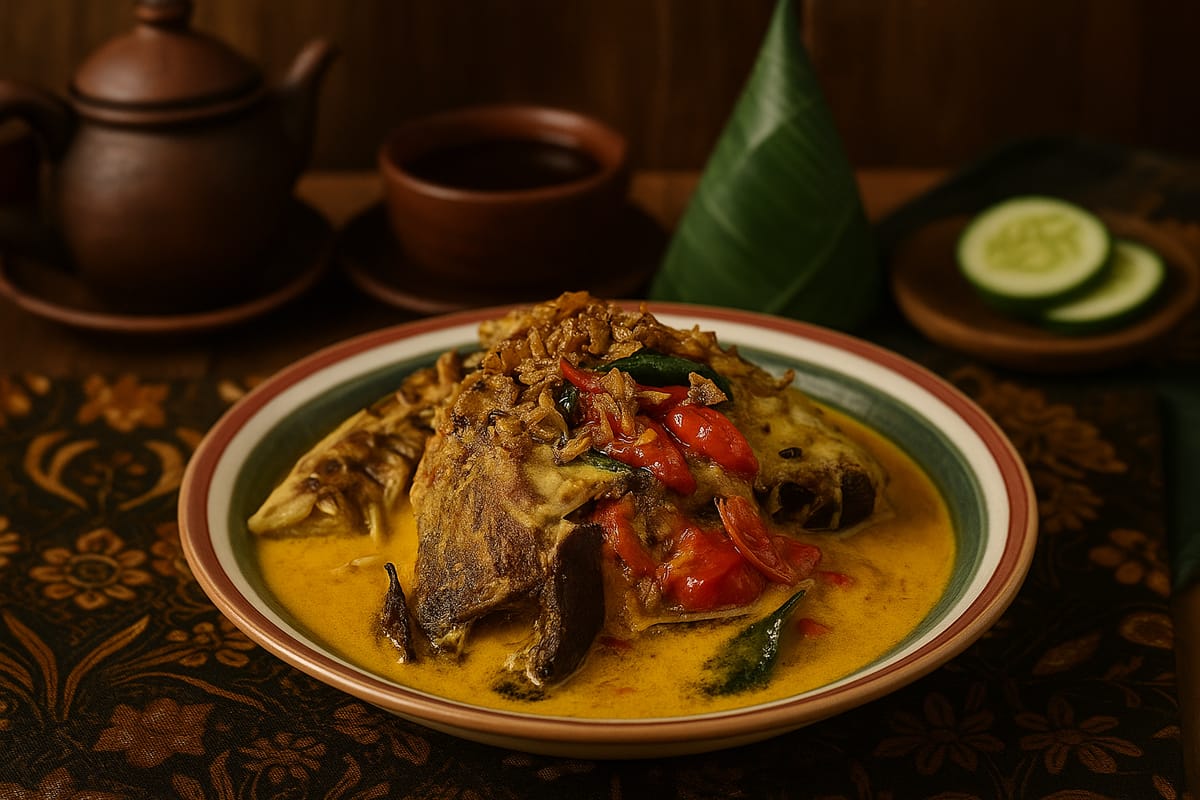
Mangut Ikan Pari (Smoky Fish Coconut Curry)
Ingredients
Instruction
- Prepare the fish– If using salted stingray, rinse well with hot water to reduce excess salt. Pat dry.– Heat oil in a pan, then fry the fish until slightly crispy. Set aside.
- Make the spice pasteBlend or grind shallots, garlic, red chilies, bird’s eye chilies, candlenuts, coriander, and salt into a smooth paste.
- Cook the spice base– In the same pan with 2 tablespoons of oil, sauté the spice paste until fragrant and the oil separates.– Add palm sugar, kaffir lime leaves, bay leaves, lemongrass, galangal, and ginger. Stir well.
- Build the brothPour in the thin coconut milk. Bring to a gentle simmer over medium heat, stirring occasionally to prevent curdling.
- Add the fish and finish– Once the broth is aromatic, reduce heat to low. Add thick coconut milk and the fried fish.– Simmer gently for 5–7 minutes until the flavors meld together. Do not boil vigorously.
- ServeTransfer to a serving bowl and enjoy hot with steamed rice.
Notes
- Fish substitution: If stingray is unavailable, smoked mackerel, haddock, or salmon are excellent alternatives. For a milder option, use fresh white fish like cod and add a touch of smoked paprika to replicate the smoky flavor.
- Spice level: Mangut is traditionally quite spicy. For a Western-friendly version, reduce or omit bird’s eye chilies and use mild red chilies.
- Candlenuts (kemiri): Not always easy to find; macadamia nuts or cashews work well.
- Bay leaves (daun salam): These are different from European bay leaves. If unavailable, substitute with regular bay leaves, though the aroma will be slightly different.
- Serving suggestion: Best enjoyed with steamed jasmine rice, but it also pairs well with crusty bread to soak up the coconut broth.
Origins of Mangut
Mangut is a classic dish from Java, especially popular in Central Java and Yogyakarta. Its foundation is simple: smoked or salted fish, coconut milk, chilies, and aromatic spices. The origins of mangut are closely tied to the daily lives of coastal communities. Historically, fish was smoked to preserve it when refrigeration was not available. What was left unsold at the market found a second life when cooked again with coconut milk and spices, creating a dish that transformed necessity into delight.
Historical Background and Coastal Connections
The history of mangut is inseparable from the life of Javanese fishermen. Smoking fish was not just a preservation method—it was also a way of ensuring food security in uncertain times. Smoked stingray (ikan pari asap) and smoked catfish (lele asap) became common in local markets. Instead of discarding unsold smoked fish, communities re-cooked them with chilies, galangal, lemongrass, and coconut milk. Thus, mangut was born, embodying both resilience and ingenuity.

Mangut is also mentioned in Javanese literary works such as Serat Centhini and Serat Rama, indicating its presence in aristocratic banquets and as an everyday meal in royal households. What once began as coastal food for the working class gradually became a dish appreciated across social layers.
The Word “Mangut” and Its Transformation
The word mangut has an intriguing etymology. In modern Indonesian dictionaries, it refers to fish cooked in coconut milk with chilies. But originally, “mangut” once described a species of freshwater fish in classical Javanese texts like Parthayajna, Nawaruci, and the 16th-century Gita Sinangsaya.
By the 19th century, the meaning shifted. Instead of being the name of a fish, mangut became associated with a method of cooking: re-cooking smoked fish with spices and coconut milk. This transformation is similar to how words in other languages evolve—for example, “horn” in English once meant only an animal’s horn, later extending to a musical instrument made from that horn.
Traditional Serving Practices
In earlier times, mangut was not an everyday dish for everyone. Coastal villagers prepared it to salvage leftover smoked fish, while in noble households it appeared on special occasions. According to Javanese records, mangut was considered a dish of honor, often prepared for welcoming esteemed guests.
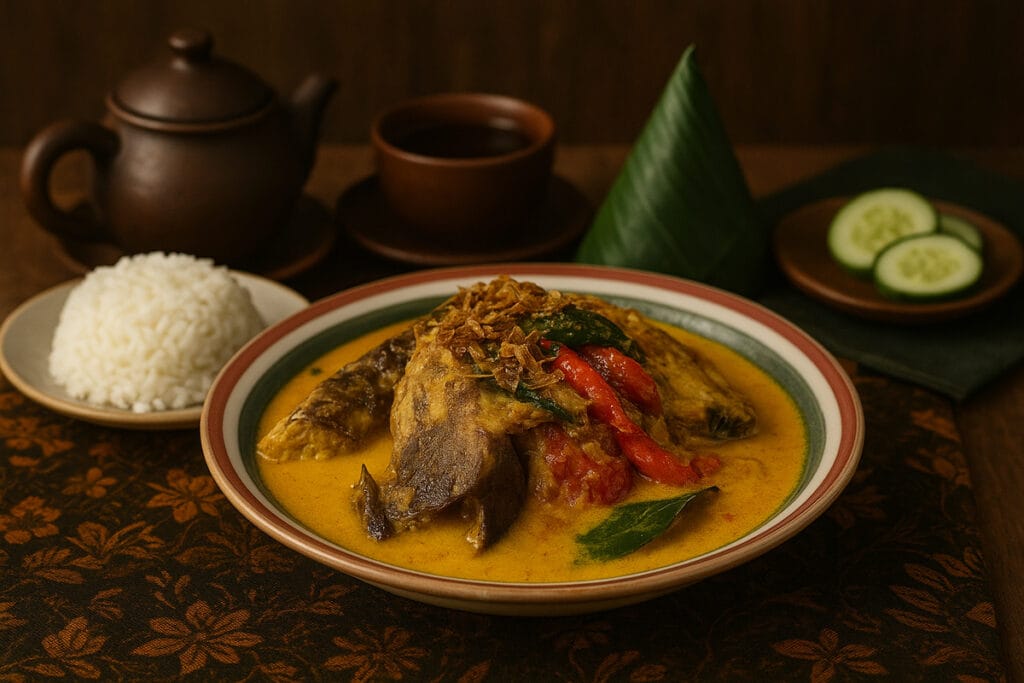
Today, mangut is a versatile dish: from humble roadside warungs to legendary eateries like Mangut Lele Mbah Marto in Bantul, Yogyakarta. Its role has expanded, but its soul—smoked fish in spicy coconut gravy—remains unchanged.
Flavor Profile and Distinctive Characteristics
The hallmark of Mangut Ikan Pari is the smoky aroma of the fish, the creamy richness of coconut milk, and the fiery heat of chilies. Depending on the region, the broth may appear golden yellow (if turmeric is used) or reddish-orange (with more chilies).

The taste is multi-layered:
- Savory-salty from the smoked stingray
- Creamy from coconut milk
- Smoky depth from the preservation process
- Spicy kick that warms the body
Optional Ingredients: Turmeric, Kencur, and Kemangi
While the core recipe remains the same, regional variations exist:
- Turmeric (kunyit): Commonly added in eastern Central Java. Just a small amount (about 1 cm) turns the broth golden and adds freshness. Without it, the broth stays creamy white; with it, the dish resembles Yogyakarta’s Mangut Lele.
- Kencur: Rarely used in mangut pari, more common in sayur lodeh or urap. If added (about 1 cm), it gives a sharp, earthy note, but too much can overpower the smoky fish.
- Kemangi (lemon basil): In some regions, fresh kemangi is added just before serving to give a fragrant, herbal touch.
These ingredients are optional and reflect local taste preferences.
Why Mangut Must Be Spicy
One defining feature of mangut pari is its spiciness. This is not just culinary preference—it has roots in coastal life. Fishermen and their families, exposed to the cold winds of the Java Sea, relied on chili heat as a natural body warmer. The fiery broth of mangut was both comforting and functional, making the spice not just tradition but necessity.
Types of Fish Used
While stingray (ikan pari) is iconic, other fish also find their place in mangut:
- Catfish (lele asap): Popular in Yogyakarta, especially in Bantul.
- Manyung (giant catfish): A Central Javanese favorite.
- Tongkol (skipjack tuna): Another common choice in coastal Semarang.
Each brings a slightly different character, but the technique and spirit remain the same.
Health Benefits
Mangut, despite being indulgent, offers several health benefits:

- Protein-rich: Fish provides lean protein and essential amino acids.
- Omega-3 fatty acids: Especially if using stingray, tuna, or mackerel substitutions.
- Capsaicin from chilies: Supports metabolism and provides natural warmth.
- Herbs like lemongrass, galangal, and ginger: Known for anti-inflammatory and digestive properties.
- Coconut milk: Though rich, when consumed moderately, it supplies healthy fats (medium-chain triglycerides).
Western Adaptation
For American and European audiences, mangut can be adapted while keeping its authentic soul:
- Fish substitution: Use smoked mackerel, haddock, or salmon if stingray is unavailable. For a milder base, fresh cod with smoked paprika can mimic smokiness.
- Spice adjustment: Reduce bird’s eye chilies or replace with jalapeños.
- Presentation: Serve as a “Smoky Fish Coconut Curry” to make it approachable.
- Pairing: While traditionally served with steamed rice, it also pairs beautifully with crusty bread, couscous, or quinoa for Western tables.
Serving Suggestions in the West
- Serve mangut in a shallow clay pot or ceramic bowl to showcase its rustic roots.
- Pair with jasmine rice for authenticity or sourdough bread for fusion dining.
- Garnish with fresh herbs like cilantro or basil if kemangi is unavailable.
- Offer optional chili paste on the side, allowing guests to control spice levels.
A Taste of Tradition
Mangut Ikan Pari is more than just a Javanese smoky fish curry—it is a dish that tells a story of cultural resilience, adaptation, and celebration. From its humble beginnings as a way to reuse unsold smoked fish, it evolved into a respected culinary icon in Java, tied to royal feasts, coastal life, and everyday dining.
For Western audiences, mangut offers a gateway to Indonesia’s coastal traditions while remaining flexible enough for adaptation. Whether served as a fiery traditional stew or a milder smoky curry, mangut invites you to taste history with every spoonful.