A Personal Memory to Begin With
Whenever I talk about Sayur Asem, a traditional Indonesian tamarind vegetable soup, I always remember a funny story from my past. I once had a boss who loved this dish so much that he often ordered it for lunch. But the way he called it was rather unique — instead of “sayur asem,” he jokingly called it sayur basi, which literally means “spoiled soup.” Why? Because of its naturally sour taste, which reminded him of how spoiled food can turn sour. It was his playful way of showing affection for the dish.
Another memory takes me back to childhood. My mother often cooked Sayur Asem at home. It was one of those quick and easy meals: just boil water, throw in the vegetables, add the spice paste, and it’s done — no complicated stir-frying or frying pans required. For us kids, it wasn’t just soup; it was a whole experience. Especially when served with sambal terasi (chili paste with shrimp), fried tempeh, tofu, crispy fried chicken, and fresh raw vegetables on the side. I still remember one time I ate so much I went for a third plate of rice. That’s the magic of Indonesian food — simple, soulful, and deeply satisfying.
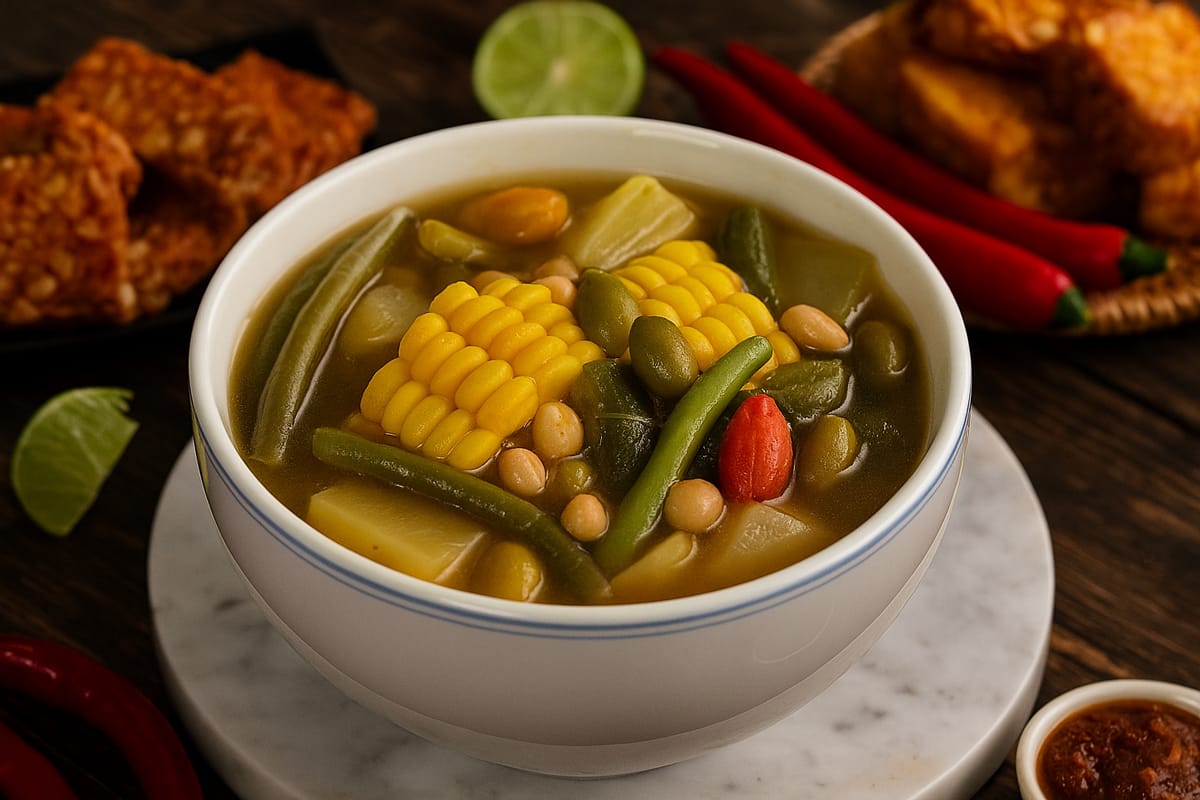
Sayur Asem (Indonesian Tamarind Vegetable Soup)
Ingredients
Instruction
- Prepare the spice paste. Blend chilies, shallots, garlic, candlenuts, shrimp paste, and salt until smooth.
- Start the broth. In a large pot, bring 4–5 cups of water to a boil. Add the corn and cook until half-tender.
- Season the soup. Stir in the spice paste, galangal, bay leaves, and palm sugar. Simmer for about 5 minutes.
- Add vegetables. Put in chayote and green beans, cooking until tender.
- Tamarind water. Pour in the tamarind extract and mix well. Add spinach (or greens) and simmer briefly until just wilted.
- Adjust seasoning. Taste and balance the flavors — it should be tangy, lightly sweet, and savory.
- Serve hot with steamed rice as a light main dish or side soup.
Notes
- Tamarind: Use tamarind paste (common in Asian or Indian stores). If unavailable, substitute with 2 tbsp lemon juice plus 1 tsp brown sugar.
- Chayote (Labu Siam): Often found in Latin or Asian groceries in the U.S. If not available, zucchini or summer squash works fine.
- Melinjo leaves/fruit: Rare outside Indonesia. Use spinach, collard greens, or kale for leaves. For fruit, skip or use edamame for texture.
- Shrimp paste (Terasi): Southeast Asian stores carry it as “belacan” or “kapi.” If hard to find, fish sauce is the easiest substitute. For vegetarian/vegan versions, omit entirely.
- Palm sugar: Replace with brown sugar or coconut sugar.
- Spice level: Traditionally mild. Add extra chili if you prefer it spicier.
What is Sayur Asem?
Sayur Asem (sometimes spelled Sayur Asam) is one of Indonesia’s most iconic soups. The name comes from two Indonesian words: sayur meaning “vegetable” and asem (or asam) meaning “sour.” The sourness comes from tamarind (asam Jawa, or Tamarindus indica), a tropical fruit widely used across Southeast Asia.
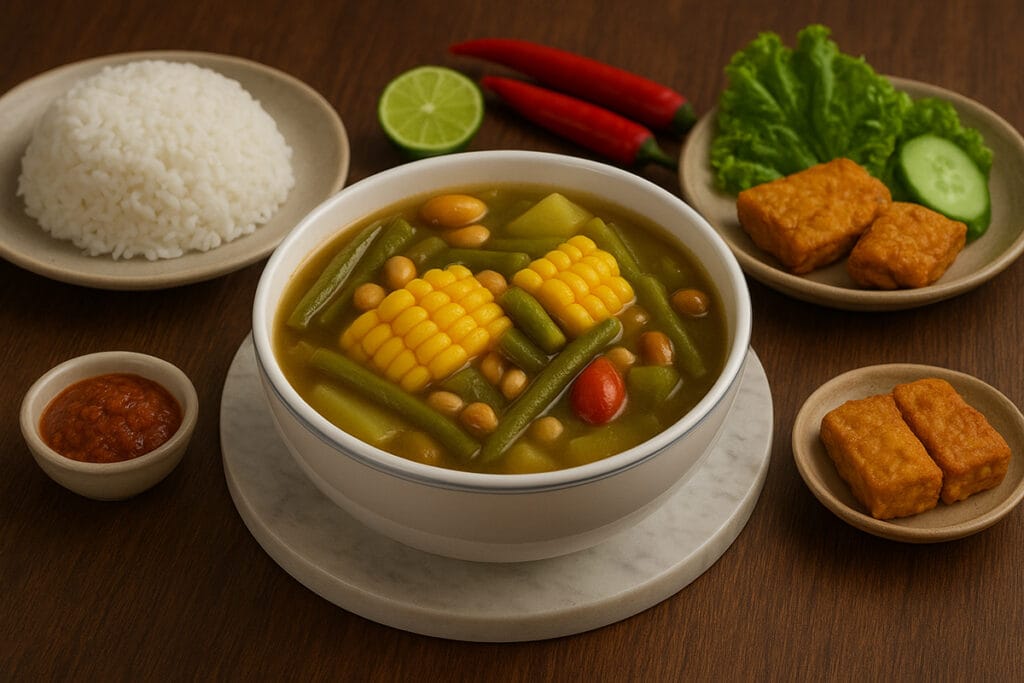
This soup is light, refreshing, and filled with local vegetables such as corn, chayote (labu siam), long beans (kacang panjang), peanuts, young jackfruit, cabbage, and melinjo leaves. The broth balances tangy, savory, and slightly sweet flavors. Unlike heavy Western stews or creamy soups, Sayur Asem is clear and vibrant — a perfect contrast to hot tropical weather.

It’s usually served as a main dish alongside steamed rice, fried tempeh or tofu, salted fish, sambal, and fresh vegetables. In Indonesian households, Sayur Asem is the definition of comfort food.
History and Origins
According to historical sources, Sayur Asem has been part of Indonesian kitchens for centuries. Some food historians believe it became popular in West Java and Betawi (Jakarta) during the colonial era under Dutch rule. Life for ordinary Indonesians was tough then, and people relied on whatever was available in their gardens or nearby fields. Tamarind trees grew abundantly in Batavia (old Jakarta), so it was natural to use tamarind as a souring agent.
The dish was known as “food of the people” — inexpensive, nutritious, and easy to prepare. Vegetables like corn, peanuts, and long beans could be grown in home gardens, making the soup affordable for everyday cooking.
Early cookbooks from the mid-20th century already featured Sayur Asem recipes. It appeared in domestic manuals for housewives, in cookbooks like Mustika Rasa (a legendary Indonesian recipe collection published under President Sukarno in 1967), and even earlier Dutch colonial references like Encyclopædia van Nederlandsche-Indië (1921). These records show how deeply rooted Sayur Asem is in Indonesian food culture.
Regional Variations
Indonesia is an archipelago of thousands of islands, and like many traditional dishes, Sayur Asem has many local versions:
- Sundanese (West Java): Clear broth, fresh and tangy, often the simplest version.
- Central Java: May include belimbing wuluh (a sour starfruit) or sweet potato leaves.
- East Java: Sometimes spicy, with added chili and kangkung (water spinach).
- Betawi (Jakarta): Often richer in flavor, with peanuts and a mix of vegetables.
- South Kalimantan: Variants include turmeric, sour eggplant, or even fish heads like patin catfish.
- Aceh & Sumatra: Versions with regional spices and local greens.
Each variation reflects local produce, cultural preferences, and even philosophies about food.
Cultural Significance and Philosophy
Sayur Asem is more than soup; it carries cultural symbolism. The mix of many vegetables in one pot represents diversity in harmony — different flavors and textures coming together to create a balanced dish. Indonesians often associate it with patience and humility. The sourness is a reminder that life can be sharp or tangy, but it can still be enjoyed when balanced with other flavors.

It’s also a deeply family-oriented dish. Sayur Asem is often cooked in large quantities and enjoyed together at the family dining table. It symbolizes home, warmth, and togetherness.
Sayur Asem and Similar Dishes Worldwide
For Western audiences, it may help to compare Sayur Asem to other sour soups around the world:
- Filipino Sinigang: A tamarind-based soup with pork, shrimp, or fish, sour and savory like Sayur Asem.
- Thai Tom Yum: Spicy and sour, though lighter and infused with lemongrass and kaffir lime.
- Mexican Pozole Verde: While different in base, it shares the communal aspect and inclusion of corn and vegetables.
- Eastern European Borscht: Sour from fermented beets, showing that tangy soups exist even in colder climates.
These comparisons make Sayur Asem easier to appreciate for those unfamiliar with Indonesian flavors.
The Name: “Asem” vs. “Asam”
Westerners may notice two spellings: Sayur Asem and Sayur Asam. Both are correct, depending on regional dialects and spelling conventions.
- In Sundanese and Javanese, the word is “asem.”
- In Bahasa Indonesia (the national language), it is “asam.”
They both refer to the same thing: sourness, usually from tamarind. For international readers, it’s helpful to think of both as valid, though “Sayur Asem” is often used more colloquially in Indonesia.
Health Benefits
Sayur Asem is not only delicious but also nutritious:

- Rich in fiber from vegetables like beans, corn, and leafy greens.
- Vitamins and minerals from tamarind, which contains vitamin C, antioxidants, and minerals like potassium and magnesium.
- Low in fat and calories, making it a healthy, light soup.
- Good for digestion — tamarind is known for its mild laxative and detoxifying properties.
It’s the kind of dish you can enjoy guilt-free, even with multiple servings.
Serving Suggestions for Western Kitchens
For American and European home cooks who want to try Sayur Asem, here are some practical tips:
- Tamarind: Tamarind paste is widely available in Asian or Indian stores. If unavailable, substitute with lemon juice plus a touch of brown sugar.
- Vegetables: If chayote isn’t available, zucchini or summer squash works perfectly. Spinach or kale can stand in for melinjo leaves.
- Protein pairing: Traditionally, Indonesians eat Sayur Asem with fried tempeh, tofu, or salted fish. In the West, it can pair beautifully with roasted chicken, grilled fish, or even BBQ meats.
- Meal idea: Serve it as a light starter before a heavier dish, or as a side to rice bowls with grilled protein.
- Vegetarian/Vegan version: Simply omit the shrimp paste (terasi) and use soy sauce or mushroom broth for depth.
Final Thoughts on Sayur Asem
Sayur Asem is more than just soup — it’s a window into Indonesian culture. Born from simple ingredients during colonial hardships, it grew into a national favorite that reflects diversity, family values, and harmony. Its sour, refreshing taste connects it to other global sour soups while still standing uniquely Indonesian.
Whether you call it Sayur Asem or Sayur Asam, this humble dish carries the warmth of Indonesian homes and the wisdom of its culinary traditions. For Western kitchens, it offers both an exotic new flavor and a surprisingly familiar comfort.