A Personal Encounter with Rujak Cingur
I had heard about rujak cingur for years. As an Indonesian, especially one who grew up in an area surrounded by Javanese neighbors, I was familiar with the word cingur—which literally means “snout” or “mouth” in Javanese. But I never thought I’d actually eat it. In my mind, rujak cingur was some sort of fruit salad mixed with slices of cow snout—and that mental image was enough to trigger disgust. I imagined the soft cartilage of a cow’s nose, perhaps even dripping with… well, mucus. The idea alone made me go “ugh.”
But everything changed a few years ago during a trip to Surabaya.
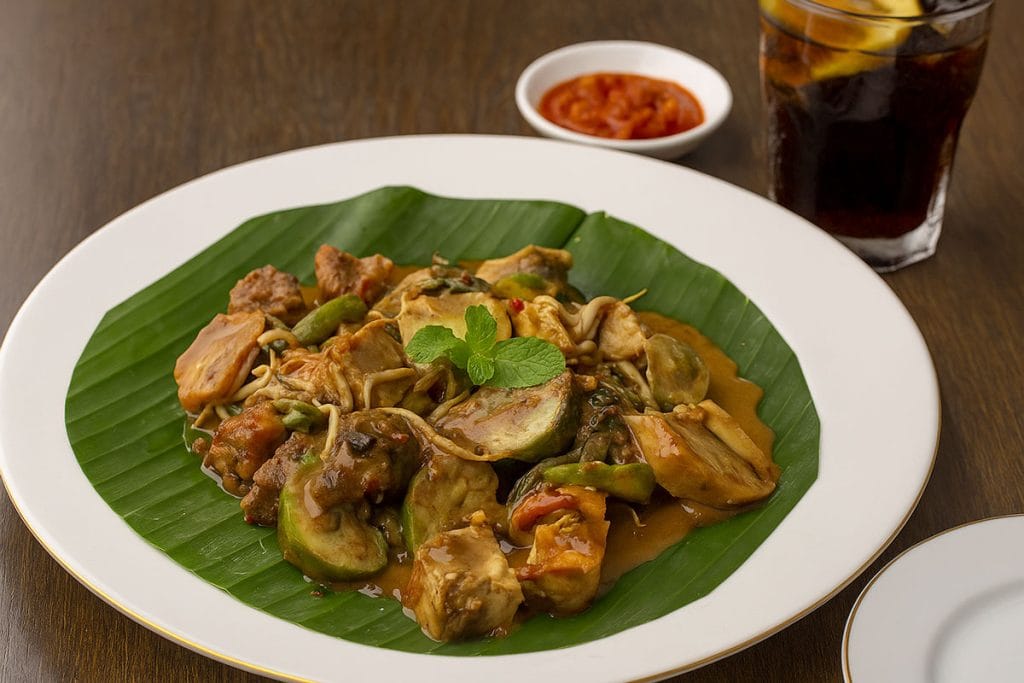
While wandering the bustling streets of the city, I stumbled upon a street food vendor serving what was labeled rujak cingur. To my surprise, the dish didn’t look like a fruit salad at all—it resembled gado-gado, a mixture of cooked vegetables, tofu, tempeh, and rice cake, all drenched in a dark, rich sauce. What caught my eye was the addition of fruit—pineapple and young mango—which added a tropical twist.
I hesitated at first, still haunted by the idea of eating cow snout. But curiosity got the better of me. And so I took a bite.
And it was delicious.

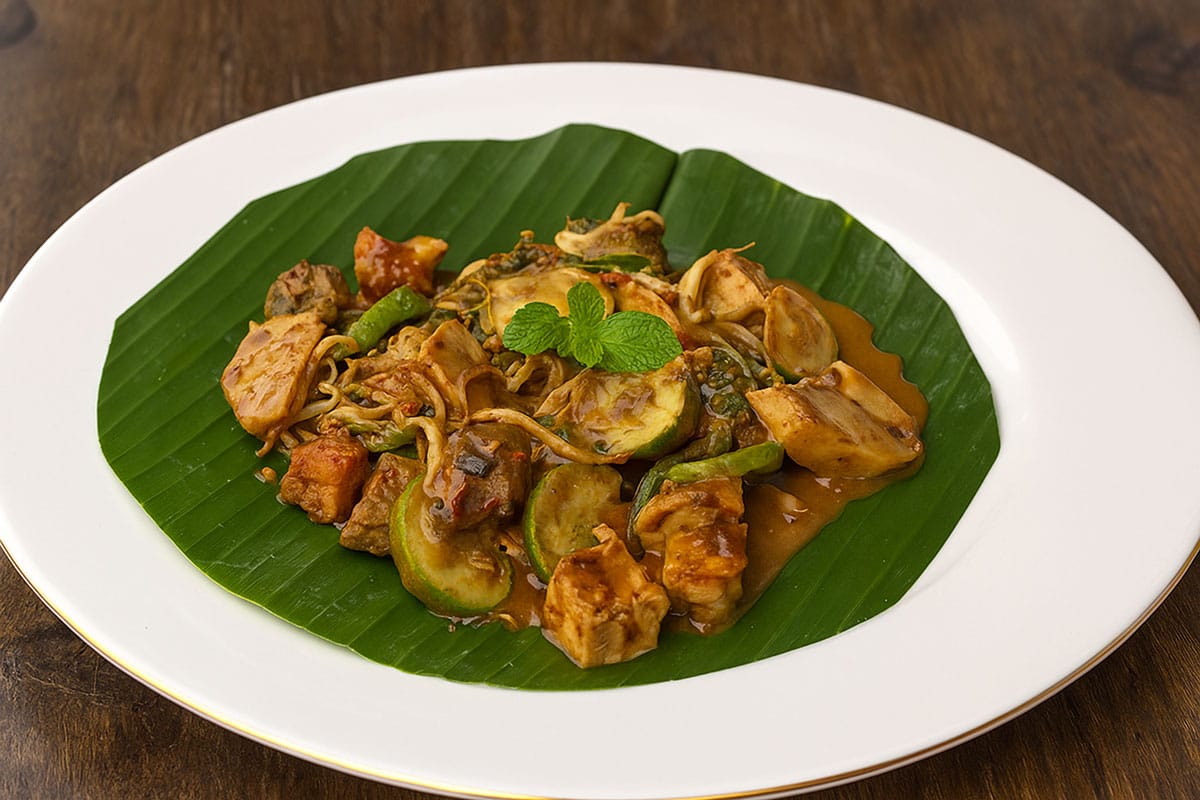
Rujak Cingur – Authentic East Javanese Salad with Petis Sauce
Ingredients
Instruction
- Blend or crush garlic, shallots, coriander, turmeric, and salt into a paste.
- Boil beef snout in 1 liter of water with the spice paste and bay leaves until tender and liquid is mostly reduced.
- Remove and lightly fry the cooked cingur in a covered pan until the surface is slightly crispy. Set aside.
- Grind or blend roasted peanuts, chilies, salt, palm sugar, and grated pisang batu into a paste.
- Add tamarind water, both types of petis, and 50 ml of water. Mix thoroughly.
- Adjust consistency if needed (sauce should be thick but pourable). Set aside.
- Slice lontong onto a plate.
- Arrange all vegetables, tofu, tempeh, peanut tempeh, and fruit slices over the rice cake.
- Top with slices of fried cingur.
- Generously pour the petis sauce on top.
- Garnish with crackers on the side and optional fried shallots.
Notes
Ingredient Notes & Substitutions
-
Cingur (beef snout)
The signature ingredient, chewy and flavorful when boiled.
Substitute: beef tongue, beef tendon, or slow-cooked brisket. -
Petis
Thick fermented shrimp paste, umami-rich and slightly sweet.
Substitute: mix 1 tbsp shrimp paste (belacan) + ½ tbsp tamarind + 1 tbsp brown sugar + a bit of water. -
Pisang batu (wild banana stem)
Grated raw banana stem (usually from pisang klutuk), adds texture and astringency.
Substitute: Young plantain (unripe), green mango, or omit if unavailable. Its texture is unique but not essential to replicate. -
Tempe kacang (peanut tempeh)
Rare type of tempeh made from peanuts instead of soybeans.
Substitute: regular soybean tempeh, or try homemade peanut tempeh. -
Kangkung / Water spinach
Common in Southeast Asian markets.
Substitute: spinach, watercress, or Swiss chard. -
Lontong (rice cake)
Compressed Indonesian rice cake, usually boiled in banana leaves.
Substitute: firm jasmine rice cubes, sticky rice, or sliced Korean rice cakes (tteok). -
Krupuk bawang (garlic crackers)
Traditional Indonesian crackers with garlic flavor.
Substitute: prawn crackers, rice crackers, or any crunchy Asian-style crackers.
For International Cooks: Tips & Notes
- If you’re trying rujak cingur for the first time, start with a small portion and keep an open mind — the sauce is powerful and full of umami.
- The balance of sweet, spicy, sour, and savory is meant to awaken all your senses.
- This dish is best enjoyed fresh. Assemble just before serving.
- For gatherings, you can serve it as a “deconstructed salad platter”, letting guests build their own plate.
What Makes Rujak Cingur Special?
This dish reflects the soul of East Java — bold, layered, and unapologetically intense. Its textures range from crunchy to chewy; its flavors shift from sweet and tangy to deeply savory and spicy. While it may challenge unfamiliar palates, it rewards those who embrace the adventure.The combination of textures—soft lontong, crunchy vegetables, chewy cingur—blended beautifully with the bold, sweet-savory sauce made from peanuts and petis, a thick fermented shrimp paste. The fruit brought a tangy freshness, while the spices created a layered complexity that was both exotic and oddly comforting. It was nothing like I had imagined, and everything I didn’t know I needed. It wasn’t just edible—it was addictive.
Since that moment, I’ve been trying to find rujak cingur back home in West Java. I once came across a restaurant claiming to serve it, but unfortunately, it turned out to be a sad imitation—just veggies and rice cake with petis sauce. The cingur was missing, and for me, that’s the heart of the dish. Without it, it’s just another salad with petis.
So to those who hesitate like I once did: don’t be afraid. Try the real thing—and you just might fall in love with one of Indonesia’s most exotic dishes.
Origins of Rujak Cingur: A Dish with Many Stories
The First Version: Surabaya & Madura Roots
The most widely accepted origin story traces rujak cingur back to 1930s Surabaya, where immigrants from Madura began selling food as a means of survival. Originally, they used Madurese petis ikan (fish-based shrimp paste), but eventually adapted to Javanese preferences by using petis udang (shrimp-based), which has a richer, more savory taste.
The dish combined local fruits and vegetables with tofu, tempeh, and the signature boiled beef snout (cingur). Everything was tossed with a spicy-sweet petis-based peanut sauce, then served on a banana leaf with krupuk (crackers). It was humble, hearty, and deeply connected to the multicultural fabric of Surabaya’s working-class neighborhoods.
The Egyptian Legend: A Culinary Folklore
A more mythical story suggests that rujak cingur has Middle Eastern origins, dating back to the time of Pharaoh Hanyokrowati in Egypt. According to legend, a cook named Abdul Rojak impressed the king with a mysterious banana-leaf-wrapped dish so flavorful that he was rewarded with a ship and land.
Abdul Rojak sailed eastward and eventually landed in Surabaya, where he adapted the dish using local ingredients. Unable to find camel snout, he substituted it with beef snout, and thus rujak cingur was born. The name rujak is said to derive from his own name, Rojak.
Is this tale historically accurate? Likely not. But it reveals how deeply food and myth are intertwined in Indonesia.
The Kalimas River Story: A Symbol of Unity
Another account attributes the birth of rujak cingur to cultural fusion along the banks of the Kalimas River in Surabaya. The river was home to communities of Javanese, Chinese, Madurese, and Arab traders, and their cuisines eventually merged into a single dish.
The mix of tropical fruit, local vegetables, and petis—a flavor bomb of fermented seafood—reflected the diversity and harmony of the riverside communities. This version of rujak cingur became a symbol of unity through food: different ingredients, different origins, but brought together by one bold sauce.
The Culinary Hybrid Theory
Some culinary researchers propose that rujak cingur may have emerged as a hybrid dish, blending elements of traditional fruit salad (rujak buah) with a colonial-era vegetable dish known as djanganan.
Djanganan was documented in a Dutch colonial cookbook from 1864, where it was described as a preparation of boiled vegetables—such as long beans, sprouts, spinach, cucumber, and other greens—topped with a rich sauce made from chili, tamarind, shrimp paste, and local spices.
According to this theory, the creation of rujak cingur may have begun as an informal experiment: someone might have combined elements of both fruit salad and vegetable dishes, then added cingur and peanut-petis sauce, giving birth to a completely new culinary experience.
Whether born from innovation or accident, rujak cingur has since become an irreplaceable icon of East Javanese cuisine, known for its bold fusion of flavors and ingredients.
The Philosophy Behind the Dish
There’s more to rujak cingur than meets the eye.
- The banana leaf it’s traditionally served on symbolizes humility and closeness to nature.
- The mix of fruits, vegetables, legumes, and meat reflects the cultural and ethnic diversity of Surabaya and East Java.
- The sauce, which blends sweet, salty, spicy, sour, and umami, represents balance—a harmony of opposites.
- The use of cingur, an unconventional part of the animal, speaks to the no-waste philosophy and resourcefulness of traditional Indonesian cooking.
Does Anything Like Rujak Cingur Exist Abroad?
While rujak cingur is uniquely Indonesian, there are some distant cousins around the world:
- Thai Som Tum (papaya salad): features raw fruit, chili, and fermented ingredients.
- Vietnamese Goi Bo Kho (beef salad): uses herbs and meat with fish sauce dressing.
- Mexican Chamoy fruit salads: combine fruit with chili and fermented sauces.
- Chinese cold dishes (like liang pi or fuqi feipian): often use offal and bold sauces.
However, none of these quite match the flavor intensity or ingredient diversity of rujak cingur.
Can Westerners Enjoy Rujak Cingur?
Absolutely—with the right introduction.

That said, a few considerations help:
Suggested Adaptation for Western Taste:
- Keep the original recipe, but offer versions with more familiar meats like beef tongue or brisket.
- Present it as an “Indonesian mixed salad” with tropical fruit and peanut-shrimp paste dressing.
- Use petis alternatives like diluted shrimp paste with tamarind and sugar if petis is unavailable.
How to Serve It:
- Plate it like a grain bowl: rice cake on the bottom, veggies, fruit, tofu, and sliced meat on top, with the sauce drizzled over.
- Use a modern ceramic bowl instead of banana leaf, but mention the traditional version.
- Pair with cold drinks like lime soda, iced tea, or young coconut water.
Final Thoughts
Rujak cingur is one of those dishes that challenges you before it rewards you. Its appearance, name, and ingredients can be intimidating—even to Indonesians. But once you take that first bite, you’ll understand why this dish has endured for nearly a century and why it continues to fascinate locals and travelers alike.
It’s not just food—it’s history, philosophy, and cultural memory on a plate.
So if you ever get the chance, especially in Surabaya, try the real thing—with the cingur. You might just be surprised at how much you love it. But if you’d like to serve it at your own table, here is an authentic rujak cingur recipe you can try at home.”