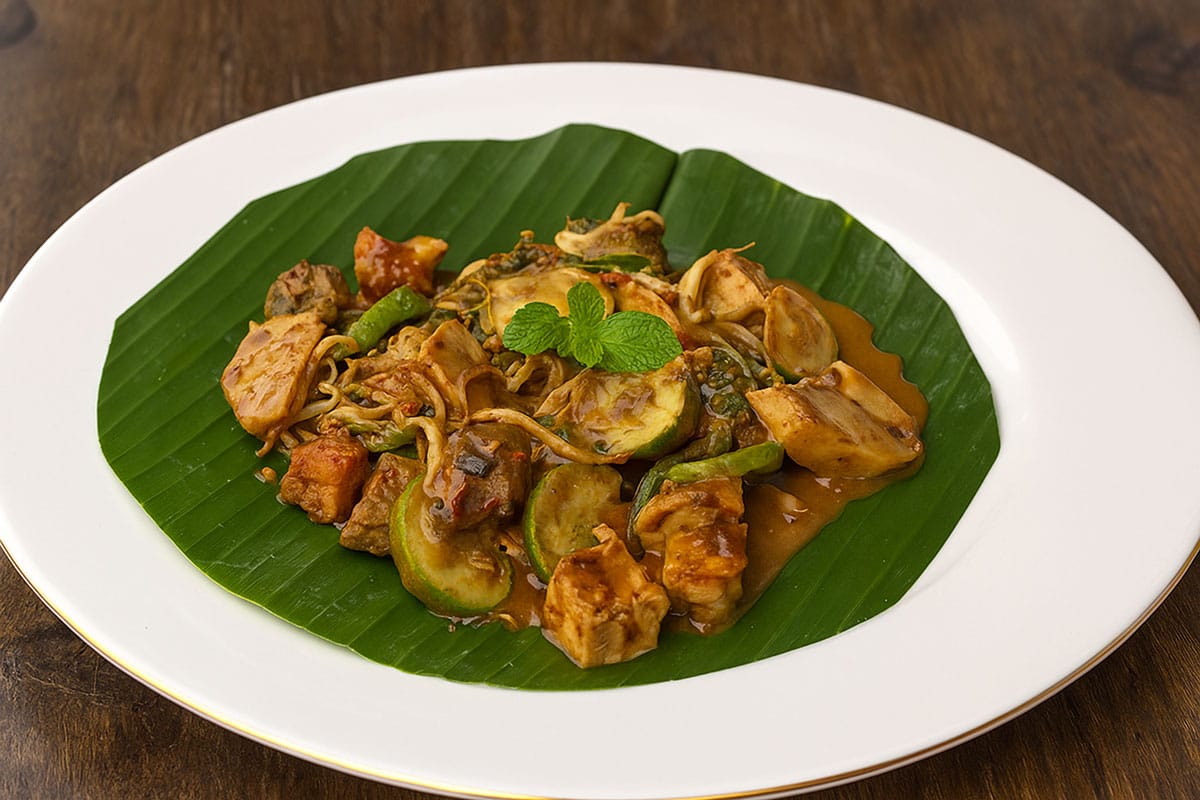
Ingredients
Instruction
Step 1 – Prepare the Cingur
- Blend or crush garlic, shallots, coriander, turmeric, and salt into a paste.
- Boil beef snout in 1 liter of water with the spice paste and bay leaves until tender and liquid is mostly reduced.
- Remove and lightly fry the cooked cingur in a covered pan until the surface is slightly crispy. Set aside.
Step 2 – Make the Petis Peanut Sauce
- Grind or blend roasted peanuts, chilies, salt, palm sugar, and grated pisang batu into a paste.
- Add tamarind water, both types of petis, and 50 ml of water. Mix thoroughly.
- Adjust consistency if needed (sauce should be thick but pourable). Set aside.
Step 3 – Assemble the Dish
- Slice lontong onto a plate.
- Arrange all vegetables, tofu, tempeh, peanut tempeh, and fruit slices over the rice cake.
- Top with slices of fried cingur.
- Generously pour the petis sauce on top.
- Garnish with crackers on the side and optional fried shallots.
Notes
Ingredient Notes & Substitutions
-
Cingur (beef snout)
The signature ingredient, chewy and flavorful when boiled.
Substitute: beef tongue, beef tendon, or slow-cooked brisket. -
Petis
Thick fermented shrimp paste, umami-rich and slightly sweet.
Substitute: mix 1 tbsp shrimp paste (belacan) + ½ tbsp tamarind + 1 tbsp brown sugar + a bit of water. -
Pisang batu (wild banana stem)
Grated raw banana stem (usually from pisang klutuk), adds texture and astringency.
Substitute: Young plantain (unripe), green mango, or omit if unavailable. Its texture is unique but not essential to replicate. -
Tempe kacang (peanut tempeh)
Rare type of tempeh made from peanuts instead of soybeans.
Substitute: regular soybean tempeh, or try homemade peanut tempeh. -
Kangkung / Water spinach
Common in Southeast Asian markets.
Substitute: spinach, watercress, or Swiss chard. -
Lontong (rice cake)
Compressed Indonesian rice cake, usually boiled in banana leaves.
Substitute: firm jasmine rice cubes, sticky rice, or sliced Korean rice cakes (tteok). -
Krupuk bawang (garlic crackers)
Traditional Indonesian crackers with garlic flavor.
Substitute: prawn crackers, rice crackers, or any crunchy Asian-style crackers.
For International Cooks: Tips & Notes
- If you're trying rujak cingur for the first time, start with a small portion and keep an open mind — the sauce is powerful and full of umami.
- The balance of sweet, spicy, sour, and savory is meant to awaken all your senses.
- This dish is best enjoyed fresh. Assemble just before serving.
- For gatherings, you can serve it as a "deconstructed salad platter", letting guests build their own plate.