Ingredients
Instruction
- Process the Spice Paste: In a food processor or traditional mortar and pestle, blend the large red chilies, curly red chilies, shallots, garlic, ginger, turmeric, and coriander into a smooth, fine paste. Add a splash of water or oil to facilitate blending if necessary.
- Aromatize the Base: Heat the vegetable oil in a large wok or heavy-bottomed Dutch oven over medium heat. Add the blended spice paste, kaffir lime leaves, bay leaves, turmeric leaf, bruised lemongrass, and bruised galangal. Sauté continuously for 5 to 7 minutes until the raw smell dissipates, the oil begins to separate from the paste, and it becomes highly fragrant.
- Brown the Chicken: Add the chicken pieces to the wok. Stir gently to coat every piece evenly with the aromatic spice mixture. Cook for about 5 minutes until the chicken turns opaque and slightly firm on the outside.
- Simmer and Reduce: Pour in the coconut milk. Season with salt, pepper, and sugar. Bring the mixture to a gentle boil, then immediately reduce the heat to medium-low.
- Develop the Kalio: Simmer uncovered for 45 to 55 minutes. Stir occasionally in a slow, sweeping motion to prevent the coconut milk from breaking unevenly and to ensure the spices do not burn at the bottom of the wok.
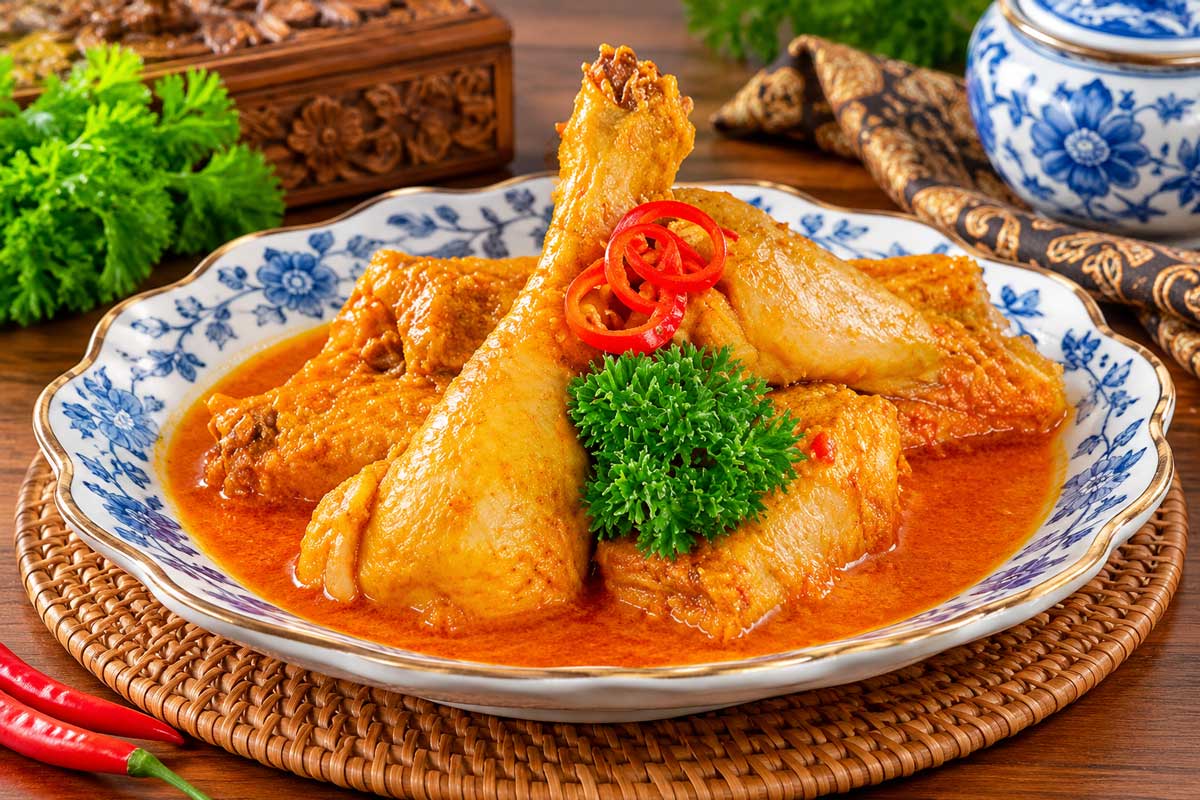
- Final Glaze: Continue cooking until the chicken is tender, the liquid has reduced by more than half, and the sauce transforms into a thick, clingy, deep-orange/brown glaze. The coconut oil should visibly separate and pool slightly at the edges.
- Serve: Remove from heat. Discard the bruised aromatics and tough leaves before serving. Serve hot alongside steamed jasmine rice or traditional rice cakes.
Notes
Nutrition is an estimate based on standard whole chicken and full-fat canned coconut milk. For a lighter version, substitute half of the coconut milk with chicken broth or light coconut milk, though this will alter the traditional texture. If fresh turmeric leaf is unavailable, omit it and add 1/4 tsp of ground turmeric to the spice paste.
The enduring appeal of Kalio Ayam lies in its ability to bridge historical tradition with modern culinary demands. It serves as a masterclass in the science of flavor extraction and reduction, transforming humble ingredients into a world-class gastronomic experience. Whether served in a bustling Padang restaurant in West Sumatra or adapted for an upscale dinner party in London or New York, the dish retains its soul—a testament to the sophistication and timelessness of Indonesian culinary artistry.